
Islamabad Talks Ended without a Deal, But Diplomacy Never Ends. 伊斯兰堡会谈无果而终,但外交进程永不停歇。

(下边有中文翻译请继续看到底。 谢谢。)

The failure of the Islamabad peace talks is more than a diplomatic disappointment. It is a dangerous setback at a moment when the region, and indeed the wider world, could least afford one. After 21 hours of direct negotiations in Pakistan between the United States and Iran, the delegations left without a deal, even as a fragile two-week ceasefire remained in place and global markets stayed on edge. The breakdown has already revived fears that the ceasefire could unravel before its scheduled expiry on April 22, with potentially grave consequences for regional security, energy markets, and ordinary people far beyond the Middle East.
What makes this failure so painful is that Islamabad represented a rare opening. These were among the highest-level direct U.S.-Iran contacts in decades, facilitated by Pakistan at a time of active war, rising casualties, maritime disruption, and extraordinary mistrust. Islamabad offered something that battlefield logic never can: a face-saving off-ramp for all sides. It was a venue where power could have yielded, at least partially, to prudence. Instead, the process ended where too many Middle Eastern crises end—without closure, without a durable framework, and without relief for civilians who are already paying the cost of strategic stubbornness.

It is not hard to see why the talks mattered so much. The war had already shaken the global economy. Reuters reported that the conflict and uncertainty around the Strait of Hormuz had disrupted economic stability and pushed oil prices higher. Associated Press likewise noted that the war and maritime tensions had roiled global markets. This is not an abstract matter for traders or policymakers. Every spike in oil prices feeds into transport costs, electricity bills, production expenses, and eventually food and household inflation. The whole world becomes a victim of prolonged conflict in such a chokepoint. A war fought in one region quickly enters the daily life of families everywhere.
That is why the collapse of the talks feels so irresponsible. Washington says the negotiations failed because Iran would not accept sweeping U.S. terms on nuclear issues. Tehran says the Americans came with excessive and unlawful demands and failed to build trust. The record available so far shows that Iran’s position, whatever one thinks of every detail, was not simply a rejection of diplomacy. Reuters reported before the summit that Iran had set out preconditions centered on an immediate end to strikes, guarantees against renewed attacks, compensation for damage, and a lasting settlement rather than a temporary pause. Reuters also reported that Iran had formally rejected a simple ceasefire formula because it wanted a permanent end to war and a broader protocol for maritime security, sanctions relief, and reconstruction. That is a hard position, certainly, but it is not the same as an unserious one.

This matters because too much public debate still treats diplomacy as a test of who can impose terms, rather than who can build a workable peace. If one side arrives seeking surrender language while the other arrives seeking security guarantees, the chances of success are always thin. To many outside observers, that is exactly how Islamabad ended: not because diplomacy was impossible, but because the gap between maximalist demands and durable compromise remained too wide. Iran’s negotiators appeared to be arguing for a comprehensive settlement; the United States appeared to be insisting first on a far-reaching strategic concession. When diplomacy is burdened with conditions that look politically impossible for the other side to accept, failure becomes self-fulfilling.
There is also a civilizational point worth stating plainly. Iran is not a transient actor, nor a state that can be bullied into strategic erasure. It is an ancient civilization with a long political memory, strong national institutions, and a deeply rooted sense of sovereignty. That does not make Tehran infallible, but it does mean that any lasting peace must take Iranian security concerns seriously rather than dismiss them as obstacles to be brushed aside.

Diplomacy works only when it recognizes the dignity, historical consciousness, and bargaining logic of all parties involved. A country with Iran’s depth and identity was never likely to accept humiliating terms under pressure and call that peace. That should have been obvious from the outset.
Another striking feature of the Islamabad process was the breadth of support for continued diplomacy. The United Nations sent envoy Jean Arnault to the region to support what it called a durable end to the conflict and explicitly backed a peaceful settlement. Reuters reported that the U.N. stressed the importance of maintaining the ceasefire and preserving freedom of maritime movement. Associated Press reported that the EU, Oman, and Russia all urged continued dialogue after the talks failed. Reuters also reported that Pope Leo used the moment of the talks to denounce the “madness of war” and call for peace through dialogue rather than rearmament. And Reuters reported that the Pakistani plan itself emerged amid outreach involving Pakistan, China, and the United States. In short, Islamabad was not a lonely diplomatic experiment. It was the focal point of a wider international hope that a larger regional fire might still be contained.

That broad support makes the failure more serious, not less. When the international system—from the U.N. to regional mediators to major powers and moral voices—leans toward negotiation, the burden on the principal parties becomes heavier. They are not merely representing themselves; they are responding to a world pleading for restraint. Islamabad was a chance for Washington to demonstrate that military pressure would be followed by political realism. Instead, the collapse of the talks has created the opposite impression: that military force was easier to deploy than diplomatic flexibility. Whatever battlefield achievements the United States may claim, it still has not produced a durable political outcome. That is not strategic success. It is, at best, suspended instability.

And who benefits from suspended instability? Not the people of Iran. Not the people of the United States. Not Pakistan, which invested heavily in mediation. Not the world economy. The principal beneficiaries are the hawks and the hardliners—those who thrive when fear replaces diplomacy. In that sense, many critics will conclude that the failed talks amount to a political win for the Israeli security line, which has long preferred coercion over compromise. That does not mean Israel alone caused the failure. But it does mean that every collapsed negotiation strengthens those who argue that force, not diplomacy, should define the region’s future.
This is where Prime Minister Benjamin Netanyahu’s own legal and political context becomes impossible to ignore. Reuters reported this week that Netanyahu’s corruption trial, which had been interrupted under emergency conditions during the war, was set to resume once the state of emergency was lifted. Reuters also reported that Netanyahu then requested a further delay, citing the ongoing regional security situation. He denies wrongdoing in the underlying corruption case, and it would be improper to reduce a complex war to one man’s courtroom troubles. Yet it is also true that critics in Israel have long accused him of benefiting politically from prolonged states of conflict and emergency, an accusation he has denied. In public life, perception matters. A region kept permanently on the edge of war also keeps accountability permanently blurred.

None of this means diplomacy is dead. It means diplomacy must restart before the ceasefire expires and before new escalatory moves make the next round even harder. The ingredients of a serious framework are not mysterious. First, there must be a clear extension of the ceasefire, monitored and publicly reaffirmed. Second, the parties need a sequencing formula: verified de-escalation, reciprocal security guarantees, and a credible timetable for political and technical talks. Third, any agreement must deal honestly with the Strait of Hormuz, because freedom of navigation is a global interest, but it cannot be addressed through threats alone. Fourth, the nuclear file must be handled with realism: non-proliferation and verification on one side, recognition of peaceful civilian rights and sovereign dignity on the other. Fifth, broader regional concerns, including sanctions relief, reconstruction, and the conflict spillover into Lebanon, cannot be treated as side notes. A narrow deal may produce a pause. Only a comprehensive one can produce stability.
Pakistan, to its credit, has shown that diplomacy is still possible even in the darkest circumstances. The fact that the talks happened at all was an achievement. The fact that they failed does not erase that achievement; it only increases the urgency of a second attempt. Islamabad should not become a symbol of a missed opportunity. It should become the place where the world learned that there is still no military substitute for political courage.

There is still time. The ceasefire has not yet expired. International support for diplomacy still exists. The U.N. still wants a durable settlement. Regional actors still want de-escalation. Markets still react nervously because they know what renewed war would mean. Most importantly, ordinary people still want what they have always wanted: peace with dignity, security without humiliation, and a future not held hostage by the calculations of the powerful. That is why negotiations must resume, and why any honest observer should insist that diplomacy—patient, comprehensive, and serious diplomacy—is the only way forward.

伊斯兰堡会谈无果而终,但外交进程永不停歇。
伊斯兰堡和谈的失败,不仅仅是一次外交失望。在本地区乃至更广泛世界都最无法承受挫折的时刻,这更是一场危险的倒退。美国与伊朗代表团在巴基斯坦进行了21小时的直接谈判后,仍未达成协议,尽管脆弱的两周停火仍在维持,全球市场也依然处于紧张状态。此次谈判破裂,已经重新引发外界担忧:停火可能会在原定于4月22日到期之前崩溃,而这将对地区安全、能源市场以及远离中东的普通民众带来极其严重的后果。
这场失败之所以格外令人痛心,是因为伊斯兰堡原本代表着一个难得的突破口。这是数十年来美伊之间级别最高的直接接触之一,而促成会谈的是巴基斯坦;当时战争仍在持续,伤亡不断上升,海上通道受到扰动,互信也极度匮乏。伊斯兰堡提供了战场逻辑永远无法提供的东西:一条让各方都能保全面子的退路。这本应是一个让强权至少在某种程度上让位于审慎的场所。然而,结局却和太多中东危机一样——没有收尾,没有持久框架,也没有给已经在为战略僵局买单的平民带来任何缓解。
不难看出,为何此次会谈如此重要。这场战争早已冲击全球经济。路透社报道称,围绕霍尔木兹海峡的冲突与不确定性破坏了经济稳定,并推高了油价。美联社也指出,战争与海上紧张局势已经扰乱全球市场。这并不是交易员或政策制定者才会关心的抽象问题。每一次油价上涨,最终都会传导到运输成本、电费、生产开支,继而推高食品和家庭生活成本。只要这种战略咽喉地带的冲突持续,整个世界都会成为受害者。一场发生在某一区域的战争,很快就会进入世界各地普通家庭的日常生活。
正因如此,会谈破裂才显得如此不负责任。华盛顿称,谈判失败是因为伊朗不愿接受美国在核问题上的广泛条件;德黑兰则表示,美国带着过度且不合法的要求而来,未能建立信任。现有公开记录表明,无论人们如何评价伊朗立场中的具体细节,伊朗的态度并不只是简单拒绝外交。路透社在峰会前报道说,伊朗提出的前提包括立即停止打击、保证不再发动新攻击、赔偿损失,以及实现持久解决方案而非临时停火。路透社还报道称,伊朗已正式拒绝简单的停火方案,因为其寻求的是永久结束战争,以及一项涵盖海上安全、制裁解除和重建问题的更广泛协议。这当然是强硬立场,但并不等于不认真。
这一点很重要,因为直到今天,太多公共讨论仍然把外交看作是谁能够强加条件的较量,而不是谁能够建立可行和平的过程。如果一方带着“投降式语言”而来,另一方则要求安全保障,那么成功的可能性本就极低。对许多外部观察者来说,伊斯兰堡会谈的结束正是如此:并非外交本身不可能,而是极限施压式要求与持久妥协之间的距离依然过于遥远。伊朗谈判代表似乎主张一项全面解决方案;而美国似乎首先坚持一项影响深远的战略性让步。当外交背负着对方在政治上几乎不可能接受的条件时,失败就会变成一种自我实现。
还有一个文明层面的事实需要明确指出。伊朗并非一个短暂的行为体,也不是一个可以被霸凌到在战略上被抹去的国家。它是一个古老文明,拥有漫长的政治记忆、坚实的国家机构,以及深植于社会中的主权意识。这并不意味着德黑兰不会犯错,但这确实意味着,任何持久和平都必须认真对待伊朗的安全关切,而不能把这些关切视为应被扫除的障碍。外交只有在承认各方的尊严、历史意识和谈判逻辑时才会奏效。像伊朗这样拥有深厚历史与身份认同的国家,原本就不可能在高压下接受屈辱性条件,并将其称为和平。这一点从一开始就应当十分清楚。
伊斯兰堡进程另一个引人注目的特点,是国际社会对继续外交努力的广泛支持。联合国派遣特使让·阿尔诺前往该地区,支持其所称的冲突“持久结束”,并明确支持和平解决。路透社报道称,联合国强调了维持停火和保障海上航行自由的重要性。美联社报道说,在会谈失败后,欧盟、阿曼和俄罗斯都呼吁继续对话。路透社还报道称,教皇利奥借会谈之机谴责“战争的疯狂”,呼吁通过对话而非重新武装来实现和平。另据路透社报道,巴基斯坦提出的方案本身,就是在巴基斯坦、中国和美国多方接触背景下形成的。换言之,伊斯兰堡并不是一次孤立的外交尝试,而是全球更广泛希望的焦点——希望一场更大范围的地区性大火仍有可能被控制住。
正因为这种支持如此广泛,失败才显得更加严重,而不是较轻。当从联合国到地区调停者、再到大国与道义声音的整个国际体系都倾向于通过谈判解决问题时,主要当事方所承担的责任就更重了。他们不仅是在代表自己,也是在回应一个呼吁克制的世界。伊斯兰堡本应是华盛顿展示“军事压力之后将接续政治现实主义”的机会。然而,会谈破裂所制造出的印象恰恰相反:军事力量似乎比外交灵活性更容易被动用。无论美国在战场上可能声称取得了何种成果,它仍然没有带来一个持久的政治结果。这算不上战略成功,充其量只是暂时冻结的不稳定。
而谁会从这种悬而未决的不稳定中获益?不会是伊朗人民,不会是美国人民,不会是为斡旋投入大量努力的巴基斯坦,也不会是全球经济。真正获益的,是鹰派和强硬派——那些在恐惧取代外交时如鱼得水的人。从这个意义上说,许多批评者会认为,谈判失败相当于给以色列安全路线带来了政治上的胜利,因为这种路线长期偏好胁迫而非妥协。这并不意味着以色列单独造成了谈判失败,但确实意味着:每一次谈判破裂,都会增强那些主张应由武力而非外交来定义本地区未来的人。
在这里,本雅明·内塔尼亚胡总理自身的法律与政治处境也变得无法忽视。路透社本周报道称,在战争期间因紧急状态而中断的内塔尼亚胡腐败案审判,在紧急状态解除后将恢复进行。路透社还报道说,内塔尼亚胡随后以地区安全局势仍在持续为由,请求进一步延期。他否认在相关腐败案中有任何不当行为,而把一场复杂战争简化为一个人的法庭困境,显然也是不恰当的。然而,同样真实的是,以色列国内批评者长期指责他在长期冲突和紧急状态中获得政治利益,而他本人对此予以否认。在公共生活中,观感同样重要。一个长期处于战争边缘的地区,也会让问责长期变得模糊。
这一切并不意味着外交已经死亡,而是意味着必须在停火到期之前、在新的升级行动使下一轮谈判更加困难之前,尽快重启外交。一个严肃框架所需要的要素其实并不神秘。第一,必须明确延长停火,并进行监督和公开重申。第二,各方需要一个“有先后顺序的安排”:经核实的降级、对等的安全保障,以及政治与技术谈判的可信时间表。第三,任何协议都必须正视霍尔木兹海峡问题,因为航行自由是全球利益,但这一问题不能仅靠威胁来处理。第四,核问题必须以现实主义方式处理:一方面是防扩散与核查,另一方面则是承认和平民用权利和主权尊严。第五,更广泛的地区问题,包括制裁解除、重建以及冲突向黎巴嫩等地外溢的影响,都不能被视为附带问题。狭窄的协议或许只能带来暂停;只有全面协议才能带来稳定。
巴基斯坦值得肯定的一点在于,它表明即使在最黑暗的时刻,外交仍然是可能的。会谈本身能够举行,已经是一项成就。会谈失败并不会抹去这一成就,反而只会增加进行第二次尝试的紧迫性。伊斯兰堡不应成为“错失机会”的象征,而应成为世界重新认识到这一点的地方:在政治勇气面前,军事手段始终无法替代政治解决。
现在仍然还有时间。停火尚未到期。国际社会对外交的支持依然存在。联合国仍然希望达成持久解决方案。地区行为体仍然希望局势降级。市场依旧紧张反应,因为它们清楚新一轮战争意味着什么。更重要的是,普通民众始终渴望的,其实从未改变:有尊严的和平,不受羞辱的安全,以及一个不被强权算计所挟持的未来。这正是为什么谈判必须恢复,也是为什么任何诚实的观察者都应坚持认为:只有外交——耐心的、全面的、严肃的外交——才是唯一的出路。
( 注意: 本文是用AI翻译的,或有误差。请以原版英文为准。谢谢。)
Reference Link:- https://www2.apdnews.cn/en/item/26/0413/axjfjjanbf51de4d3eb3cf.html
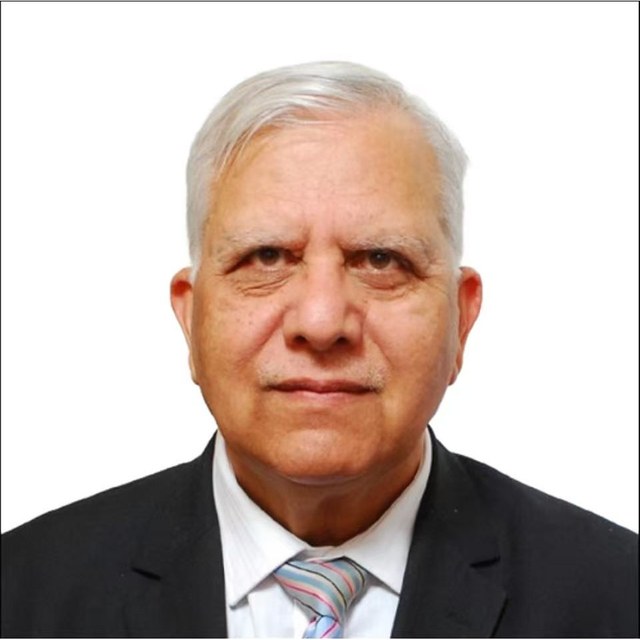
Zamir Ahmed Awan is the founder and Chair of the Global Silk Route Research Alliance, a think tank in Islamabad. He studied engineering at Shanghai University in the 1980s, and years later he went back to China as Pakistan's science counsellor in Beijing, from 2010 until 2016, working on science and higher education cooperation between the two countries.…