Pakistan develops integrated energy model to map path to net zero by 2050
Wire desk byline Sourced from Xinhua, Dawn, Arab News, Anadolu and Minute Mirror. Translated and abridged by the GSRRA Desk.

Pak-IEM 2.0 outlines least-cost and net-zero scenarios, flags investment needs and fossil fuel dependence

Pakistan has developed a new integrated energy planning model to guide long-term policy decisions, as rising demand, import dependence and climate commitments place pressure on the energy sector, according to a news report.
The model, Pak-IEM 2.0, has been developed by Germany’s development agency GIZ in collaboration with the Energy Planning and Resource Centre (EP&RC) under a project focused on decarbonisation and digitisation of power distribution networks.
A report presented to the power minister said Pakistan’s energy system is under strain from population growth, urbanisation and increasing demand for cooling, transport and industrial output, alongside reliance on imported fossil fuels. These factors are affecting affordability, energy security and fiscal stability.
The model is designed to support long-term planning using the TIMES-VEDA framework, allowing policymakers to compare different energy pathways and assess trade-offs related to costs, investment, emissions and energy security. It provides a system-wide view of both supply and demand across the energy sector.
Two scenarios have been developed under the model: a Least Cost Baseline (LCB) and a Net Zero Energy (NZE) pathway.
The LCB scenario assumes continuation of current policies as of July 2025, with adoption of cost-efficient technologies but without strict decarbonisation targets. Under this pathway, energy demand is projected to grow about 2.5 times by 2050 compared to 2024 levels, while final energy demand increases by around 30%. Renewable sources become the main contributor to power generation, reducing emissions from the power sector by about 56%.
However, fossil fuels, including imported oil and LNG, continue to play a significant role in sectors such as transport, industry and households, resulting in overall emissions stabilising rather than declining.
The NZE scenario outlines a transition aligned with Pakistan’s climate targets, aiming for net-zero emissions in the energy sector by 2050. Under this pathway, electricity generation becomes fully decarbonised after 2040 and reaches net-negative emissions by mid-century through technologies such as bioenergy with carbon capture and storage.
The model indicates that achieving net-zero emissions will require higher upfront investment, particularly in power generation, grid infrastructure, transport and industrial systems, compared to the least-cost scenario.
Reference Link:- https://profit.pakistantoday.com.pk/2026/04/07/pakistan-develops-integrated-energy-model-to-map-path-to-net-zero-by-2050/
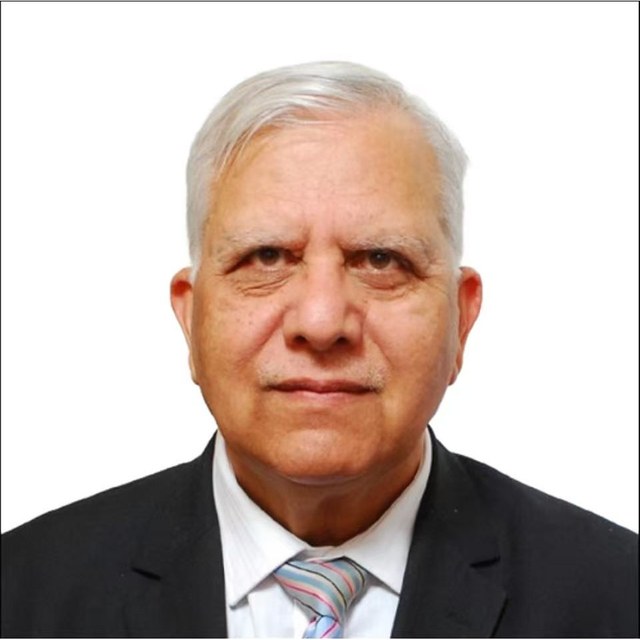
Zamir Ahmed Awan is the founder and Chair of the Global Silk Route Research Alliance, a think tank in Islamabad. He studied engineering at Shanghai University in the 1980s, and years later he went back to China as Pakistan's science counsellor in Beijing, from 2010 until 2016, working on science and higher education cooperation between the two countries.…