
Indus Waters Treaty: Hague-based CoA endorses Pakistan’s position
Wire desk byline Sourced from Xinhua, Dawn, Arab News, Anadolu and Minute Mirror. Translated and abridged by the GSRRA Desk.

The Ministry of Water Resources on Thursday reiterated that the Indus Waters Treaty (IWT) between Pakistan and India remains fully effective, a position endorsed by the Hague-based Court of Arbitration (CoA).
“India wrote to Pakistan stating that the IWT has been put in abeyance, but Pakistan’s position is that the Treaty is fully operational and effective. Our stance has also been endorsed by the CoA, which has stated that the Treaty remains effective and binding on India,” said Secretary, Ministry of Water Resources, Syed Ali Murtaza, while responding to a question from Chairman, Senate Standing Committee on Water Resources, Jam Saifullah Khan, during a committee meeting.
The secretary stated that the mandate of both the Ministry of Water Resources and the Indus Water Commission covers hydropower-related matters. Currently, there is no regular Indus Water Commissioner; therefore, the additional charge has been assigned to Additional Secretary Mehar Ali Shah.
READ MORE: Meeting condemns Indian ‘water aggression’
Responding to a question regarding the alleged “dubious” role of former Indus Water Commissioner Jamaat Ali Shah in dealing with hydroelectric projects established by India in Indian-held Kashmir, the Secretary—also serving as acting Indus Water Commissioner—said that Jamaat Ali Shah had been exonerated following an inquiry.
He maintained that an Indus Water Commissioner cannot issue any viewpoint without formal approval from the state.
Addressing concerns about surplus electricity and its linkage with under-construction hydropower projects, the Secretary said the electricity market has not yet been deregulated, which is necessary for private sector participation and market-based price determination.
He explained that electricity costing is determined in the absence of deregulation, but predictability is not 100 percent accurate due to fluctuations in generation. Hydel generation, he noted, is a by-product of water regulation rather than energy demand.
The Ministry does not agree with the power sector’s generation-demand formulas, he noted adding that hydel generation is a long-term process. He added that electricity from Tarbela is currently being generated at Rs 0.53 per unit.
Replying to another question, the Secretary informed the Committee that neither the World Bank nor any other international financial institution is financing the Diamer-Bhasha Dam due to part of its location in Gilgit-Baltistan. China is also not funding the project. The Government of Pakistan is financing it through the Public Sector Development Programme (PSDP). He stated that 30 percent of work has been completed on the Diamer-Bhasha Dam, while 21 percent work has been completed on the Dasu Hydropower Project.
The Committee was informed that the Dam Safety Bill will soon be presented to the federal cabinet. Punjab has removed 2,625 encroachments from river waterways; however, 83 obstructions still remain, according to the Federal Flood Commission. SUPARCO has confirmed the removal of the cleared encroachments.
The Committee was briefed that the primary responsibility for removing encroachments lies with the provinces.”
It is a fact that there are encroachments in river waterways. What is the solution to prevent them?” asked Chairman Jam Saifullah Khan. The Secretary responded that preventing obstructions in waterways is the responsibility of provincial irrigation departments.
The acting Indus Water Commissioner informed the Committee that it must be examined whether provinces have carried out proper zoning of river areas. He added that provinces, particularly Punjab and Sindh, need to clarify whether high-risk and low-risk flood zones have been identified.
The Secretary further informed the Committee that the National Flood Protection Plan has been sent to the Council of Common Interests for approval, while the Dam Safety Act is in its final stages.
The Committee was also informed that a proposal to install 707 telemetry stations across the country is under consideration to improve weather forecasting and monitoring, with planned assistance from the Asian Development Bank. Officials of the Federal Flood Commission stated that installation of telemetry systems at 27 locations to monitor water flows will be completed by June 2026.
The Committee observed that climate change—particularly accelerated glacier melt—has intensified flood events while contributing to long-term water scarcity. It stressed that encroachments along natural waterways and floodplains obstruct water flow, amplify flood damage, and undermine national resilience. While Punjab has removed 2,625 encroachments, the issue persists nationwide. The Committee called for time-bound, coordinated provincial action to clear waterways and enforce zoning laws.
Serious concern was expressed over unauthorized infrastructure development, including bridges reportedly constructed without approval of the Flood Planning Commission. The Chairman highlighted the high-risk vulnerability of Zameendara Bandh near cultivated areas and directed the Ministry to submit comprehensive provincial data on flood-prone zoning, including a standardized definition of “high risk,” to support evidence-based decision-making.
Institutional capacity was also reviewed. The Ministry reported that 15 of its 33 sanctioned posts remain vacant. The Committee termed the staffing gap a structural weakness affecting oversight and implementation and sought detailed vacancy data for BPS-16 and above to ensure accountability.
On groundwater management, the Committee noted that low recharge rates, inadequate reservoirs, and excessive pumping—particularly in major urban centers—pose a systemic threat to water security. It called for stricter regulatory enforcement and sustainable extraction policies. The Pakistan Council of Research in Water Resources (PCRWR) informed the Committee that quarterly water quality monitoring is ongoing and that rainwater harvesting has been made mandatory for new housing societies in Islamabad.
The Committee also examined technological and infrastructure measures. SUPARCO is utilizing satellite imagery to identify encroachments, strengthening monitoring capacity. WAPDA briefed that a PC-I for the flood telemetry system is under approval, with 17 operational sites currently providing early warning data. However, with respect to technical limitations in discharge calculations during flood events remaining, the Chairman directed immediate rectification.
Concluding the meeting, the Chairman emphasized that Pakistan’s water crisis is not merely a resource issue but a governance challenge requiring integrated planning, strict enforcement of land-use regulations, strengthened institutional capacity, and coordinated federal-provincial action to ensure sustainable and climate-resilient water management.
Reference Link:- https://www.brecorder.com/news/40408181
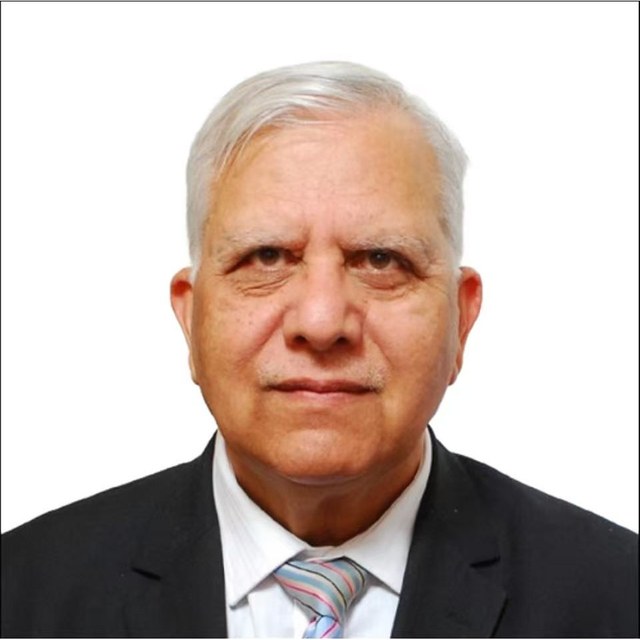
Zamir Ahmed Awan is the founder and Chair of the Global Silk Route Research Alliance, a think tank in Islamabad. He studied engineering at Shanghai University in the 1980s, and years later he went back to China as Pakistan's science counsellor in Beijing, from 2010 until 2016, working on science and higher education cooperation between the two countries.…