The Super Cool Tourism to Hainan Island, China
Wire desk byline Sourced from Xinhua, Dawn, Arab News, Anadolu and Minute Mirror. Translated and abridged by the GSRRA Desk.

“Everyone has the right to freedom of movement and residence within the borders of each State.” Observing from a broader perspective, “it is essential to promote the development of friendly relations between nations.” These principles stem from the solemn and broad Universal Declaration of Human Rights (UDHR), which was jointly followed by billions of people from various countries and ethnic groups since 1948[i]. An important and universal concrete behavior of following these principles was domestic and international travel, as joy is on every tourist’s face and happiness is rippling in a person’s heart. In today’s world, civilians of all countries fall over themselves to travel and learn new things during a period of their journeys, simultaneously stimulating global economic development.
ONE Hainan’s Tourist Boom in 2025
Hainan Island, a brilliant pearl of China’s territory, is located in the Western Pacific Ocean. This island is dotted with fine and soft golden sandy beaches, a vast stretch of green coconut trees, and clear blue bays. Since provincial administrations launched island-wide special customs operations(ISCO) in the Hainan Free Trade Port (FTP) on December 18, 2025, the island has welcomed batch after batch of domestic and foreign tourists more than ever before. This was a model of the recovery and growth of global tourism in 2025.
The first World Tourism Barometer announced by the World Tourism Organization (UN Tourism) on January 20, 2026 manifested: “An estimated 1.52 billion international tourists were recorded globally in 2025, up 4%, almost 60 million more than in 2024.” Tourism had a significant effect in boosting consumption. “The preliminary estimates pointed at USD 1.9 trillion in international tourism receipts globally, a 5% increase from 2024.” The tourism industry in the Asia-Pacific region has achieved remarkable developmental results. The total international tourists arriving in Asia and the Pacific “reached 331 million, up 6%[ii].”
At the same time, the tourist growth rate of Hainan Province, a tropical island in China, significantly outpaced the global average. According to the data of Hainan provincial departments such as tourism, culture, radio, and sports, etc., this island received 106 million domestic and overseas tourists in 2025, up 9.1 percent from 2024. Total tourist spending rose 10.5 percent year on year to 225.4 billion yuan (about $32.4 billion)[iii].” Overseas tourists lingered on the beautiful island, enjoying themselves so much as to forget to leave. Inbound visitors there increased sharply in 2025 since “Hainan’s recording approximately 1.5 million inbound travelers — a rise of 35.2 percent — and inbound overnight stays totaling 5.94 million nights, up 59 percent from the previous year[iv].”
Sanya is the southernmost city on the island. Thousands upon thousands of travelers from home and abroad arrive in this city in the coldest days of winter, freely walking under the early summer-like sunshine of the Northern Hemisphere. How pleasant the hot and spicy sunshine on the island is in the severe winter! Countless tourists freely play on the golden fine sandy beach of the Sanya Bay, dive under the blue wave, and rest under the green coconut tree, their faces cozily accepting the flick from the gentle marine breeze and their bodies and minds immersing into the beauty and mystery of the sea.
After leaving the bay beach, tourists like to visit a nearby ancient city named Yazhou, existing a long historical stage of over 2,000 years. This city was the ancient Chinese southernmost one built and administratively governed by the central royal court. Tourists can freely enter the three ancient, imposing urban gates and the street with seven unique tortuous corners and appreciate the rich and profound ancient Chinese architectural arts, definitely losing themselves in the ancient urban living scenes of multiple ethnic groups, such as the Han, Li, and Miao ethnic groups. Whereafter, visitors stand again beside the ruins of the ancient wharf in the seawall and review the ancestral and nautical commercial history[v]. The Chinese national ancestors piloted the ocean-going cargo ships with fully loaded silk and porcelain across the Indian Ocean to some countries of the Persian Gulf, and opened up a Maritime Silk Road connecting the East and the West to bring benefits to descendants and serve the global interests.
The charming seaside scenery, the centuries-old ancient Chinese architecture, and the colorful ethnic customs especially make overseas tourists fully enjoy themselves, appreciating extensive and profound Chinese culture and spending a great time. Data issued by Sanya Municipal Bureau of Tourism, Culture, Radio, Film and Sport revealed: “Sanya’s inbound overnight tourists reached1.0614 million in 2025, a year-on-year increase of 41.38 percent. The inbound overnight tourists spent $ 934 million, up 66.65 percent[vi].” The beneficial growth rate of tourism in Sanya City ranked first in Hainan Province. Sanya is a place that domestic and foreign tourist yearns for and deeply travel.
TWO The Trend of Smart Tourism
Looking back and gazing at history, human civilization has developed over thousands of years, from hunting in the wilderness to farming the wasteland, from industrial production to digital innovation. Every civilizational leap stems from humanity’s continuous exploration towards the unknown and subsequently intelligent creation. Nowadays, civilization is in an intelligent world that is changing quickly.
The Chinese civilization, with a history of over 5,000 years, has now entered a primary prosperous phase. China’s national population was 1,408.28 million in 2024 announced by the National Bureau of Statistics of PRC[vii]. Also, according to the data released by the Ministry of Culture and Tourism of PRC in 2025, the total number of China’s domestic residential travel reached 6.522 billion person-time, an increase of 907 million compared with the same phase of the previous year, representing a year-on-year growth of 16.2%[viii]. The average number of times every person travels across the country was about 4.5 times a year, according to an allowable statistical fundamental value. The getting-rich Chinese resident excitedly travels out to see the world and gain health.
The Chinese modern tourist market is a home, gathering countless innovations and touching stories. Data from a special survey conducted by the China Tourism Academy under the Ministry of Culture and Tourism of PRC in 2024 showed that countrywide 74.8% of tourists obtained travel information from online sight-seeing platform. Among them, tourists of 30.3% gained it from the official website or the social media official account of the recreational destination, and 17% from travelling agency. Many also got the information from playing blogger on social media[ix]. Obviously, the concept and action of smart tourism have become the main intellectual and behavioral methods for tourists.
Hainan Island boasts beautiful scenery, gaining a renowned reputation of famous scenic spot. How can we serve the booming smart tourism, both inner and outer in the modern era? Specifically, how can we better carry out the “artificial intelligence (AI) +” initiative to satisfy the tourist demands flocking to Hainan Island like a wave? This is a new issue facing the tourism industry in Hainan Province. AI is a benchmark of contemporary cutting-edge science and technology, and also profoundly changes the operational mode of various industries at an unprecedented speed. The “AI +” action means to integrate various digital technologies, real things, and cultural elements into one to form a new productive force and create fashionable products, ultimately, to satisfy social demand. The “AI +” method implemented by the people of Hainan Province in Sanya City in recent years has achieved some remarkable results in the Atlantis Resort, making it the most internationalized marine-themed comprehensive resort.
In this Atlantis Resort, the most famous attraction is an aquarium named “Lost Space”, possessing a total of 30 display pools with 17,500 tons of pure natural seawater, keeping 86,000 marine creatures of 280 species swimming freely. Local managers adopted a typical technology of visual management and control (VMC) to monitor the on-site situation at all times. VMC’s multiple typological sensors automatically and accurately captured data such as briny temperature and quality, piscine baits, and different marine biological changes, etc., and reproduced the real scene on the liquid crystal display (LCD) screen elsewhere. The managers directly observed the fish schools’ activities in the control room far from the site, then operated equipment to adjust the temperature or change the seawater, etc. accordance with the plan, and to handle emergencies on time. “AI +” initiative guards the aquarium better. Look, the Beluga whale in the artificial ocean whistles to tourists, the Manta rostris greets travelers, and the Sphyrnidae is so cute. “Mom, a shark goes to me. Big teethes, Ah! Ah!” A boy entering the aquarium shouted. All the children were amazed there and forgot to go back.
After leaving the aquarium, visitors entered the C Show and were greeted by a central watery stage with a capacity of up to 7,000 cubic meters, equivalent to the capacity of four Olympic-standard swimming pools. A giant 40-meter curved light-emitting diode(LED) screen showed a clear and stunning picture. This was a semi-open theater holding a big watery stage including the landscapes of land, water, and air according to the support of three-dimensional technology (3D), namely a colorful and dreamy world[x]:
Swimming in the vast blue sea and the golden and magnificent Dragon Palace, among a bright-coloured group of leaping big fish, a team of fairies with white clothes gracefully danced, and a mighty general of crab with a spear leading some shrimp soldiers strongly fought against the fierce eight-clawed octopus……With splendid performances including dance, water ballet and aerial art et al. appearing, the audiences, without helmet-mounted equipment, immersed in a fantastic world, built by the technologies of naked-eye virtual reality (VR) and augmented reality(AR,) and some real animated actors at the same time and place. It is both real and illusory, wondrous and indescribable. “AI +” action integrates multiple scientific devices and colourful mythical performing arts into one to provide exquisite and cheerful services for mass tourism.
The professional team learned about direct and indirect projects at home and abroad in multiple aspects during a constructive period of the Atlantis digitalization project. The team’s entrepreneurs drew on the digital constructive achievement of the Library of Nanjing City, China, which had established the exchanges of the “AI+” method with some universities in Europe. For example, Limassol City, the second largest city in Cyprus, established friendly relations with Nanjing City, China, in 1992. Some scholars named Serghides, Christoforides, and Iakovides et al., engaging in the scientific research of computer at the University of Cyprus, summarized the digitized constructive experiences of the Library of Limassol University, and some of those leading contents and related others were conveyed to the Library of Nanjing City by cultural exchange. Unrestricted scientific exchanges benefit all mankind. The scholars pointed out digital scenes in many public places need to achieve some goals including, “visitor’s immersiveness, realism, interactivity and feedback as well as other features, such as animated non-player characters (NPCs), three dimensional (3D) audio, ray-casting and Graphical User Interfaces (GUIs), that significantly augment the overall virtual reality (VR)library user experience, presence as well as navigation autonomy[xi].” Here, NPC refers to ordinary people, and GUI refers to the widespread computer screen images.
Many facts have proven that the “AI+” initiative can accomplish these tasks. In other words, everyone can learn and master AI devices. In summary, “AI +” action attracts a person’s yearning, up person happy. Digital technology has created new economies and cultures, ushering in a new era.
THREE Education in Tourism
Dong Qichang (1555-1636), a minister of education and foreign affairs of the Ming Dynasty in ancient China and also a renowned painter, once formulated a very useful sentence of “read ten thousand books and travel ten thousand miles[xii].” In the Chinese language, his words have become an idiom, namely, an eternal and progressive cultural symbol. Only in this way can young people learn diversified knowledge, become talented through communication and training, have a broad mind for the world, and take on the professional and crucial responsibility for the public well-being.
Tourist flappy happy laughing in the Sanya Bay floated into auricles of residents across the country, especially stirring up the resonance of the students of Tianshui Normal University (TNU) in Gansu Province. TNU is located in a surrounding of Qinling Mountains, a group of important, tall, continuous ones. The obstruction of the high mountains makes students eagerly rush towards the blue sea at any time. Near TNU, the famous Tianshui Maijishan Grottoes stood, one of the world’s cultural heritages announced by the United Nations Educational, Scientific and Cultural Organization (UNESCO) in 2014, attracting a large number of domestic and foreign tourists every day. Some students from the College of Foreign Languages of TNU worked as tour guides at the Grottoes for business training because one of their professors, named Hu Dingyi, talked about the Grottoes’ history in class many years ago[xiii]. Naturally, the tourist topic was very popular on the campus.
Ma Ping is a student of the Grade 2024 majoring in English at the College of Foreign Languages, TNU, and is a commissary in charge of living in Class 4. She said: “Tianshui City, my university here, was a key node on the ancient Silk Road, assisting the Tianshui Maijishan Grottoes to thrive for a long time.” Indeed, in ancient society, merchants, monks, artisans, and others traveled along this Silk Road westward to the Western Regions, such as Persia (today’s Iran), and eastward into the Central Plains, such as Chang’an of the Tang dynasty (today’s Xi’an City, Shaanxi Province). They exchanged amicably with each other like an endless stream. Tourism is a form of education, helping people become intelligent.
Ma Ping, feeling about herself under intense academic pressure, has no time to visit Sanya Bay, but enjoys the eye-opening coastal fervent tourism. She watched the International Dragon and Lion Dance Elite Competition· Sanya Cup 2026 held on 18-19 January 2026 on the Internet. Twenty-four delegations from home and abroad, such as China, Italy, and Malaysia. participated in this competition.
The Chinese national representative dragon and lion dance competition performed with powerful and exquisite postures, one after another, showing the perfect unity of coordination, strength, and technical skill. Facing the Sanya Bay’s blue wave rippling, on the beach, the Chinese traditional martial arts manifested majestic vigour and beautiful gesture, sowing joy, happiness and confidence. Ma Ping specifically quoted the words of a 25-year-old participating athlete from Italy: “While learning the martial routines, I understand ‘wǔ dé’(Chinese Hanyu Pinyin, meaning martial virtue) is more important[xiv].” Ma Ping stated with great pride that Chinese martial arts were not merely a typological sport but also a cultural heritage with profound connotations.
Ma Ping served as a commissary in charge of living in her Class 4 and thus developed some private habits, paying more attention to things related to life. So, she was very interested in the marine biological living habits in the “Lost Space” aquarium there, and read some related materials. The aquarium is a cool sportful venue, meanwhile, a scientific, popular educational base in marine creatures. Tourists can learn about marine creatures and environmental change to enhance environmental protection awareness through digital technology and physical objects. For instance, tourists can study that the gender of green marine turtles is determined by the sand temperature during the hatching days. When the temperature is high, the green turtles hatched are mostly female, while at a lower temperature, male mostly[xv]. “How magical it is!” Ma Ping said.
The monitor of Class 4 is also named Ma Ping. What a delightful coincidence! To distinguish her from the other female author of the same name in this article, a temporary symbol (1) is specially added after her name here, while (2) provisionally is also added for the other, namely
that commissary in charge of living. The two classmates of Ma Ping (1) and Ma Ping (2) here exchanged a topic: Tourism education is highly valued in the international community. For example, the UN Tourism held a high-level training class in Bandar Seri Begawan, the capital of Brunei, from November 18th to 20th, 2025, training over 100 persons from 11 UN Tourism Member States in digital technologies, including the tourism satellite account (TSA) and the system of environmental-economic accounting (SEEA), etc[xvi]. By analyzing the environmental changes, tourists’ interests, and the associated changes in economic benefit in virtual image, relevant regulators can improve their skills to deal with some difficult problems in the tourism industry. Undoubtedly, smart tourism and its education supported by digital technology represent a major trend. The Sanya Bay, rising and falling tide, is like a molded image of the Chinese majestic marine Dragon King with a bending body, namely, after fiercely dancing and roaring in the sky and then falling into a deep sleep. This deity warmly welcomes tourists from all directions, even in his dreams.
Authors:
Minzu University of China Wang Tianjin
Tianshui Normal University Ma Ping(1),Ma Ping(2)
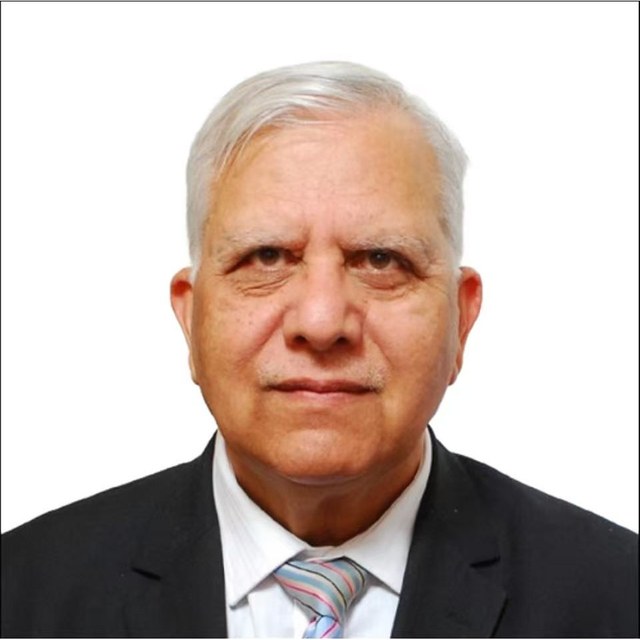
Zamir Ahmed Awan is the founder and Chair of the Global Silk Route Research Alliance, a think tank in Islamabad. He studied engineering at Shanghai University in the 1980s, and years later he went back to China as Pakistan's science counsellor in Beijing, from 2010 until 2016, working on science and higher education cooperation between the two countries.…