China invited to Pakistan Minerals Investment Forum

The federal government said that Pakistan has the potential for USD 6 to USD 8 billion in mineral exports annually and invited Chinese companies to participate in the Pakistan Minerals Investment Forum (PMIF) 2026, to be held on April 8 and 9, to strengthen economic and investment cooperation between Pakistan and China under CPEC.
“Pakistan’s mineral exports have the potential to reach USD 6 to USD 8 billion annually within this decade through value addition. We extend a formal invitation to all the Chinese companies and delegates present here to participate in the PMIF-2026 scheduled to be held in April.
Pakistan is richly endowed with mineral resources, including copper, gold, coal, zinc, lead, gemstone rare earth elements, and other strategic minerals.
READ MORE: Meeting reviews PMIF 2026 preparations
The government is taking concrete initiatives to enhance mineral exploration, promote value addition, and ensure maximum economic benefit through sustainable and responsible development of the mineral sector,” Minister for Planning, Minister for Petroleum Ali Pervaiz Malik and Minister for Board of Investment (BOI) Qaiser Ahmed Sheikh expressed these views while addressing separately to Pak–China Mineral Cooperation Forum in Islamabad on Wednesday.
The forum was attended by Ambassador of the People’s Republic of China to Pakistan Jiang Zaidong, senior government officials, representatives of Chinese and Pakistani companies, investors, and key stakeholders from the mineral and industrial sectors.
Speaking at the launch ceremony of the China-Pakistan Mineral Cooperation Forum, Federal Minister for Planning, Development and Special Initiatives Ahsan Iqbal said “Pakistan and China are entering a new and important phase of their economic partnership by making mineral development a key focus of CPEC Phase-2, which aims to turn connectivity into productivity, exports, and long-term economic growth.”
He said both countries are reshaping their strategic partnership around mineral-based industrial development, with Gwadar set to play a central role as the main gateway linking Pakistan’s mineral-rich areas to regional and international markets.
The minister said the China-built international airport in Gwadar has put the port city in a strong position to support Pakistan’s next phase of growth. He added that “Gwadar is now ready to operate not only as a modern port city but also as a centre for the mining industry by connecting Pakistan’s mineral resources with global markets.”
Highlighting Pakistan’s unused mineral potential, Ahsan Iqbal said the country has about 92 known minerals, of which 52 are currently being mined, with nearly 5,000 active mines and yearly production of around 68.5 million metric tons. Despite this, he noted that mineral exports remain low, contributing only 2 to 3 percent to the country’s GDP.
“This gap between potential and performance is largely due to lack of value addition,” he said, adding that over 90 percent of mineral exports were raw or semi-processed, while only about 40 percent of Pakistan’s land had been geologically mapped.
Citing marble and granite reserves stretching from Turbat to Chitral, the minister said, “There is a huge opportunity for Chinese enterprises to invest in modern cutting and processing technologies so Pakistan can become a global hub for world-class marble and earn billions of dollars from this sector alone.”
He said with improved governance, technology and strategic partnerships, Pakistan’s mineral exports could rise to USD 6–8 billion annually within this decade, support GDP growth of around six percent and generate more than 350,000 direct and indirect jobs.
He said, “China plays a key role in this transformation because of its experience in the entire mining process, including geological surveys, modern mining, processing, smelting, refining, environmental protection, and project financing.” He added that existing projects such as Saindak Copper-Gold, Duddar Lead-Zinc, and Thar Coal show the strong potential of cooperation between the two countries.
The minister said, “Pakistan is now moving beyond simple mining by setting up mineral processing plants, smelters, refineries, and mineral-based industries connected to special economic zones and transport corridors.”
He identified the Naukundi–Mashkhel–Turbat–Gwadar corridor as a potential flagship project to directly connect Balochistan’s mineral belt with Gwadar Port.
Ahsan Iqbal said the government had strengthened institutional coordination through the Special Investment Facilitation Council to ensure fast-track approvals, policy consistency and robust security arrangements, reaffirming that the safety and security of Chinese nationals and investments remained a top national priority.
Inviting Chinese enterprises to take a leading role in developing copper, gold, rare earths and other critical minerals vital for clean energy and advanced manufacturing, the minister said, “With China as our trusted partner, Pakistan is determined to convert its mineral wealth into industrial strength, export competitiveness and shared prosperity.”
Addressing the ceremony, Federal Minister for Petroleum Ali Pervaiz Malik invited Chinese companies to take part in the PMIF 2026, scheduled for April 8 and 9 this year.
He said Chinese participation would be especially welcome through a country pavilion displaying mining skills, technologies, and equipment. He added that the forum would provide a focused platform for direct engagement with policymakers, regulators, and project sponsors.
The minister said that under the China-Pakistan Economic Corridor (CPEC), Chinese investment has played a key role in quickly expanding Pakistan’s power generation capacity through various energy projects, helping to overcome a long-standing barrier to economic growth.
He noted that China was among the first countries to recognise the strategic importance of the mining sector and now holds a strong position in rare earth elements and key metals such as antimony, while also leading globally in copper smelting and refining.
The minister said rising confidence among local investors shows a stable and sustainable business environment, adding that more Pakistani companies are entering the mining sector and forming partnerships with international firms.
With global demand increasing for copper and other critical minerals needed for the energy transition, he said Pakistan, with China’s support, is positioning itself as a dependable long-term partner in the global mineral supply chain.
Federal Minister for the Board of Investment (BOI) Qaiser Ahmed Sheikh said the Forum was a significant initiative aimed at further strengthening economic and investment cooperation between Pakistan and China.
He said that more than 300 Pakistani companies visited China in September 2025, resulting in the signing of 167 Memorandums of Understanding (MoUs) during the Pak-China Business-to-Business Conference. He informed that the BOI is actively pursuing the implementation of all signed MoUs to translate commitments into tangible investment outcomes.
Highlighting Pakistan’s vast untapped potential, the Minister said, “Pakistan is richly endowed with mineral resources, including copper, gold, coal, rare earth elements, and other strategic minerals.” He emphasised that the government is taking concrete initiatives to enhance mineral exploration, promote value addition, and ensure maximum economic benefit through sustainable and responsible development of the mineral sector.
The minister reiterated that the BOI is providing maximum facilitation to investors by improving the Ease of Doing Business, offering incentives through Special Economic Zones (SEZs), and streamlining approval processes.
He added that regulatory reforms are underway to further improve the investment climate and create a more conducive environment for foreign investors in Pakistan.
Delivering the keynote address, Ambassador Jiang Zaidong reaffirmed China’s strong interest in investing in Pakistan’s mining sector and in supporting skills development and the use of modern technology. He stressed that steady cooperation and innovation are important to move the sector forward, while responsible mining can improve the use of resources and build positive relations with local communities.
He noted that the Saindak project alone has trained more than 5,200 local workers and repeated China’s commitment to increasing local participation and providing organized support to companies operating in Pakistan. He also highlighted China’s focus on developing “small and beautiful projects,” including initiatives in infrastructure, education, and healthcare, as part of wider development cooperation.
Wang Jicheng, Chairman of MCC (Metallurgical Corporation of China) shared insights from Chinese mining operations in Pakistan, highlighting the role of technology transfer, workforce training, and adherence to best practices. He reaffirmed MCC’s long-term commitment to Pakistan’s mineral sector and its focus on expanding cooperation in exploration, mining, and downstream development while contributing to local employment and skills enhancement.
Reference Link:- https://www.brecorder.com/news/40404645
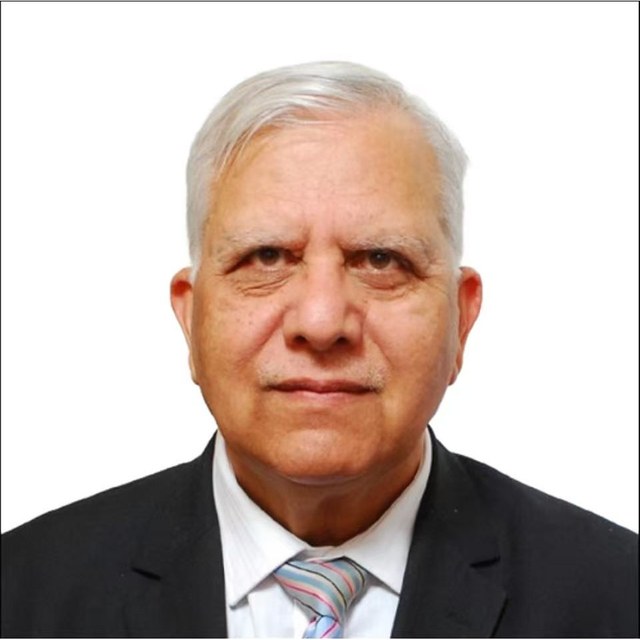
Zamir Ahmed Awan is the founder and Chair of the Global Silk Route Research Alliance, a think tank in Islamabad. He studied engineering at Shanghai University in the 1980s, and years later he went back to China as Pakistan's science counsellor in Beijing, from 2010 until 2016, working on science and higher education cooperation between the two countries.…