Wire desk byline Sourced from Xinhua, Dawn, Arab News, Anadolu and Minute Mirror. Translated and abridged by the GSRRA Desk.
Views:551
Rather than confining itself to routine multilateral work, Islamabad’s mission in New York was repeatedly called upon to translate principle into pressure and moral clarity into policy engagement.
In 2025, Pakistan re‑entered the United Nations Security Council (UNSC) for the eighth time, marking the beginning of a two‑year term that would challenge the very essence of multilateral diplomacy.
Wars raged, humanitarian norms eroded, and the Council — designed to prevent precisely such breakdowns — struggled repeatedly to act. For Islamabad, the first year became as much a test of resolve and principle as a diplomatic assignment.
From the humanitarian catastrophe in Gaza and the widening confrontation between Israel and Iran to renewed tensions in South Asia, the Council’s agenda in 2025 was dominated by crises that called into question the very purpose of international collective action.
For Pakistan, this was no ordinary diplomatic season.
Rather than confining itself to routine multilateral work, Islamabad’s mission in New York was repeatedly called upon to translate principle into pressure and moral clarity into policy engagement.
At every turn, Pakistan advanced a simple but compelling argument: that the Council’s credibility must be measured not by statements of concern, but by concrete action in defence of civilians and international law.
Backdoor diplomacy and strategic briefings
Behind the scenes, Pakistan engaged in intense backchannel diplomacy. Its mission conducted briefings for Security Council ambassadors on the India‑Pakistan conflict, separate consultations with the Organisation of Islamic Cooperation (OIC) and the Arab Group, and robust advocacy for the Indus Waters Treaty. These efforts helped ensure that Pakistan’s concerns were understood beyond the formal floor of the Council and cultivated wider support for its positions.
South Asia’s firestorm: India‑Pakistan war and the nuclear shadow
In May, South Asia itself became a focal point of global concern when a sudden escalation between India and Pakistan brought the region perilously close to a wider conflict. During the confrontation, Pakistan formally requested closed consultations of the UN Security Council to brief members on the deteriorating situation and rising tensions across the Line of Control. It apprised the world body of what it described as aggressive actions by New Delhi and steps that, it warned, risked regional and international peace and security.
In rare closed-door consultations on May 5, the Council discussed the situation, with diplomats stressing restraint and dialogue amid the region’s volatile security environment.
Pakistan’s Permanent Representative Ambassador Asim Iftikhar Ahmad said Pakistan does not seek confrontation but reiterated that it is “fully prepared to defend our sovereignty and territorial integrity.”
He stressed Pakistan’s commitment to peaceful, cooperative relations with all neighbours, including India, and openness to dialogue based on mutual respect and sovereign equality. On the occupied Kashmir dispute, Ambassador Asim told reporters that this unresolved matter — which has simmered for more than seven decades — remains the “core issue” between Pakistan and India and must be resolved in line with the aspirations of the Kashmiri people if durable peace is to be achieved in South Asia.
The closed consultations — the first of their kind on this issue in 2025 — drew urgent appeals from the United Nations itself. UN Secretary‑General António Guterres said relations between the two nuclear-armed neighbours were at “their highest in years,” and called for “maximum restraint” and a de‑escalation of tensions.
Pakistan’s move to bring the crisis before the Council underscored Islamabad’s conviction that global attention was necessary to avert the risk of unchecked escalation, especially given the density of South Asia’s population and the catastrophic consequences that conflict could entail.
On the ground, the crisis was eventually defused after intense diplomatic engagements.
US President Donald Trump later asserted that Washington’s intervention had helped prevent a potential nuclear conflict, saying: “We stopped a nuclear conflict… millions of people could have been killed.” Trump also highlighted the role of economic and trade leverage in securing de‑escalation. His remarks were made outside the UN context but were appreciated by Pakistan both in and outside the world body.
Gaza and the Council’s credibility
Even as South Asia commanded attention, Israel’s genocidal war on Gaza and the ensuing humanitarian devastation in the besieged enclave became the defining challenge for the Security Council in 2025. Pakistan’s voice emerged as one of the most persistent calls for urgency and action.
At a high-level Council briefing on the Middle East, Ambassador Ahmad delivered remarks that echoed well beyond the chamber: “Words of concern are no longer enough. The time to act, the time to prevent genocide, is now.”Pakistan’s Permanent Representative to the UN, Asim Iftikhar Ahmed, addresses the UN General Assembly. — Photo via X/@PakistanUN_NY
That statement set the tone for Pakistan’s engagement throughout the year: unapologetically firm in moral terms, yet grounded in the language of international law. In subsequent interventions, Ambassador Asim pressed the Council to reconcile the scale of civilian suffering in Gaza with its own mandate under the UN Charter.
“How many more lives must be lost before this Council does what is morally, legally and charter‑bound to do?” he challenged, warning that failure to act risked normalising impunity.
Pakistan’s position remained consistent: an immediate ceasefire, unimpeded humanitarian access, and accountability for violations of international humanitarian law were not only urgent imperatives, but essential to the Council’s raison d’être. Islamabad also focused on finding a political horizon for the Palestine issue, underscoring its commitment to multilateralism and the UN Charter.
PM at the UN: taking the case to the world
With repeated deadlock in the Security Council, Pakistan extended its advocacy to the broader UN membership. In September, at the 80th session of the UN General Assembly, Prime Minister Shehbaz Sharif delivered a speech that placed Pakistan’s diplomatic messaging on the global record.
Prime Minister Shehbaz Sharif addresses the United Nations General Assembly on Friday. — Reuters
In robust and unambiguous terms, the prime minister condemned the Gaza campaign, describing it as a “genocidal onslaught” and warning the international community that it was witnessing “one of the darkest chapters in recent history.” He appealed for an immediate ceasefire and a credible political process.
On South Asia, PM Shahbaz referenced the May conflict more directly, situating Pakistan’s diplomatic posture within a broader quest for peace: “We have won the war, and now we seek to win peace.”
Even amid constant emergencies, Pakistan worked to reinforce diplomacy as more than a set of slogans. During its rotating presidency of the Security Council in July, Islamabad steered the discussion toward peaceful dispute settlement and multilateral cooperation. The month culminated in a unanimously adopted Pakistan-sponsored resolution reaffirming dialogue, mediation, and judicial mechanisms as core tools for resolving disputes. This represented a major diplomatic win for Pakistan — especially on issues relating to occupied Kashmir — at a time when the Council has been fractured.
Although largely normative in character, the resolution reflected Pakistan’s belief that diplomacy must be defended institutionally — especially at a moment when the resort to force risked becoming the default option.
Across the year, Islamabad consistently emerged as a strong advocate of the UN Charter, highlighting the relevance of its purposes and principles and upholding multilateralism.
A year that defined the test
As 2025 drew to a close, Pakistan’s first year on the Security Council emerged as a test of the potentials and limitations of principled diplomacy. Faced with crises that tested the Council’s very purpose, Islamabad insisted on anchoring debate in legal norms, humanitarian concern, and the universal principles of the UN Charter.
In a Council too often paralysed by power politics, Pakistan demanded a clear and consistent stance from the international community, calling for the protection of civilians, respect for law, and the disciplined practice of diplomacy even when outcomes remain uncertain.
Looking ahead
As Pakistan enters the second year of its Security Council term, it carries forward not merely a record of speeches, but a narrative of engagement — one that challenges the Council to rise above paralysis and live up to its founding promise. Whether the diplomatic tests of 2025 yield more decisive outcomes in 2026 remains a question not only for Islamabad’s advocates but for the future of the multilateral system itself.
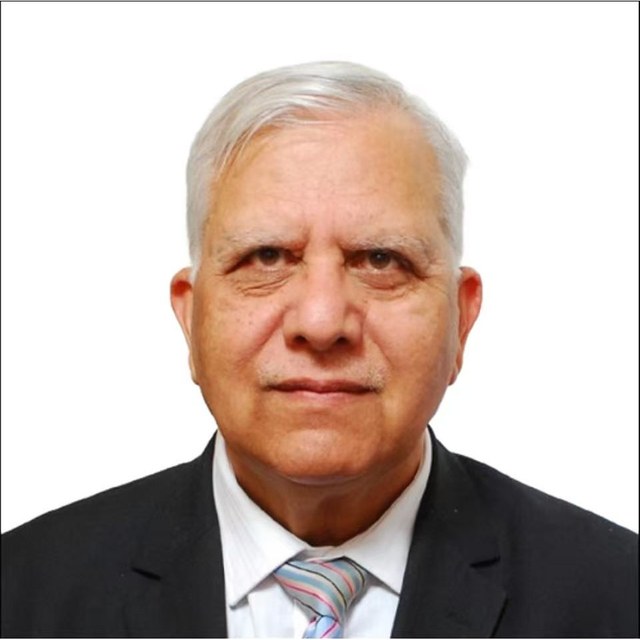
Prof. Engr. Zamir Ahmed Awan Founder & Chair, Global Silk Route Research Alliance
Zamir Ahmed Awan is the founder and Chair of the Global Silk Route Research Alliance,
a think tank in Islamabad. He studied engineering at Shanghai University in the 1980s, and years later he went
back to China as Pakistan's science counsellor in Beijing, from 2010 until 2016,
working on science and higher education cooperation between the two countries.…