Pakistan sets 60% renewable energy goal for 2030, NA told

- Share of on-grid renewable capacity currently stands at 37 percent, says energy minister
The National Assembly was informed on Friday that the country is making significant strides towards a greener future, with the government setting ambitious targets to increase the share of renewable energy in the national grid to 40 percent by 2025 and 60 percent by 2030.

In a written response to questions posed by lawmakers, Awais Leghari, the Minister for Energy (Power Division), said the country has already surpassed its 2025 target, with renewable energy accounting for more than 46 percent of Pakistan’s power generation mix as of September 2025.
He noted that the share of on-grid renewable capacity currently stands at 37 percent, but this figure is expected to rise significantly as both private and public sector projects continue to come online.
PM Shehbaz pledges 62% renewables in energy mix by 2035 at UN climate summit
Leghari highlighted that 60 private sector renewable energy projects, developed under the Private Power and Infrastructure Board (PPIB), are currently operational, contributing a total of 4,753 megawatts (MW) to the national grid.
These projects include 680 MW of solar power, 1,937 MW of run-of-river hydropower, 1,845 MW of wind energy, and 291 MW of bagasse cogeneration.
Additionally, public sector projects like the 9,619 MW hydropower plants and 100 MW solar energy capacity at Karachi’s K-Electric are helping to further increase the renewable energy share.
“Pakistan’s clean energy share has exceeded 46 percent, surpassing our 2025 renewable energy target years ahead of schedule,” he said, emphasising the importance of the government’s renewable energy policies in securing the nation’s long-term energy needs.
In a move to further promote clean energy, he said that the government is encouraging solar energy adoption at the consumer level across residential, commercial, and industrial sectors.

He said that net-metering regulations, which allow individuals to generate and share solar or wind power with the grid, are seen as a key strategy to expand renewable energy use across the country.
Leghari also pointed out that the government is working to streamline the power sector, citing a reduction of Rs780 billion in circular debt over the past year.
He noted that circular debt, a persistent issue in the energy sector, stood at Rs2,393 billion as of 30 June 2024, but had dropped to Rs1,614 billion by 30 June 2025.
He attributed this decline to a combination of efforts, including negotiations with power producers to reduce late payment interest charges and improvements in the efficiency of distribution companies (DISCOs).
“Our goal is not just to enhance renewable energy capacity, but also to ensure a sustainable and efficient energy system for the country,” he added.
In a separate matter, Pakistan Post has come under scrutiny after Russia suspended all international mail services with Pakistan due to unpaid dues totalling Rs55 million. The suspension, officially notified by Russian Post in August 2025, has disrupted postal exchanges between the two countries.
Federal Minister for Communication, Aleem Khan, informed the House that the financial strain faced by Pakistan Post had extended beyond Russia, with international liabilities exceeding Rs310 million as of November 2021.
He said the department is working to clear the dues and hopes to resolve the issue once the necessary funds are released by the Finance Division.
“This suspension has caused significant inconvenience for individuals, businesses, and academic institutions relying on international mail services. Our priority is to restore postal services with Russia as quickly as possible,” he added.
Reference Link:- https://www.brecorder.com/news/40396061
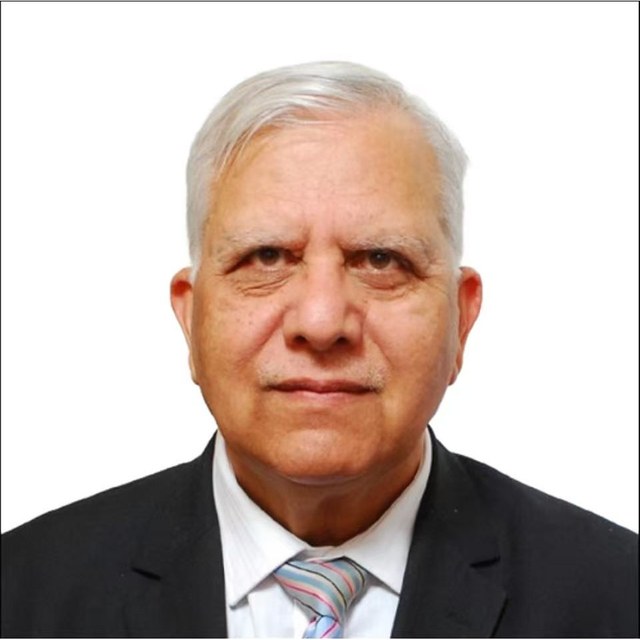
Zamir Ahmed Awan is the founder and Chair of the Global Silk Route Research Alliance, a think tank in Islamabad. He studied engineering at Shanghai University in the 1980s, and years later he went back to China as Pakistan's science counsellor in Beijing, from 2010 until 2016, working on science and higher education cooperation between the two countries.…