Pakistan’s Commerce Ministry finalises 5-year textile and apparel policy for ECC review
Wire desk byline Sourced from Xinhua, Dawn, Arab News, Anadolu and Minute Mirror. Translated and abridged by the GSRRA Desk.

The Ministry of Commerce has reportedly finalised a draft of the five-year (2025-30) Textile and Apparel Policy for submission to the Economic Coordination Committee (ECC) of the Cabinet, sources told Business Recorder.
However, the ministry has decided to discuss the final draft with other concerned ministries at an inter-ministerial meeting so that their concerns and suggestions are also made a part of the summary, the sources added.
The Commerce Ministry’s policy is aimed at achieving an export target of up to USD 29.381 billion aligned with export targets proposed by the National Export Development Board (NEDB), envisaged under the Uraan Pakistan and promoting “Made in Pakistan” initiatives.
MoC prepares draft textile, apparel policy
Under the draft five-year Textile and Apparel Policy, the proposed export target for the Fiscal Year (FY) 2025-26 will be USD 19.370 billion, for FY 2026-27, USD 21.420 billion, for FY 2027-28,USD 23.740 billion, for FY 2028-29, USD 26.710 billion, and for FY 2029-30, USD 29.381 billion.
However, the textile sector’s stakeholders are of the view that the designed draft policy could not achieve the desired results until recommendations of the industry are given proper weightage in the final policy documents.
“Since the country is in the IMF programme, understandings with the industry will not be honoured, which implies that the Textile and Apparel Policy will just remain a document,” said one of the stakeholders.
According to the Commerce Ministry, strategic objectives of the Policy which also include made-ups/home textiles, intermediates and raw materials is to provide conducive business environment and boost textiles and apparel exports to USD 29.381 billion by FY 2029-30; enhance exports of value-added textile products, while maximising the utilisation of locally produced raw materials and intermediates, attract export-led investment with the focus on high-value, high-tech and environmentally friendly projects, and enhancing productivity and economies of scale; promote sustainable manufacturing practices, focusing on resource efficiency, industrial de-carbonization, circular economy and social responsibility, and improve the quality of human resource, with a focus on training and capacity building.
The proposed strategic interventions are as follows: (a) SBP and EXIM Bank, in coordination with the MoC and the Ministry of Industries and Production (MoI&P), shall (i) redesign Export Finance Scheme (EFS) for better targeting and utilisation while allowing back-to-back Letter of Credits (LCs) against master LCs with mandatory value-addition to promote export diversification, (ii) enhance credit limits with priority to value-added sectors and MSME, and (iii) reduce mark-up; (b) EXIM Bank, in coordination with the SBP, shall announce targeted financing schemes at low mark-up, with priority to MSME for investments in (i) value-added products (like apparel, technical textiles, smart, high performance and human-made materials, etc.) for enhancing economies of scales, (ii) ancillary industry such as machinery, spare parts, dyes and chemicals, accessories/trims, etc, and (iii) intelligent, green and technological transformations; (c) EXIM Bank, in coordination with the SBP, shall scale-up Credit Risk Insurance Scheme on favourable terms and conditions for exporters to cover “Commercial Risks” (i) in case if buyer goes bankrupt or insolvent, defaults on payment, or refuses to take delivery of goods, or (ii) if the issuing bank goes bankrupt, closes down or in respect to receivership, or defaults in spite of consistency of trading documents and consistency between LCs and trading documents or dishonours under usance LC, or on account of “Political Risks,” (iii) if the country or region of the buyer or issuing bank prohibits or restricts the buyer or issuing bank from paying for goods or making LCs payment to the insured, (iv) an import ban is imposed on the goods purchased by the buyer or the import permit issued to the buyer is revoked, (v) any war, civil war or riot makes the buyer unable to perform contract or the issuing bank is unable to discharge its payment obligation under LC, or (vi) a moratorium is issued by third country through which the payment by the buyer or issuing bank has to be routed; (d) SBP and the EXIM Bank shall re-launch Financing Scheme for Renewable Energy with a priority to the MSME to reduce carbon footprints and minimize import of fossil fuels; and (e) EXIM Bank, in coordination with the SBP, shall incentivize establishment of warehouses abroad for E-Commerce entrants. The SBP shall review the policy to increase the export realisation period (from 120 days to 180 days) and the procedures for imposing penalties for delayed realisation. The SBP shall revise the definition of the MSME and link it with the dollar-rupee parity.
Access to Reliable and Competitive Energy: Power Division shall (i) supply electricity to direct and indirect exporters on regionally competitive tariff, exclusive of cross subsidies, Transmission and Distribution (T&D) losses, and inefficiencies of other consumers, (ii) diversify energy mix with a balanced blend of renewables and the other conventional resources, modernise infrastructure to reduce transmission and distribution losses and the other inefficiencies to make grid electricity affordable and reliable, (iii) ensure uninterrupted power supply to export sectors, (iv) operationalize Competitive Trading Bilateral Contracts Market (CTBCM) with rational “Use of System” charges (excluding cross subsidies and other costs (v) announce incremental electricity consumption package, and (vi) review limit of surplus unit exports to Wapda under Solar Net-metering Policy.
Reference Link:- https://english.news.cn/20251116/f99c0fa99b844c05acaa25e8a27c0384/c.html
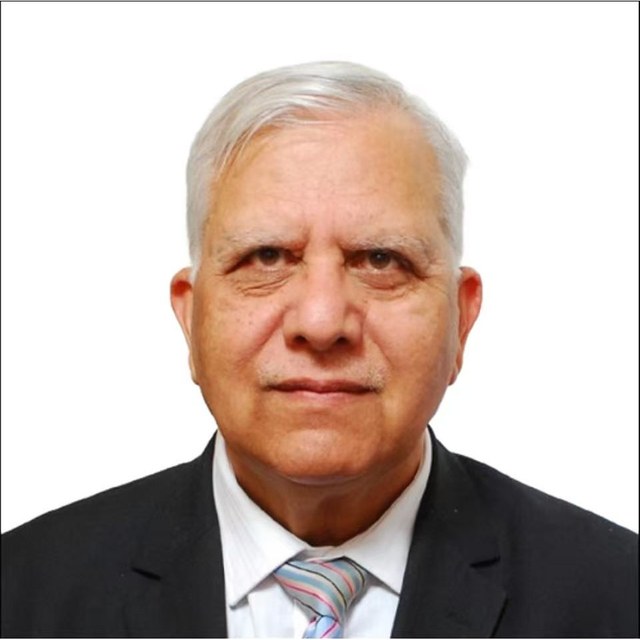
Zamir Ahmed Awan is the founder and Chair of the Global Silk Route Research Alliance, a think tank in Islamabad. He studied engineering at Shanghai University in the 1980s, and years later he went back to China as Pakistan's science counsellor in Beijing, from 2010 until 2016, working on science and higher education cooperation between the two countries.…