Cultivate Talents for the New Five-Year Plan – A Preliminary Exploration of Educational Reform at Tianshui Normal University in China

Author: Wang Tianjin
Minzu University of China
Beijing
China’s economic construction has achieved considerable results. The new national five-year outline (2026-2050) also unfolds an inspiring blueprint, including artificial intelligence, high-speed trains, and spaceships etc., by designing to establish more high-quality universities and cultivate a large number of young talents. Tianshui Normal University in Gansu Province, as a characteristic case in reform and progress among Chinese universities, all the teachers and students actively devote own wisdom and strength to the country’s economic and cultural development by actively learning advanced scientific and technological knowledge and inheriting and carrying forward excellent traditional culture.
1. Strive to Achieve the Youthful Dreams
I had studied at this home university during the period 1978-1980. I returned to my Alma Mater due to a lecture recently. There are 11,000 energetic young people from all over the country gathering in Tianshui Normal University (TNU) now. Walking around campus, I observed a thriving scene. Three students are discussing the Chinese Tang Dynasty’s poetry while walking side by side. Two teams are playing basketball on the sports field, rising “ Come on! Quick!” from the outside. A student from the College of Foreign Languages is singing an English song softly under a tree:
“I will run, I will climb, I will soar.
The past is everything; we weren’t made to make us who we are.
So I’ll dream until I make it real, and all I see is stars.
When your dreams come alive, you’re unstoppable.”
How soared up the youthful vigor! This was an official advertising music to Huawei mobile phones titled Dream It Possible, released by Huawei Technologies Co. Ltd. in China some years ago for international marketing. The Huawei company is a hero enterprise in China, even in the world. The song inspires everyone to strive to achieve their dream in life. Further speaking, from those campus scenes brimming with learning and joy, people can perceive four qualities demonstrated by the students: autonomy, creativity, care, and harmony. Why? Let me try to generalize these situations because our young people show their “thinking spirit” much more.
World-famous German thinker and educator Friedrich Engels (1820-1895) said in Dialectics of Nature · Introduction, written between 1873 and 1882, that the most beautiful flower on the earth, the thinking spirit. For Chinese students, how profound and broad a “thinking spirit” you understand, how magnificent and imposing the careers you pursue. Some people may say the spirit is blank. But countless histories tell us that the spirit is not empty. The human mind’s power is infinite. “Thinking spirit” comes from matter and drives matter forward. This process runs one time, another time, again and again, and repeats many times. Against this background, this thinking spirit is tested in practice. In other words, the thinking spirit indicates truth.
In modern Chinese society, the ideas of Engels are generally recognized by the public. So, regarding the entire process and outcome of the “thinking spirit”, there is a completely Chinese-style expression: “Chinese people often say a sentence such as ‘Practice is the sole criterion for testing truth’.” This was a concise exposition made by Deng Xiaoping, the chief architect of China’s reform and opening up, who holds a great reputation in the world. Since 1978, this statement has been taken as a beacon guiding us to emancipate our minds, to seek truth from facts, and to carry out reform and opening up, promoting the sons and daughters of all ethnic groups to join hands to build an economically prosperous country. For example, China’s gross domestic product was approximately 18.9 trillion US dollars by converted at the average annual exchange rate in 2024, accounting for around 17% of the world’s total economic output. Its average annual contribution rate to global economic growth remained at around 30%.
Spiritual consciousness is like a tree; deep roots produce lush leaves. The most robust cultural root is none other than Confucianism. Confucius, a Chinese ancient sage, considered that the people’s prosperity derived from benevolence. He formulated that benevolence contained five moral elements, including reverence, magnanimity, honesty, agility, and benefit. Confucius believed, he who could do these five excellent morals in the world would be benevolence. Many historical facts have proved that these five principles are fundamental to governing the world. Undoubtedly, the “care and creativity” that I observed in university students is rooted in the excellent traditional culture of the ” magnanimity and agility. ” Many historical facts prove that these five principles are fundamental to governing the world. These are the same, including the “thinking spirit” embodying human civilization, inheriting the Chinese fine traditional culture, and establishing the basics of Ideological liberation and reform and opening up, coming from a sentence of “Practice is the sole criterion for testing truth.” Let’s give a big thumbs up to the TNU students who have demonstrated the spirit of “autonomy, creativity, care, and harmony”. Carry it forward and have a bright future.
2. “Oriental Smile”: Interdisciplinary Education for World Peace
How can we cultivate more talents needed to achieve the goals of the new five-year national outline (2026-2050)? Undoubtedly, deepening the reform of university education is an important link. The teachers and students of Tianshui Normal University have integrated excellent traditional culture with modern science and technology into educational practice through reformative measures for a long time. Professor Hu Dingyi, as a founder of the College of Foreign Languages in TNU, for example, was courageous in reform and exploration in his teaching many years ago. He adopted a novel and innovative cross-disciplinary teaching method, integrating classroom teaching with social practices such as field trips and learning to disseminate new ideas. This method has enhanced the collegiate educational quality. In the classroom, he read a novel titled The Adventures of Tom Sawyer by the world-famous American writer Mark Twain, guiding students to learn the vivid and rich contents of European and American cultures. Meanwhile, Professor Hu led his students to visit the Maiji Mountains Grottoes (or Maijishan Grottoes), located near the university. The Maijishan Grottoes are one of the four famous grottoes in Chinese historical relics. The Maiji Mountains Grottoes were successfully selected into the UN World Heritage List, in Doha, Qatar, on June 22, 2014. Hu and his students expressly appreciated a stone statue of a young novice monk in Cave 133. This monk was made during a period of the Northern Wei Dynasty (386-534 AD) in ancient China. A smile lasting more than 1,500 years emerged on this little and quietly standing monk’s face, and it was the most extended childish smile in human history.
The human’s most original emotional expression is vividly displayed on this statue: purity and innocence, beauty and kindness, praying for everlasting peace. This stone statue was praised by people as an Oriental Smile. An Italian artist, Leonardo da Vinci (1452-1519 AD), made a painting titled Mona Lisa’s Smile. It was a world-famous picture, known as a human historical treasure. A concise research point needs to be manifested here the time of Mona Lisa’ s Smile is almost 1,000 years later than the time of Oriental Smile by comparing the two. Chinese culture made a distinctive contribution to the human civilizational development.
Professor Hu Dingyi had a free and easy chat with his teacher, educational major students, about their impressions of a small square in front of the grottoes after the visit. The students expressed their praise with different sentences for the superb artistry and the ideological orientation of pursuing social peace and tranquility shown by the Oriental Smiles made by the predecessors from distant times. With sincere words and earnest wishes, he affirmed first and then instructed the students: “Students should inherit the excellent traditional Chinese culture, grow to be first-class educators with a smile and love, and train the freshmen into talent in economic construction.” Professor Hu emphasized that we should consciously adapt to the rising commercial living surroundings, skillfully deal with complex problems at work to better serve society with innovative educational methods, and contribute to future national economic construction. Young people, in particular, should absorb the essence of traditional national cultural quintessence and always make unremitting efforts to maintain world peace. Confucius said, learning without thinking leads to confusion, and thinking without learning ends in vain. Looking back on the teachings, I think the professor’s two concepts are still unforgettable. Firstly, students should bring forth new ideas and explore new methods of interdisciplinary education in a future teaching position. Secondly, students need to keep international contact and strive for opportunities to participate in international academic exchanges more in the coming days. All the students expressed that this new cross-disciplinary teaching method broadened their horizons.
Last year, Tian Xia, a professor from Huaihua University in Hunan Province, worked jointly with me, and we published an English academic paper in an American journal in 2024 as follows:
Xia Tian (Corresponding Author, Huaihua University), Tianjin Wang(Minzu University of China). 2024. From a Word to a World: An Innovative Teaching at a Higher Educational Institution in China. Journal of Higher Education and Practice 24(7): 130-141.
This paper describes how Professor Hu Dingyi had analyzed the rich meanings of “Oriental Smile” in Maijishan Grottoes and taught students to carry forward the excellent traditional Chinese culture. The following is a few brief introductions:
Abstract: This paper investigates an enlightening teaching reform of the English major based on Tianshui Normal University in Gansu Province. ……Professor Hu Dingyi, as a leading implementer, explored and created a good learning atmosphere for collegiate students beyond the classroom teaching and achieved remarkable results ……
Keywords: innovative higher education, ethnic culture and integration, Oriental Smile, enlightening teaching.
An international network full reprinted this English paper. As of October 30, 2024, global readers were 377,456,823 more. Nowadays, more people around the world are reading this article continuously. Hundreds of millions of people, according to the data, appreciated the ancient peace-loving spirit and modern educational reform in China. President Xi Jinping’s New Year’s Day Congratulations 2025 in China specified, “Oriental Smile” of Maijishan Grottoes spans thousands of years. The brief congratulations expressed profound significance. As an empirical example of higher education in China, Tianshui Normal University, along with other universities, is jointly cultivating more outstanding talents for the implementation of the national new five-year outline (2026-2050).
3. Educational Practice in Domestic Carbon Sink Trading
For most days in 2025, the abnormal climate change on Earth increased significantly. Catastrophic hurricanes, torrential rains, and mountain floods raged, destroying vast tracts of farmland; extreme heat, droughts, and wildfires occurred frequently, burning down houses in towns. The UN Paris Agreement 2016 and Intergovernmental Panel on Climate Change (IPCC) established accordingly possessed international legal binding force. IPCC once released an official report titled Climate Change 2023: Synthesis Report and stated: “Human-caused climate change is already affecting many weather and climate extremes in every region across the globe. This has led to widespread adverse impacts on food and water security, human health, and on economies and society, and related losses and damages to nature and people (high confidence).” Governments at all levels in China have actively organized specific units and personnel to implement the Paris Agreement and adjusted measures to local conditions to protect the ecological environment.
The Xihe River, as a tributary of the Yellow River in China, flows in front of the gate of Tianshui Normal University. It is the mother river of Tianshui City, nourishing the vast stretches of farmland on both banks and providing drinking water for urban residents. Behind the university buildings, Xiaolong Mountain stands up. The forests and grassy slopes on the range nurture countless streams, becoming an important source of water replenishment for the Xihe River. The whole Xiaolong Mountains lie at the western end of the Qinling Mountains. An important geographical boundary between the Chinese north and south is the Qinling Mountains. The Great Qinling Mountains, located in eastern China, are the continuation of the Kunlun Mountains, located in western China, both uninterruptedly spanning more than 2,500 kilometers in the territory. The Kunlun Mountains are located on the northern edge of the Qinghai-Tibet Plateau. Civilians often call the Qinghai-Tibet Plateau “the Third Pole of the Earth.” This plateau is the initiating and regulating zone for climatic formation in the Northern Hemisphere. The Qinghai – Tibet Plateau in China covers an area of about 258.09 ten thousand square kilometers, equal to 83.7% of the total area of the plateau, with an average elevation of about 4,400 meters.
The Qinghai-Tibet Plateau gives birth to some great national and international rivers such as the Changjiang River and the Yellow River, the Indus River, the Yarlung Zangbo – the Ganges – the Brahmaputra Rivers, and the Lancang River – Mekong River, etc. These rivers nourish billions of people in China, India, Pakistan, and the five Indochina Peninsula countries. Furthermore, China has implemented the Belt and Road” initiative to assist many countries in developing their economies. For example, China jointly builds international railways with countries such as Laos, Thailand, and Vietnam etc. Maintaining the ecological environmental benign cycle of the Qinghai-Tibet Plateau is a crucial natural condition to support the construction of these international railways. Therefore, the teachers and students of Tianshui Normal University are aware that protecting the environment of the Xiaolongshan mountains is closely related to maintaining a benign ecological cycle on the Qinghai-Xizang Plateau.
They applied their learning knowledge, on the one hand, to protect the natural environment of Tianshui City, to primely contribute to the benign ecological cycle of the associated Qinghai- Tibet Plateau; on the other hand, they helped farmers in the rural areas of Xiaolongshan mountain to achieve economic benefits by carbon sink trading. As everyone knows, green vegetation absorbs carbon dioxide to produce oxygen through photosynthesis. Forest Law of the People’s Republic of China(implemented in 2020)stipulated, artificial tree and grass planting was a law that every citizen had to follow. According to the rules of the UN Paris Agreement, labor-intensive products like artificially planting trees and grass to convert carbon dioxide to oxygen can be commercialized to sell in a special market. In other words, a marketable behavior aimed at buying and selling carbon dioxide is carbon sink trading, and its ways are various. The TNU teachers and students explored different carbon sink trading methods. For example, the teachers and students knowledgeably assisted montanic farmers in establishing forest landscape parks to attract urban tourists for play and consumption, enabling the farmers to gain service economic benefits.
For example, there is a kind of national geographical indicative product named Tianshui Hua Niu apple in the countryside of Xiaolongshan Mountain. The apple trees grow and bear fruit due to the unique soil, moisture and climate in the mountainous areas. The apples are popular both domestic and foreign markets with a fresh and sweet taste, rich in nutrition. The teachers and students taught the montanic farmers AI technology to assist those in growing Tianshui Hua Niu apple, enabling them to gain sales profits. President Xi Jinping’s New Year’s Day congratulations 2025 in China praised, Tianshui Hua Niu apple is big and red. All the teachers and students were overjoyed after hearing the congratulations. As another, the teachers and students assisted montanic farmers in establishing forest landscape parks to attract urban tourists for play and consumption, enabling the farmers to gain service economic benefits.
4. Build A Beautiful Homeland From Small Things
At present, the peaceful developmental complexion China has always adhered to faces the challenge of an increasingly volatile international situation. The American Trump administration imposes global hegemony. The Trump government has abused tariffs in an attempt to strangle China’s development. The few destroy the world’s centuries-old rules of free and fair trade. The Chinese people work shoulder to shoulder to pool resources and concentrate their own efforts on managing the country’s affairs well, and give full play to the advantage of the domestic super-large-scale market. We set up a domestic and international dual circulation to develop the social economy faster.
Tianshui Normal University implements a reform policy to combine classroom education with social practice, particularly emphasizing guiding students to transform scientific concepts into their daily behaviors. Every student should contribute to building a beautiful home for study and life. Through their studies, the students increasingly realized that the size of people’s ecological footprint was closely related to the condition of the campus environment, the quality of life, and physical health. This concept originated from the UN Paris Agreement of 2016. Ecological footprint(EF) is a method of determining how much biologically productive area an individual, a city, a country, or humanity requires to produce the resources it consumes and to
absorb the waste it generates, using technology and management.
For instance, the students studied some investigative materials on energy-related consumptive expenditure conducted by East China Normal University. The materials showed that during a relatively recent period of years, the air-conditioners and lighting sockets on the campus over there had consumed the most electricity, the associated cost up the highest. The air conditioning system accounted for approximately 42.61% and the lighting socket system accounted for about 41.22% of the total electrical consumption. The more electrical consumption used, the more coal is burned to generate electricity, and the more carbon dioxide is out. Air pollution wasa serious disaster. Therefore, the students of Tianshui Normal University clearly confirmed that the power consumption and related cost expenditure within the campus were the main factors contributing to increasing EF in a specific local area. “We must save electricity to protect around environment here.” They said. Therefore, the students started from the small things around them and made efforts in the details to build a beautiful campus in Tianshui City in Gansu Province. To save electricity, students consciously turned off the lights when not in use, especially the lighting and power sockets in the dormitories. They also turned off the taps in public restrooms when using nothing. These things are very simple, but one is not easy to do well. Xunzi (c. 313 – 238 BC) was an important representative figure of the Confucian school in ancient China. He once said, therefore, one cannot reach a thousand miles without accumulating a small step; there is no river or sea without converging small streams. In brief, Tianshui Normal University has inherited the outstanding national traditional culture and comprehended International advanced theories, and taken steps forward in educational reform and innovation. All TNU teachers and students proactively act to make more contributions to the national new developmental outline (2026-2030).
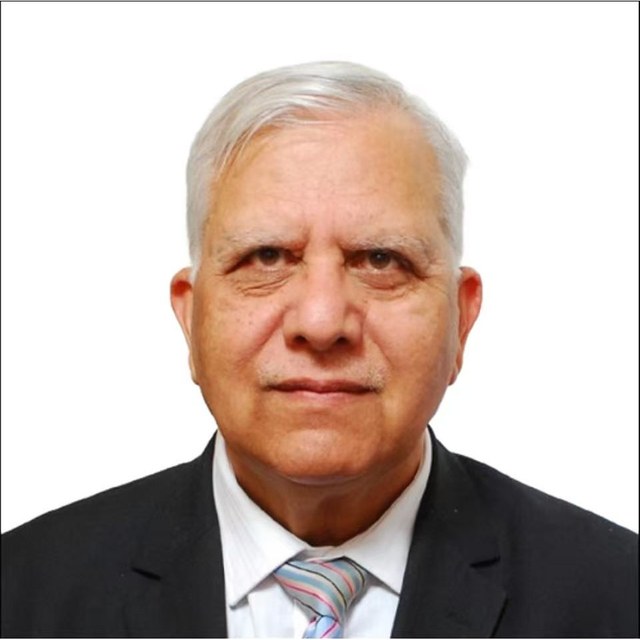
Zamir Ahmed Awan is the founder and Chair of the Global Silk Route Research Alliance, a think tank in Islamabad. He studied engineering at Shanghai University in the 1980s, and years later he went back to China as Pakistan's science counsellor in Beijing, from 2010 until 2016, working on science and higher education cooperation between the two countries.…