


(下边有中文翻译请继续看到底。 谢谢。)
The upcoming 25th EU-China Summit, scheduled to take place on July 24, 2025, in Beijing, marks a critical juncture in the evolving dynamics of international relations and global economic governance. At the invitation of the Chinese leadership, European Council President Antonio Costa and European Commission President Ursula von der Leyen will visit China to co-chair the summit alongside Chinese Premier Li Qiang. Chinese President Xi Jinping is also expected to meet with the EU leaders. This high-level engagement reflects the mutual desire to stabilize, deepen, and recalibrate one of the most consequential partnerships in today’s multipolar world.
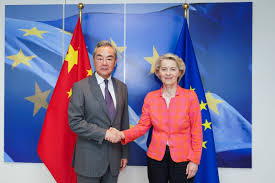
The timing of this summit is crucial. Global geopolitics is undergoing rapid transformation, driven by major shifts in U.S. foreign policy under President Donald Trump’s renewed administration, rising protectionist trends, and the lingering fallout from the Ukraine conflict. At such a time, the EU-China dialogue carries the hopes of billions for an alternative model of cooperation—one based on mutual respect, peaceful coexistence, and economic synergy.
A Strained Transatlantic Relationship
A key context shaping this summit is the increasingly strained relationship between the European Union and the United States. While the EU has traditionally been seen as a close ally of the U.S., recent developments have created visible fissures in this long-standing transatlantic bond.
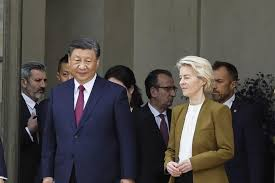
President Trump, now serving his second term, has made a series of statements and policy decisions that have caused considerable dismay in Europe. His assertion that the European Union was “created to counter the United States” offended many EU leaders and questioned the very foundation of U.S.-EU relations. Such remarks, whether rhetorical or strategic, have exposed deep-seated mistrust.
Moreover, the Trump administration’s imposition of high tariffs on European exports, including steel, aluminum, wine, and automobiles, has harmed EU industries and disrupted global supply chains. These protectionist moves not only violate the spirit of free trade but have also triggered retaliatory measures, contributing to growing economic uncertainty.
Another point of contention has been President Trump’s persistent demand that NATO member states increase their defense spending. While burden-sharing has long been debated within NATO, Trump’s transactional approach and his public rebukes of allies such as Germany and France have further strained ties. His disparaging remarks about key European allies, including his suggestion that the U.S. should consider “purchasing” Greenland from Denmark—a proposal that was met with ridicule and rejection—only deepened the divide. Similarly, his suggestion that Canada could become the 52nd U.S. state shocked policymakers across the Atlantic and was seen as undermining sovereign dignity.
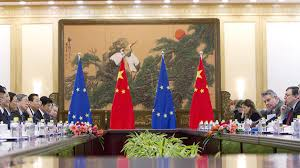
The Ukraine crisis, too, has become a contentious issue. While the EU remains steadfast in its support for Ukraine, Trump’s ambiguity and shifting stance have raised concerns in Brussels. His policy focus on reducing U.S. aid to Ukraine and encouraging European nations to take full responsibility for the conflict has left many EU member states feeling politically isolated and strategically vulnerable.
In light of these developments, the EU is now reassessing its foreign policy calculus. There is growing recognition within European circles that overdependence on any single partner, no matter how historic the alliance, may be unwise in an increasingly uncertain world. The search for strategic autonomy has therefore become a central theme in Brussels—and it is in this context that China emerges as a natural and necessary partner.
China: A Reliable and Rational Partner
Unlike the United States, China has consistently demonstrated a pragmatic and cooperative approach to international relations. Since initiating reform and opening-up policies in the late 1970s, China has focused on economic development, poverty alleviation, technological innovation, and peaceful coexistence. It has not engaged in military conflicts, nor has it pursued hegemonic ambitions. Instead, Beijing has repeatedly emphasized dialogue, mutual respect, and win-win cooperation.
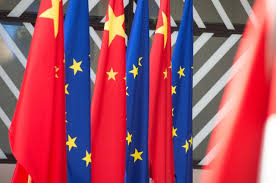
President Xi Jinping’s global vision—reflected in initiatives such as the Belt and Road Initiative (BRI), the Global Development Initiative (GDI), and the Global Security Initiative (GSI)—underscores China’s commitment to multilateralism and shared prosperity. These initiatives are not about creating dependencies but about fostering connectivity, infrastructure development, and mutual benefit across continents.
For the EU, this presents a strategic opportunity. As two of the largest economies in the world, China and the European Union have the power to drive global growth, enhance technological collaboration, and champion global climate action. In 2024, China remained the EU’s largest trading partner, with bilateral trade surpassing $900 billion. European companies benefit immensely from access to the Chinese market, and vice versa. From German automobiles and French cosmetics to Chinese electronics and renewable energy equipment, the interdependence is clear and mutually advantageous.
Moreover, China has shown a willingness to address European concerns regarding market access, intellectual property rights, and level playing fields. Beijing’s recent policy reforms to open up its financial sector and encourage foreign investment are viewed positively by European stakeholders. Likewise, China appreciates the EU’s strategic autonomy and its efforts to resist Cold War-style bloc politics.
The Path Toward a New Partnership
As the EU-China Summit convenes, there is an urgent need to move beyond past disagreements and look toward a future-oriented partnership based on equality, trust, and mutual benefit. The post-pandemic world demands robust coordination in areas such as public health, climate change, artificial intelligence, cybersecurity, food security, and green transition. In all these areas, China and the EU can lead the way.
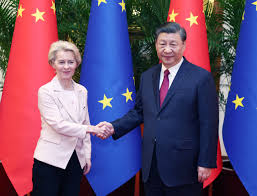
It is expected that the two sides will discuss mechanisms to enhance policy coordination, resolve outstanding trade disputes, promote investment liberalization, and explore avenues for third-party cooperation in regions like Africa, Central Asia, and Southeast Asia. Shared commitments to the Paris Agreement, the UN Sustainable Development Goals, and digital transformation can serve as pillars of collaboration.
Importantly, both sides must work to remove misperceptions and resist the politicization of economic relations. Anti-China sentiments within parts of the European political spectrum, often fueled by external pressures and misinformation, need to be addressed through dialogue and mutual understanding. Likewise, China must continue to reassure European stakeholders about its long-term intentions and its commitment to fair, rules-based engagement.
A Summit of Global Significance
The world is watching the EU-China Summit with great anticipation. In an era of rising uncertainty, instability, and fragmentation, the ability of China and the EU to find common ground will send a powerful message: that cooperation is still possible; that diplomacy can prevail over confrontation; and that development can be inclusive and balanced.
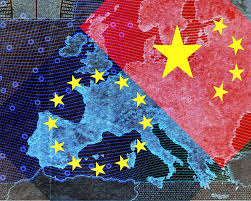
If this summit leads to a renewed strategic agreement—be it in the form of a new investment treaty, a roadmap for green cooperation, or a digital innovation framework—it will not only benefit the 1.8 billion people across China and the EU but will also stabilize the global economy. Such a deal would reassert multilateralism as the cornerstone of international relations and inspire other nations to follow suit.
A New Chapter in EU-China Relations
The 25th EU-China Summit is more than a diplomatic engagement—it is a litmus test for global cooperation in a multipolar world. Amid rising geopolitical tensions, economic nationalism, and unilateralism, the summit offers a rare opportunity to chart a course based on rationality, shared interests, and global responsibility.
China, guided by its principle of peaceful development, stands ready to engage in constructive dialogue. The EU, increasingly disillusioned with erratic U.S. policies, may now be more open to recalibrating its foreign policy in the direction of strategic independence and diversified partnerships.
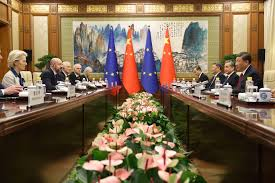
The path ahead may not be without challenges. But with political will, mutual respect, and a shared vision, the EU and China can not only strengthen their bilateral ties but also become pillars of peace, engines of growth, and architects of a more equitable international order.
As President Xi Jinping prepares to welcome European leaders in Beijing, there is hope that this summit will indeed mark the beginning of a new, more cooperative chapter in EU-China relations—one that sets a positive example for the world.
将于2025年7月24日在北京举行的第25次中欧领导人会晤,标志着国际关系和全球经济治理形势演变的关键时刻。应中国领导人邀请,欧洲理事会主席安东尼奥·科斯塔和欧盟委员会主席乌尔苏拉·冯德莱恩将访华,与中国总理李强共同主持峰会。这种高层接触反映了双方都希望稳定、深化和重新调整当今多极世界中最重要的伙伴关系之一。
这次峰会的时机至关重要。在唐纳德·特朗普总统的新政府领导下,美国外交政策发生了重大转变,保护主义趋势上升,乌克兰冲突的余波挥之不去,推动了全球地缘政治的快速转型。在这样的时刻,欧中对话承载着数十亿人对另一种合作模式的希望——一种基于相互尊重、和平共处和经济协同的合作模式。
紧张的跨大西洋关系
影响这次峰会的一个关键背景是欧盟和美国之间日益紧张的关系。虽然欧盟传统上被视为美国的亲密盟友,但最近的事态发展使这种长期的跨大西洋关系出现了明显的裂痕。
正在第二任期的特朗普总统发表了一系列声明和政策决定,在欧洲引起了相当大的恐慌。他声称欧盟是“为了对抗美国而建立的”,这冒犯了许多欧盟领导人,并对美欧关系的基础提出了质疑。这样的言论,无论是修辞上的还是战略上的,都暴露了根深蒂固的不信任。
此外,特朗普政府对包括钢铁、铝、葡萄酒和汽车在内的欧洲出口产品征收高关税,损害了欧盟产业,扰乱了全球供应链。这些保护主义举动不仅违背了自由贸易的精神,还引发了报复措施,加剧了经济的不确定性。
另一个争论点是特朗普总统一直要求北约成员国增加国防开支。虽然北约内部长期以来一直在讨论分担责任的问题,但特朗普的交易方式以及他对德国和法国等盟友的公开指责使关系进一步紧张。他对主要欧洲盟友的贬低言论,包括他建议美国应该考虑从丹麦“购买”格陵兰岛——这一提议遭到了嘲笑和拒绝——只会加深分歧。同样,他关于加拿大可能成为美国第52个州的建议震惊了大西洋彼岸的政策制定者,被视为损害了主权尊严。
乌克兰危机也已成为一个有争议的问题。虽然欧盟仍然坚定地支持乌克兰,但特朗普的模棱两可和立场的转变引起了布鲁塞尔的担忧。他的政策重点是减少美国对乌克兰的援助,并鼓励欧洲国家对乌克兰冲突承担全部责任,这让许多欧盟成员国感到政治孤立,在战略上处于弱势。
鉴于这些事态发展,欧盟现在正在重新评估其外交政策考量。欧洲圈子内越来越多的人认识到,在一个日益不确定的世界里,过度依赖任何一个合作伙伴都可能是不明智的,无论这个联盟多么具有历史意义。因此,寻求战略自治已成为布鲁塞尔的一个中心主题——正是在这种背景下,中国作为一个自然而必要的合作伙伴出现了。
中国:值得信赖的理性伙伴
与美国不同,中国在国际关系中一贯表现出务实合作的态度。自20世纪70年代末实施改革开放政策以来,中国一直致力于经济发展、扶贫、技术创新和和平共处。中国没有卷入军事冲突,也没有追求霸权野心。相反,北京一再强调对话、相互尊重和合作共赢。
这些倡议不是要制造依赖,而是要促进各大洲之间的互联互通、基础设施建设和互利共赢。
对欧盟来说,这是一个战略机遇。作为世界上最大的两个经济体,中国和欧盟有能力推动全球经济增长,加强技术合作,支持全球气候行动。2024年,中国保持欧盟第一大贸易伙伴地位,双边贸易额超过9000亿美元。欧洲企业从进入中国市场中受益匪浅,反之亦然。从德国的汽车、法国的化妆品到中国的电子产品和可再生能源设备,相互依存、互利共赢。
此外,中国已表明愿意解决欧洲在市场准入、知识产权和公平竞争环境方面的关切。中国政府最近开放金融业、鼓励外国投资的政策改革,得到了欧洲利益相关方的积极评价。同样,中国赞赏欧盟的战略自主和抵制冷战式集团政治的努力。
迈向新型伙伴关系之路
在中欧领导人会晤召开之际,双方迫切需要超越过去的分歧,面向平等、信任和互利的未来伙伴关系。疫情后世界需要在公共卫生、气候变化、人工智能、网络安全、粮食安全、绿色转型等领域加强协调。在所有这些领域,中国和欧盟都可以发挥带头作用。
预计双方将讨论加强政策协调,解决未决贸易争端,促进投资自由化的机制,并探讨在非洲,中亚和东南亚等地区开展第三方合作的途径。对《巴黎协定》、联合国可持续发展目标和数字化转型的共同承诺可以成为合作的支柱。
重要的是,双方必须努力消除误解,抵制经济关系政治化。欧洲部分政治派别的反华情绪往往受到外部压力和错误信息的推动,需要通过对话和相互理解来解决。同样,中国必须继续向欧洲利益相关者保证其长期意图和对公平、基于规则的参与的承诺。
具有全球意义的峰会
全世界都在期待欧中领导人会晤。在一个不确定性、不稳定性和分裂加剧的时代,中国和欧盟找到共同点的能力将发出一个强有力的信息:合作仍然是可能的;外交可以战胜对抗;这样的发展可以是包容和平衡的。
如果这次峰会能达成一项新的战略协议——无论是新的投资协定、绿色合作路线图还是数字创新框架——这不仅将造福中欧18亿人民,也将稳定全球经济。这样的协议将重申多边主义作为国际关系基石的地位,并激励其他国家效仿。
开启欧中关系新篇章
第25次中欧领导人会晤不仅仅是一次外交接触,更是多极世界中全球合作的试金石。在地缘政治紧张局势、经济民族主义和单边主义日益加剧的背景下,此次峰会为制定基于理性、共同利益和全球责任的路线提供了难得的机会。
中国愿本着和平发展的原则,与各方进行建设性对话。欧盟对美国反复无常的政策越来越失望,现在可能会更开放地重新调整其外交政策,朝着战略独立和多元化伙伴关系的方向发展。
前面的道路可能不会没有挑战。只要有政治意愿、相互尊重和共同愿景,欧盟和中国不仅可以加强双边关系,而且可以成为和平的支柱、增长的引擎和更加公平的国际秩序的建设者。
( 注意: 本文是用AI翻译的,或有误差。请以原版英文为准。谢谢。)
Reference Link:- https://www2.apdnews.cn/en/item/25/0722/axjfadcjda76c3df5718ca.html