

(下边有中文翻译,请继续看到底。 谢谢。)
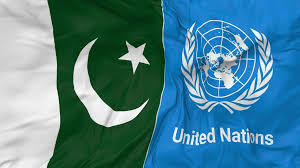
Pakistan’s assumption of the presidency of the United Nations Conference on Disarmament in Geneva is more than a routine diplomatic rotation. At a time of intensifying geopolitical competition, rising military expenditure and growing pressure on traditional arms-control mechanisms, Pakistan has been entrusted with an important responsibility at the heart of international peace and security.
New challenges are also emerging in outer space, cyberspace and artificial intelligence. These developments underline the need for stronger international dialogue and more effective multilateral mechanisms to address shared security concerns.
On Aug. 17, Ambassador Tahir Hussain Andrabi began presiding over the Conference on Disarmament on behalf of Pakistan. As the final president of the Conference’s 2026 session, he will oversee preparations for its annual report and the related resolution for consideration by the First Committee of the UN General Assembly.
Comprising 65 member states, including all nuclear-armed countries, the Conference remains the principal multilateral negotiating forum for disarmament and arms control.
The importance of Pakistan’s role lies not simply in occupying the chair, but in the manner in which it exercises its responsibility. Ambassador Andrabi has emphasized the distinction between Pakistan’s national positions and the impartial responsibilities of the presidency.
A chair must facilitate dialogue and faithfully reflect the views of the membership rather than advance a national agenda. Such an approach is fundamental to credible multilateral diplomacy, particularly at a time when international divisions are becoming increasingly pronounced.
A Long Record of International Responsibility
Pakistan’s current role has considerable historical depth.
Since joining the United Nations in 1947, Pakistan has repeatedly been entrusted with positions of responsibility in the organization’s principal bodies. It has been elected to the Security Council eight times: in 1952-53, 1968-69, 1976-77, 1983-84, 1993-94, 2003-04, 2012-13 and 2025-26.
Pakistan has also presided over the Economic and Social Council six times: in 1952, 1957, 1975, 1995, 2005 and 2020-21.
As one of the UN’s principal organs, ECOSOC plays a significant role in advancing international cooperation on economic, social and development issues. Pakistan’s repeated participation in its leadership reflects its longstanding engagement with the international development agenda.
At the General Assembly, Pakistan also produced one of the distinguished figures of early postwar diplomacy. Sir Muhammad Zafrulla Khan, Pakistan’s first foreign minister, was elected president of the 17th session of the UN General Assembly in 1962. He subsequently served at the International Court of Justice, including as vice-president.
Pakistan’s diplomatic contribution has also extended beyond elected national positions. Ambassador Munir Akram presided over the Conference on Disarmament in 1996 and subsequently served twice as president of the Security Council. He also headed ECOSOC in 2005 and again during 2020-21.
Pakistani nationals have made wider contributions to the UN system. Dr. Nafis Sadik, for instance, served as executive director of the United Nations Population Fund from 1987 to 2000 and became internationally recognized for her work in women’s health and population policy.
These experiences demonstrate that Pakistan’s engagement with multilateral institutions is not a recent phenomenon, but part of a longstanding diplomatic tradition.
Peacekeeping as a Practical Contribution
Perhaps the most tangible expression of Pakistan’s commitment to multilateralism has been its longstanding contribution to UN peacekeeping.
Pakistani military personnel have served in numerous UN missions, often in difficult and dangerous environments. Their participation represents a practical contribution to international efforts aimed at maintaining peace and stability.
This tradition continues. In August 2026, UN Secretary-General António Guterres appointed Major General Jawwad Ahmed of Pakistan as Force Commander of the UN Mission for the Referendum in Western Sahara.
Such appointments reflect international confidence in Pakistan’s professional military capabilities and its extensive experience in UN peacekeeping operations.
Pakistan’s contribution to the UN, therefore, cannot be assessed solely through the size of its economy or military capabilities. Its particular strengths lie in diplomacy, peacekeeping experience and its ability to maintain communication across political and regional divides.
China and Pakistan: An Enduring Partnership in a Changing World
Pakistan’s growing international role is closely connected with its ability to maintain constructive relations with major partners. Among these relationships, the Pakistan-China partnership occupies a distinctive and enduring position.
China and Pakistan have developed a relationship based on mutual trust, respect for sovereignty and long-term strategic cooperation. Their partnership has remained resilient despite profound changes in the regional and international environment.
The two countries share broad interests in promoting regional stability, strengthening connectivity, advancing economic development and supporting a more representative and inclusive system of global governance.
At a time when unilateralism and geopolitical confrontation continue to create uncertainty, both China and Pakistan have emphasized dialogue, multilateralism and peaceful cooperation.
For Pakistan, cooperation with China has created important opportunities for infrastructure development, economic connectivity and industrial growth. The China-Pakistan Economic Corridor has become a major platform for promoting connectivity and development, linking Pakistan’s development priorities with broader regional cooperation.
Beyond bilateral cooperation, China and Pakistan also share an interest in strengthening South-South cooperation and giving developing countries a greater voice in international affairs.
Both countries recognize that the international system is undergoing profound changes. The rise of developing countries and emerging economies is contributing to a more multipolar world, while the Global South is increasingly seeking a stronger role in shaping international governance.
Shared Commitment to Multilateralism and Development
China and Pakistan have consistently supported the central role of the United Nations in international affairs and have emphasized the importance of resolving disputes through dialogue and consultation.
Their cooperation reflects a broader recognition that global challenges cannot be effectively addressed through confrontation or exclusive geopolitical blocs.
Issues such as climate change, terrorism, food security, development financing, public health and emerging technologies require broader international cooperation.
In this context, the principles of mutual respect, peaceful coexistence and common development have acquired increasing relevance.
Pakistan’s current presidency of the Conference on Disarmament provides another opportunity to demonstrate the importance of dialogue in addressing complex international security questions.
China’s continued support for multilateralism and international cooperation also provides an important foundation for developing countries seeking a more balanced and inclusive international order.
The two countries can continue to cooperate within the United Nations, the Shanghai Cooperation Organisation and other multilateral platforms to promote regional stability and development.
Connectivity and Common Development
Pakistan’s geographical position gives it significant potential to serve as a bridge connecting South Asia, China, Central Asia and the Middle East.
This geographical advantage becomes increasingly important as regional countries seek greater connectivity in trade, transport, energy and infrastructure.
The China-Pakistan Economic Corridor has demonstrated the potential of infrastructure and connectivity to create new opportunities for development.
Its broader significance lies not only in bilateral cooperation, but also in the possibility of strengthening links between regions and promoting shared economic growth.
For developing countries, infrastructure remains one of the essential foundations of modernization. Better roads, railways, ports, energy systems and digital connectivity can contribute to trade, investment and employment.
The emphasis on connectivity and development also reflects a broader understanding that peace and development are closely interconnected. Sustainable peace requires economic opportunity, while long-term development depends on stability.
From Diplomatic Visibility to Practical Results
The challenge before Pakistan is now to transform diplomatic visibility into concrete outcomes.
Its presidency of the Conference on Disarmament should be assessed by its ability to encourage dialogue, build consensus, preserve the credibility of multilateral institutions and keep difficult arms-control questions on the negotiating table.
A mature foreign policy does not require every international development to validate a national position. It requires the capacity to listen, negotiate, accommodate differences, and consistently uphold fundamental principles.
Pakistan’s long record at the United Nations demonstrates that its international role is not a recent phenomenon. Its current responsibility in Geneva offers another opportunity to contribute constructively to global security and international governance.
At the same time, Pakistan’s enduring partnership with China reflects the importance of stable, long-term cooperation in an increasingly uncertain international environment.
Such cooperation should not be viewed through the narrow lens of geopolitical confrontation. Its broader value lies in promoting development, connectivity, regional stability, and mutually beneficial cooperation.
Dialogue Is Strategic Strength
The world is becoming increasingly fragmented, but fragmentation makes dialogue more necessary, not less.
Diplomacy is not weakness. It is a form of strategic strength.
Even amid intense geopolitical competition, dialogue remains possible. Multilateral institutions remain relevant, and countries with different political systems and national interests can still identify areas of common ground.
Pakistan’s experience at the United Nations, combined with its close and enduring partnership with China, demonstrates the value of maintaining communication, strengthening cooperation and pursuing development through peaceful means.
In an era marked by uncertainty, countries must resist the temptation to view every international relationship through the prism of confrontation.
The more constructive path lies in respecting sovereignty, expanding areas of cooperation, strengthening multilateral institutions, and promoting common development.
Pakistan’s current role in Geneva offers an opportunity to demonstrate that even when international divisions are profound, dialogue can continue; even when national interests differ, common ground can be found; and even in a rapidly changing international order, cooperation remains an essential foundation for peace and development.
For Pakistan and China, their long-standing partnership provides an important example of how neighboring countries with shared interests can pursue connectivity, development, and strategic cooperation while supporting a broader vision of a more inclusive and multipolar international order.
巴基斯坦在联合国的多边领导地位及其与中国持久的伙伴关系。
巴基斯坦出任联合国日内瓦裁军谈判会议主席,绝非一次例行的外交轮值。在地缘政治竞争加剧、军事开支不断上升、传统军控机制面临越来越大压力的背景下,巴基斯坦被赋予了维护国际和平与安全的重要责任。
与此同时,外层空间、网络空间和人工智能领域也不断出现新的安全挑战。这些发展进一步凸显了加强国际对话、完善多边机制、共同应对安全关切的必要性。
8月17日,巴基斯坦常驻裁军谈判会议代表塔希尔·侯赛因·安德拉比大使开始主持会议。作为2026年会议的最后一任主席,他将负责监督年度报告的筹备工作以及提交联合国大会第一委员会审议的相关决议。
裁军谈判会议由65个成员国组成,其中包括所有拥有核武器的国家,仍是国际社会开展裁军与军备控制多边谈判的主要平台。
巴基斯坦此次担任主席的重要性,不仅在于其占据主席席位,更在于其如何履行这一职责。安德拉比大使强调,巴基斯坦的国家立场与会议主席所承担的公正职责应当明确区分。
主席应当促进对话,准确反映各成员的意见,而不是推动本国议程。这种做法是维护多边外交公信力的基础,尤其是在国际分歧日益加深的今天,更具有重要意义。
长期承担国际责任的外交传统
巴基斯坦当前承担的这一职责具有深厚的历史基础。
自1947年加入联合国以来,巴基斯坦多次在联合国主要机构中承担重要职责。该国曾8次当选联合国安全理事会非常任理事国,任期分别为1952—1953年、1968—1969年、1976—1977年、1983—1984年、1993—1994年、2003—2004年、2012—2013年以及2025—2026年。
巴基斯坦还曾6次担任联合国经济及社会理事会主席,分别是在1952年、1957年、1975年、1995年、2005年和2020—2021年。
作为联合国主要机构之一,经济及社会理事会在推动经济、社会和发展领域国际合作方面发挥着重要作用。巴基斯坦多次参与该机构的领导工作,体现了其长期参与国际发展议程的外交传统。
在联合国大会层面,巴基斯坦也曾涌现出战后早期外交舞台上的杰出人物。巴基斯坦首任外交部长穆罕默德·扎弗鲁拉·汗爵士于1962年当选联合国大会第17届会议主席。此后,他还曾任国际法院法官,并担任副院长。
巴基斯坦的多边外交贡献也超越了国家当选职务。穆尼尔·阿克拉姆大使曾于1996年担任裁军谈判会议主席,此后两度担任联合国安理会主席。他还分别于2005年以及2020—2021年担任经济及社会理事会主席。
巴基斯坦籍人士还在联合国体系内作出了更广泛的贡献。例如,纳菲斯·萨迪克博士曾于1987年至2000年担任联合国人口基金执行主任,并因其在妇女健康和人口政策领域的工作而获得国际认可。
这些经历表明,巴基斯坦参与多边国际机构并非近年来才出现的现象,而是其长期外交传统的重要组成部分。
以维和行动践行多边主义
巴基斯坦对多边主义最为直接、最具实践意义的贡献之一,是其长期参与联合国维和行动。
长期以来,巴基斯坦军人参与了众多联合国维和任务,并多次在艰苦和危险的环境中执行任务。他们的参与,是巴基斯坦为维护国际和平与稳定作出的实际贡献。
这一传统仍在延续。2026年8月,联合国秘书长安东尼奥·古特雷斯任命巴基斯坦少将贾瓦德·艾哈迈德担任联合国西撒哈拉全民投票特派团部队指挥官。
此类任命体现了国际社会对巴基斯坦专业军事能力以及长期参与联合国维和行动经验的认可。
因此,评价巴基斯坦对联合国的贡献,不能仅仅从其经济规模或军事能力出发。巴基斯坦的独特优势还体现在外交能力、维和经验,以及在不同政治力量和地区力量之间保持沟通的能力。
中巴伙伴关系:变动世界中的长期合作
巴基斯坦不断提升的国际作用,与其同主要伙伴保持建设性关系的能力密切相关。在这些关系中,中巴伙伴关系具有独特而持久的地位。
中国和巴基斯坦长期建立在相互信任、尊重主权和战略合作基础上的伙伴关系,尽管地区和国际环境发生深刻变化,两国关系始终保持韧性。
两国在维护地区稳定、加强互联互通、推动经济发展以及支持建立更加公平、更具代表性的全球治理体系等方面拥有广泛共同利益。
在单边主义和地缘政治对抗持续带来不确定性的背景下,中国和巴基斯坦都强调对话、多边主义与和平合作的重要性。
对巴基斯坦而言,与中国开展合作为基础设施建设、经济互联互通和产业发展创造了重要机遇。中巴经济走廊已成为推动互联互通和发展的重要平台,将巴基斯坦自身的发展重点与更广泛的地区合作联系起来。
除双边合作之外,中国和巴基斯坦还共同关注加强南南合作,推动发展中国家在国际事务中拥有更大话语权。
两国都认识到,国际体系正在经历深刻变化。发展中国家和新兴经济体的崛起正在推动世界朝更加多极化的方向发展,而全球南方也越来越希望在国际治理体系建设中发挥更加积极的作用。
共同维护多边主义与发展
中国和巴基斯坦一贯支持联合国在国际事务中的核心作用,强调通过对话与协商解决争端的重要性。
两国合作体现出一个更广泛的认识,即全球性挑战无法通过对抗或排他性的地缘政治集团得到有效解决。
气候变化、恐怖主义、粮食安全、发展融资、公共卫生以及新兴技术等问题,都需要更加广泛的国际合作。
在这一背景下,相互尊重、和平共处和共同发展等原则的重要性日益凸显。
巴基斯坦此次担任裁军谈判会议主席,为进一步展示对话在解决复杂国际安全问题中的重要作用提供了新的机会。
中国持续支持多边主义与国际合作,也为寻求更加平衡、更加包容的国际秩序的发展中国家提供了重要基础。
两国可以继续在联合国、上海合作组织以及其他多边平台加强协调,在维护地区稳定、促进发展方面发挥积极作用。
互联互通与共同发展
巴基斯坦的地理位置使其具备成为连接南亚、中国、中亚和中东的桥梁的重要潜力。
随着地区国家寻求加强贸易、交通、能源和基础设施领域的联系,这一地理优势的重要性日益凸显。
中巴经济走廊展现了基础设施和互联互通推动发展的潜力。
其更广泛的意义不仅在于中巴双边合作,也在于通过加强不同地区之间的联系,为共同经济增长创造新的空间。
对于发展中国家而言,基础设施仍是现代化建设的重要基础。更加完善的公路、铁路、港口、能源体系和数字连接,可以促进贸易、投资和就业。
对互联互通与发展的重视,也体现了和平与发展相互关联的更深层认识。可持续和平需要经济机遇,而长期发展同样离不开稳定环境。
从外交影响力走向务实成果
当前,摆在巴基斯坦面前的挑战是如何将外交影响力转化为具体成果。
巴基斯坦担任裁军谈判会议主席的成效,应当通过其促进对话、凝聚共识、维护多边机构公信力以及推动军控问题继续留在谈判桌上的能力来衡量。
成熟的外交政策并不意味着每一项国际发展都必须符合本国立场,而是意味着具备倾听、谈判、协调分歧以及持续维护基本原则的能力。
巴基斯坦长期参与联合国事务的历史表明,其国际作用并非近年来才形成。此次在日内瓦承担新的责任,为巴基斯坦继续为全球安全和国际治理作出建设性贡献提供了新的机会。
与此同时,中巴长期伙伴关系也体现了在日益复杂和不确定的国际环境中,稳定、长期合作的重要价值。
这种合作不应仅仅从地缘政治对抗的狭窄视角加以理解。其更广泛的价值在于推动发展、加强互联互通、维护地区稳定以及促进互利合作。
对话本身就是战略力量
当今世界日益碎片化,但正因为分歧加深,对话才更加不可或缺。
外交并非软弱,而是一种战略力量。
即使在激烈的地缘政治竞争环境下,对话仍然可以持续;多边机构仍然具有重要意义;拥有不同政治制度和国家利益的国家,依然能够寻找共同利益和合作空间。
巴基斯坦在联合国的外交实践,以及其与中国长期稳定的伙伴关系,都表明保持沟通、加强合作、通过和平方式推动发展具有重要价值。
在充满不确定性的时代,各国应避免将所有国际关系都置于对抗框架之下。
更加具有建设性的道路,是尊重国家主权,扩大合作领域,加强多边机构建设,并推动共同发展。
巴基斯坦当前在日内瓦承担的职责,为其展示这样一种理念提供了机会:即使国际分歧十分深刻,对话仍然可以继续;即使国家利益存在差异,共同点仍然可以找到;即使国际秩序正在快速变化,合作仍然是和平与发展的重要基础。
对于中国和巴基斯坦而言,两国长期发展的伙伴关系提供了一个重要范例:邻国可以在拥有共同利益的基础上推进互联互通、发展与战略合作,同时共同支持建立更加包容、更加多极化的国际秩序。
(注意: 本文是用AI翻译的,或有误差。请以原版英文为准。谢谢。)
Reference Link:- https://www2.apdnews.cn/en/item/26/0907/axjgaagc82dd6d11f22f94.html