Pakistan’s carbon border test

Europe’s carbon border rules do not yet cover Pakistan’s textile exports, but the country’s largest export industry is already living in their shadow. Since 1 January 2026, the European Union (EU) has operated its Carbon Border Adjustment Mechanism (CBAM), which requires importers to pay a carbon price on emissions embedded in certain goods entering the EU, so the carbon price of imports matches that of domestic production.
For now, the mechanism covers six sectors: iron and steel, cement, aluminium, fertilisers, electricity, and hydrogen. Textiles are not among them, but the European Commission has flagged textiles as a candidate for the next phase. European buyers are not waiting for the law: they are already asking Pakistani suppliers for the emissions and supply-chain data that CBAM will eventually require. For Pakistan’s largest export industry, the question is now whether it will be ready when Europe’s carbon border reaches it.
The EU remains Pakistan’s single largest export market, taking roughly 28 per cent of total exports and around $7.103 billion in textile and apparel shipments in FY26. Much of this trade rests on GSP+ preferences, which allow about 90 per cent of eligible goods to enter duty-free. Once textiles are drawn into CBAM, the carbon charge will eat into that duty-free advantage, and CBAM is only one part of a converging compliance burden. The EU’s Digital Product Passport, due in February 2027, will raise traceability requirements for textile exporters. In this regard, SECP has formulated rules to push listed Pakistani firms towards sustainability disclosures. Exporters that build one credible dataset for buyers and regulators will be better placed to contain compliance costs and protect market access. Those still collecting data separately for each customer may risk falling behind competitors such as Bangladesh and Vietnam.
None of this is to suggest that Pakistan’s textile sector has been passive. Many of the country’s leading exporters have moved early by installing solar rooftops at scale, switching from furnace oil to biomass and gas, and investing in efficient dyeing and finishing technologies. The CBAM Readiness Index developed under a PIDE RASTA study places Punjab’s textile cluster at around 66.8 out of 100, a middling score that credits real progress in how much firms now understand about CBAM and how much they have already done about it. But the same score exposes the limit of what any single firm can achieve. No mill can cut its emissions faster than the energy system it depends on.
This is where the national picture becomes important. Pakistan’s grid is now around 64 per cent low-carbon, above the world average, but that clean grid is not what runs a spinning or finishing line. Mills depend on captive power for the process heat and steam that dyeing, finishing and drying require, and it is here that the country’s remaining fossil dependence sits. Yet recent changes to the gas levy and net-metering rules may have slowed some of the renewable-energy and efficiency investments mills were preparing to make. The next stage of the transition will therefore depend heavily on policy support that firms cannot provide on their own.
The government has begun to act, with the Ministry of Climate Change introducing Pakistan’s first national carbon market policy in 2024, and the country is participating in the international SPAR6C capacity-building initiative. Pakistan submitted its Third Nationally Determined Contribution in September 2025, committing to a 50 per cent emissions reduction by 2035, an ambition officially costing some $565.7 billion in required investment. These are useful commitments on paper. The problem is that the operational infrastructure, the trading platform, the international linkages, and the sector-specific greenhouse gas inventories have not yet caught up with the commitments themselves.
Four measures would materially improve Pakistan’s position before CBAM extends to textiles. First, industrial electricity pricing has to be restructured so that cleaner power becomes both available and affordable to export industry; the EU itself has recognised, in its own Steel and Metals Action Plan of 2025, that decarbonisation stalls when energy taxes push industry off the grid rather than off carbon. Second, a national system for measuring, reporting and verifying product-level emissions and material data is needed, aligned with EU methodology and the Digital Product Passport, so that Pakistani exports can meet European traceability requirements when they arrive. Third, green finance, including concessional lending, subsidised rooftop solar schemes for industrial users, and carbon-market linkages, has to become accessible to textile firms at manageable cost. Fourth, the domestic carbon market must be operationalised, with the trading platform completed and international linkages secured, so that Pakistani firms can participate in global carbon markets and access the climate finance that a serious industrial transition will require.
There is also a case Pakistan can make in Brussels alongside these domestic reforms. UNCTAD and the LDC Group have argued that CBAM revenues should be recycled into the climate transitions of the developing countries most exposed to the levy, and Pakistan, which contributes less than 1 per cent of global emissions while ranking among the world’s most climate-vulnerable economies, has a strong claim to join that call. Making it in European capitals, at UN climate negotiations and through the country’s own missions abroad, is the natural work of economic diplomacy in the coming years.
The strategic point is straightforward. Pakistan’s textile industry can, and largely wants to, meet the standards Europe is now setting. What it needs is a domestic policy environment that makes that possible: affordable clean energy, accessible green finance, credible measurement systems and a working carbon market. Delivered together, these reforms would protect the export market that underwrites so much of the sector’s contribution to national income, and would put Pakistan in a position to attract the concessional climate finance the country will require in any case. Left undelivered, they will simply concede to Bangladesh and Vietnam the market Pakistan has spent a generation building.
Reference Link:- https://www.brecorder.com/news/40442968
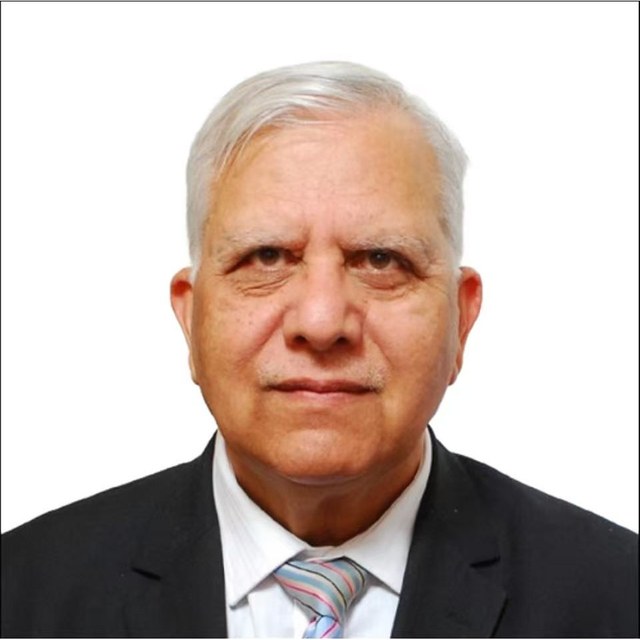
Zamir Ahmed Awan is the founder and Chair of the Global Silk Route Research Alliance, a think tank in Islamabad. He studied engineering at Shanghai University in the 1980s, and years later he went back to China as Pakistan's science counsellor in Beijing, from 2010 until 2016, working on science and higher education cooperation between the two countries.…