
Pakistan Maritime Trade: Cashing in on shifting trade routes, ME conflict

With sufficient capacity, agile policy responses and unusually effective public-private collaboration, Pakistan is well-positioned to capitalise on shifting trade routes amid Middle East turmoil, turning short-term gains into lasting economic advantage.
Building on March 2025’s tariff cuts and cargo discounts, the government introduced transshipment incentives in August 2026 under a unified regulatory framework for all ports, announced by Federal Minister for Maritime Affairs Junaid Anwar Chaudhry, to simplify operations. It activated slab-based concessions, with 20-80pc discounts on wet cargo vessels, wharfage rebates of 20-80pc with 14 days free terminal storage facility at the Karachi Port Trust (KPT).
The Port Qasim Authority (PQA) offers a 100pc waiver on wharfage and 7-21 days of free storage, while all four private container operators, Karachi International Container Terminal (KICT), South Asia Pakistan Terminal (SAPT), Karachi Gateway Terminal Ltd (KGTL) and Qasim International Container Terminal (QICT), have cut terminal handling charges by up to 25pc.
Pakistan has introduced regulatory reforms to boost port competitiveness and attract international shipping lines; data indicates a record surge in number of ships at Karachi Port, attracting foreign shipping and maritime services companies
Besides, Pakistan has introduced regulatory reforms to boost port competitiveness and attract international shipping lines. Customs measures now permit off-dock transshipment, facilitate bulk, break-bulk and vehicle cargo, and enable sea-to-air transfers. Faster clearance, pre-arrival declarations, expanded scanning, round-the-clock examinations and electronic delivery orders are aimed at cutting delays and procedural bottlenecks.
Reflecting growing international interest, Mediterranean Shipping Company (MSC) launched its weekly Premium IPAK direct service linking Karachi with Europe through Karachi Gateway Terminal Limited (KGTL) in October 2026. A new weekly feeder service connecting Karachi with Khor Fakkan, UAE, further strengthens Gulf connectivity and prospects for additional transshipment business.
Dredging of Karachi Port’s navigation channel, scheduled for completion by December 2026, is expected to accommodate larger vessels and reduce trade logistics costs. Meanwhile, the KPT has stepped up engagement with major international shipping lines to attract more vessel calls, direct services and transshipment cargo. These efforts, backed by competitive incentives, regulatory facilitation and coordination with private terminal operators, have helped the port achieve record transshipment volumes.
Karachi Port climbed 30 places to 69th in the Container Port Performance Index 2025. Its Port Liner Shipping Connectivity Index score rose from 309 in Q1 2026 to 357 in Q3. Pakistan advanced from 35th to 34th in global Liner Shipping Connectivity Index.
“We cannot afford to squander this opportunity to step out of the shadows. Our goal is not to capitalise on temporary regional disruptions but to translate this opening into sustained maritime trade and investment, positioning Pakistan as a leading, reliable and competitive shipping hub,” a senior official said, requesting anonymity.
Private stakeholders believe that timely reforms and port expansion can finally help Pakistan capitalise on its strategic geographical location.
Partially available official data indicates a record surge in vessel calls, including mother ships, robust transshipment activity, efficient container handling, a rising number of ships at anchorage, and growing demand for ancillary services such as warehousing and bunkering, attracting foreign shipping and maritime services companies to Pakistan.
According to the KPT, it has sustained a growth trajectory following a record FY2025-26, when cargo handling reached an all-time high of 55.438m tonnes and container throughput hit 2.749m (20-foot equivalent unit) TEUs with over 2,100 vessel calls.
Growth continued in July-October 2026, with cargo throughput rising 3.8pc to 19.286m tonnes from 18.581m tonnes a year earlier. Export cargo grew 10.5pc and dry bulk handling surged 26.1pc, while vessel calls increased by 13.7pc to 764 from 672 last year.
Beyond its operational performance, Karachi Port contributes significantly to public revenues, with the KPT paying Rs12bn annually in federal taxes and Rs5bn to Sindh. The provincial government also collects Rs160bn annually through the Sindh Infrastructure Development Cess (SIDC) on goods entering the province through Karachi Port and Port Qasim.
KPT Chairman, retired Rear Admiral Shahid Ahmed, laments that despite substantial SIDC collections, dilapidated roads linking Karachi’s ports to industrial zones and national highways continue to delay cargo movement and inflate logistics costs. He proposed earmarking 50pc of SIDC revenue for upgrading and maintaining port access roads through coordinated federal and provincial efforts involving relevant stakeholders.
The Karachi Port recorded notable gains in global performance benchmarks, climbing 30 places to 69th in the Container Port Performance Index (CPPI) 2025. Its Port Liner Shipping Connectivity Index (PLSCI) score rose from 309 in Q1 2026 to 357 in Q3, while Pakistan advanced from 35th to 34th in the global Liner Shipping Connectivity Index (LSCI), reflecting improved port efficiency, connectivity and competitiveness.
Mr Ahmed says the KPT is expanding capacity, connectivity and maritime services through dredging, modernisation and investment. Bunkering services launched with Vitol in November 2025 have served over 170 vessels. Projects offered to investors include 250 acres for terminal development, 140 acres for a Marine Business District and Manora Shipyard.
“The KPT will prioritise direct shipping services, transshipment, faster cargo clearance, terminal expansion and improved road-rail connectivity, alongside digitalisation through enterprise resource planning, vessel traffic management and integration with the Port Community System,” the KPT chairman says.
Muhammad Rajpar, former chairman of the Pakistan Ship’s Agents Association, welcomes the progress, citing reduced port and terminal transshipment tariffs, risk-based customs scanning and non-intrusive inspections. Other measures include direct engagement with global shipping lines, permission to use off-dock terminals for transshipment, introduction of feeder services and removal of Pakistani ports from Lloyd’s war-risk list. Relocating long-stay auction containers to off-dock facilities has also freed valuable port space for transshipment cargo, he adds.
M H Lodhi, managing director of Monsoon Winds Maritime Services, says international collaboration in port modernisation, shipbuilding, green shipping, logistics and technology, and skills development can leverage Pakistan’s strategic location to enhance its global trade competitiveness and sustain maritime growth.
Reference Link:- https://www.dawn.com/news/2043193
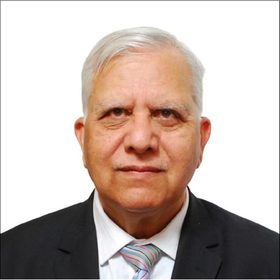
Zamir Ahmed Awan is the founder and Chair of the Global Silk Route Research Alliance, a think tank in Islamabad. He studied engineering at Shanghai University in the 1980s, and years later he went back to China as Pakistan's science counsellor in Beijing, from 2010 until 2016, working on science and higher education cooperation between the two countries.…