U.S. youths explore Silk Road heritage, green growth in NW China

At the Mogao Caves in Dunhuang, northwest China’s Gansu Province, a nine-story wooden structure clings to the cliffside, sheltering a cave with a 35.5-meter-tall statue of Maitreya Buddha. The scale of the site left Zoey Ashlyn Koehl, a student from Oklahoma City University (OCU), in awe.
“That was insane,” Koehl said after visiting the millennium-old UNESCO World Heritage Site. “One of my friends said she almost started crying because it was so breathtaking.”
It was Koehl’s first visit to China. She was among 20 students and teachers from the University of Central Oklahoma (UCO) and OCU who recently traveled to Dunhuang at the invitation of the foreign affairs office of the Gansu provincial government.
The group was the first U.S. youth delegation invited to Gansu under China’s 2026 initiative to host 100,000 young Americans for exchanges and study over the next five years. The program builds on a 2023 initiative, which had a target of 50,000 young Americans that had been met ahead of schedule.
Gansu was an important passage along the ancient Silk Road, where merchants, envoys and monks carried goods and ideas across Asia and Europe. Its cultural heritage includes the Mogao Caves, with their extensive Buddhist art, as well as historic sites and artifacts reflecting exchanges among different civilizations.
Michael Lynn Reeder was struck by the lively poses of the sculptures and the richness of the murals at the Mogao Grottoes.
“I especially love coming here and seeing all the original works and everything that people have put so much time into,” he said.
The UCO student noted how the influences of different schools of thought and cultural groups over the centuries had contributed to the area’s invaluable and diverse heritage.
Beyond the grottoes, the delegation rode camels across the dunes of Mingsha Mountain, a desert landmark near Dunhuang, and joined a multicultural flash mob beside Crescent Moon Spring, an oasis lake nestled among the sands.
“You get to imagine what it must have been like for people long ago,” said OCU student Maison Elise Dolphin.
Briana Corazon Donovan, 22, said she was surprised to find that Dunhuang offered not only deep historical and cultural roots, but also “the energy and excitement of a modern city.”
The group also visited an international cultural exhibition and toured a molten-salt solar thermal power station. At the plant, about 12,000 mirrors focus sunlight on a 260-meter-high tower, heating molten salt that can then generate electricity. The plant can reduce carbon dioxide emissions by about 350,000 tonnes annually.
For Dillon Thomas Longey, Dunhuang’s clean streets and clean energy left the strongest impression. The city boasts a long ancient heritage and a great deal of modern development, Longey said.
Local authorities’ strong focus on renewable energy and clean resources is extremely important as the whole world shifts to a greener path, he added.
Reference Link: – https://english.news.cn/20261109/2610a92fa8934f0fb5d01db6145a6bda/c.html
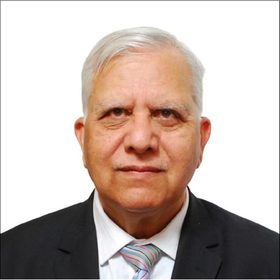
Zamir Ahmed Awan is the founder and Chair of the Global Silk Route Research Alliance, a think tank in Islamabad. He studied engineering at Shanghai University in the 1980s, and years later he went back to China as Pakistan's science counsellor in Beijing, from 2010 until 2016, working on science and higher education cooperation between the two countries.…