
Pakistan: IMF programme’s fourth review
Source Xinhua, Dawn, Arab News, Anadolu and Minute Mirror

The fourth review of the IMF Extended Fund Facility and the Resilience and Sustainability Facility is to commence shortly. The third review was completed earlier in May 2026, and following the successful review, a Staff Mission Report was released. This report contains the macroeconomic projections of the economy of Pakistan for 2026-27 and also a set of medium-term projections.
The third review process had already incorporated into the projections the possible impact of the Middle East war on Pakistan’s growth prospects, rate of inflation, public finances and balance of payments in 2026-27.
Accordingly, the GDP growth rate is expected to fall marginally from 3.7 percent in 2025-26 to 3.5 percent in 2026-27. Perhaps surprisingly, even with a low GDP growth rate, the unemployment rate is projected to come down from 6.9 percent in 2025-26 to 6.5 percent in 2026-27.
The estimated average rate of inflation in the Consumer Price Index was expected to be 7.2 percent in 2025-26, and because of the rise in oil prices, it is projected to rise to 8.4 percent in 2026-27. However, the monthly inflation rate in June 2027 was expected by the IMF to be lower at 7 percent.
The projections of the balance of payments for 2026-27 are of a relatively optimistic nature. The current account deficit is expected to worsen by only 0.5 percent of GDP, in relation to the likely level of 0.4 percent of GDP in 2025-26. This optimism is also reflected in faster growth expectations in exports at 11.2 percent as compared to 7.4 percent growth in imports. Near-zero growth is anticipated in remittances.
There is a need to recognise that the IMF, in May 2026, with the ongoing Middle East war, did postulate the risk of a much larger impact on the economy of Pakistan. In such an adverse scenario, GDP growth was projected to fall in 2026-27 by 1.5 percentage points, the rate of inflation to approach 11 percent, and the current account deficit to reach 1.5 percent of GDP.
The first task of the IMF Staff Mission will, of course, be a review of the current state of the economy. The recent meeting of the Prime Minister with the IMF Managing Director in New York was very positive. She praised Pakistan for strong stabilization efforts, as evidenced by the record level of foreign exchange reserves at USD 21 billion and the budget deficit at 2.6 percent of GDP in 2025-26, the lowest in the last 22 years.
The IMF Staff will examine the federal and provincial budgets for 2026-27 and determine their consistency with the public finance projections after the third review. An assessment will also have to be made as to how severe the impact of the US-Iran war will be on the Pakistan economy.
We first look at the budgetary projections for 2026-27. Clearly, the IMF was not aware of the unprecedented move of the provincial governments being asked to make a grant of over Rs 1 trillion to the federal government.
Consequently, the IMF projections for 2026-27 are substantially off the mark. First, federal non-tax revenues will be significantly higher due to the provincial grant. Second, the provincial governments have to target lower development spending due to the lower availability of finances and commitment to high provincial cash balances.
The unprecedented moves in the budgets of 2026-27 should be commented upon by the IMF. It is very unusual for a lower level of government to make a large grant to a higher level of government.
There are also two other specific issues in the realm of public finances in 2026-27. The first is currently a hotly debated issue. It relates to the level of revenues from the petroleum levy, which are targeted at a huge Rs 1.7 trillion in 2026-27.
There has been public protest over the increase in the prices of fuel since February 2026, before the start of the war. The prices of both HSD oil and petrol have gone up by over 50 percent. Such increases have not been observed in other South Asian countries.
The view that is being taken is that the shock of rapidly rising fuel prices internationally should have been limited by a big cutback in the large petroleum levy from its present level of Rs 80 per liter
The IMF continues to see the levy as a tax, like a sales tax. During the upcoming discussions on the fourth Programme review, hopefully the Ministry of Finance will place before the IMF the proposal to bring down the rate of the petroleum levy to the standard sales tax rate of 18 percent of the c.i.f. price of fuel products. This will help in reducing the price by about 10 percent to 15 percent, and thereby also bring down the overall rate of inflation by a reduction in transport cost and provide relief especially to the lower income groups, who are not benefiting from the subsidy to scooter and small car owners.
The other issue relates to the level of fiscal effort by the Provincial governments. An ambitious target was set by the IMF of additional revenues of Rs 467 billion in 2026-27 from tax reforms. This would have implied a hefty growth in revenues of 54 percent. The Provincial governments have targeted less than 20 percent growth in own-tax revenues in 2026-27. The time has come in particular for an in-depth review of the development of the agricultural income tax, as agreed with the IMF.
The position after six months of the war is that of continued restrictions on the movement of supplies through the Strait of Hormuz. The war will also continue unless there is a breakthrough through negotiations. Pakistan has seen a less negative impact on the current account due to fast growth of home remittances of 15 percent. However, this may be partly due to lump sum transfers by returning workers, especially from the UAE.
Also, Pakistan is seeing a return to power outages due to the shortages of LNG and other fuels. This may increase in the coming months and also impact industrial production and exports. Further, the shortage of fertilizer could restrict agricultural output in coming seasons.
Therefore, the revised projections for 2026-27, especially of the balance of payments by the IMF in the fourth review, should reflect more downside risk factors. The GDP growth rate in 2026-27 may be targeted at under 3 percent, inflation at close to 11 percent, and the reserve position somewhat below the peak level currently of USD 21 billion. We look forward to a degree of understanding by the IMF of the abnormal and difficult conditions that the people of Pakistan are facing today.
Reference Link:- https://www.brecorder.com/news/40441645
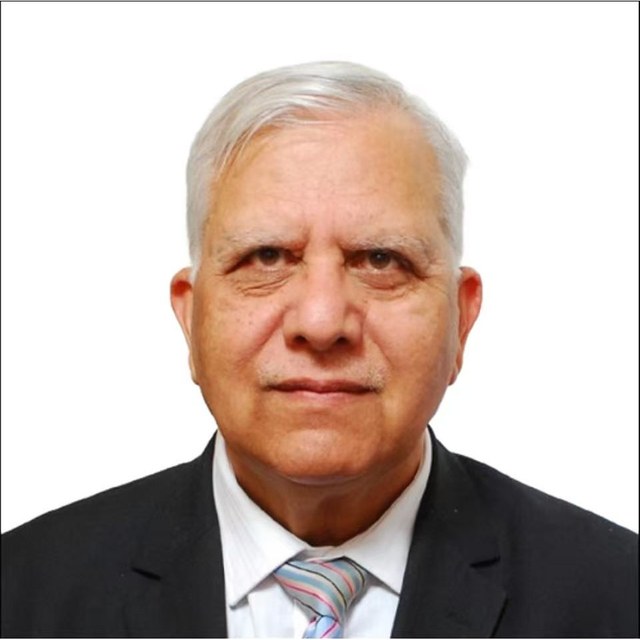
Zamir Ahmed Awan is the founder and Chair of the Global Silk Route Research Alliance, a think tank in Islamabad. He studied engineering at Shanghai University in the 1980s, and years later he went back to China as Pakistan's science counsellor in Beijing, from 2010 until 2016, working on science and higher education cooperation between the two countries.…