
Pakistan: Fiscal reforms’ missing piece
Source Xinhua, Dawn, Arab News, Anadolu and Minute Mirror

Finance Minister Muhammad Aurangzeb’s recent assurance that the government will “stay the course” on fiscal reforms, coupled with the Asian Development Bank’s call for urgent action to broaden Pakistan’s narrow tax base, comes at a critical juncture.
The government has made meaningful progress in restoring fiscal discipline, but it would be a mistake to equate a lower fiscal deficit with a fundamentally stronger revenue system.
Pakistan has reduced its fiscal deficit to around 2.6 percent of GDP, its lowest in 22 years, and recorded three consecutive primary surpluses. These are undoubtedly significant achievements, but the reality is that the harder reform remains unfinished.
The central weakness is that much of the improvement in tax collection has come from extracting more from existing taxpayers, rather than bringing enough new taxpayers into the tax net. FBR collections have risen 40 percent over two years to Rs13 trillion, while the tax-to-GDP ratio has improved from 8.8 percent to 10.3 percent.
The finance minister has rightly identified 13 percent as a longer-term target, but reaching it sustainably will require a substantially wider tax base, not a heavier burden on those who are already documented and compliant. This is where Pakistan’s reform record remains deeply frustrating. Salaried individuals and the formal corporate sector are relatively easy targets because their incomes and transactions are visible. They consequently carry a disproportionate share of the tax burden.
Meanwhile, large segments of the economy remain either lightly taxed or outside the effective tax net altogether. Retail, wholesale trade, real estate and other sectors with substantial economic activity continue to enjoy preferential tax treatment.
The retail sector is a clear example of how political expediency has allowed parts of the economy to enjoy a lighter tax burden. Successive governments have promised to bring this sector fully into the tax net, unveiling scheme after scheme, only for vested interests, weak enforcement and political retreat to consign most to failure.
Retailers have repeatedly demonstrated their nuisance value, threatening protests and strikes at the first sign of new taxation initiatives, forcing governments to capitulate.
Now, once again, the government is turning to measures such as digital invoicing, track-and-trace, faceless customs and digital production monitoring. Technology can undoubtedly improve documentation, reduce human discretion and strengthen compliance. But the fact remains that technology is an instrument, not a substitute for political will.
No digital platform can overcome the reluctance to confront powerful constituencies or the FBR’s repeated dilly-dallying in identifying and pursuing new sources of revenue.
The ADB has correctly framed the issue as one of fiscal sustainability. A broader and more efficient revenue base would reduce the government’s dependence on borrowing to finance essential functions of the state.
Stronger domestic resource mobilisation would create greater fiscal space for health, education and infrastructure, while reducing the pressure that debt servicing places on scarce public resources.
Most importantly, Pakistan cannot escape its familiar boom-and-bust cycles if every period of growth eventually produces widening fiscal and trade deficits, rising borrowing and another stabilization programme. Sustainable growth requires a state capable of financing its responsibilities from a broad, predictable and equitable tax base.
The government therefore needs to move beyond the easier task of extracting more revenue from the same taxpayers and confront the harder questions of who is still not paying, why they are not paying and why successive dispensations have failed to bring them into the net.
Technology and better administration cannot compensate for lack of political will to bring under-taxed sectors into the fold. It must be recognised that a wider tax base remains non-negotiable for lasting fiscal stability. Any reform effort that fails to make broadening the tax net its central objective risks merely postponing Pakistan’s next fiscal crisis.
Reference Link:- https://www.brecorder.com/news/40438518
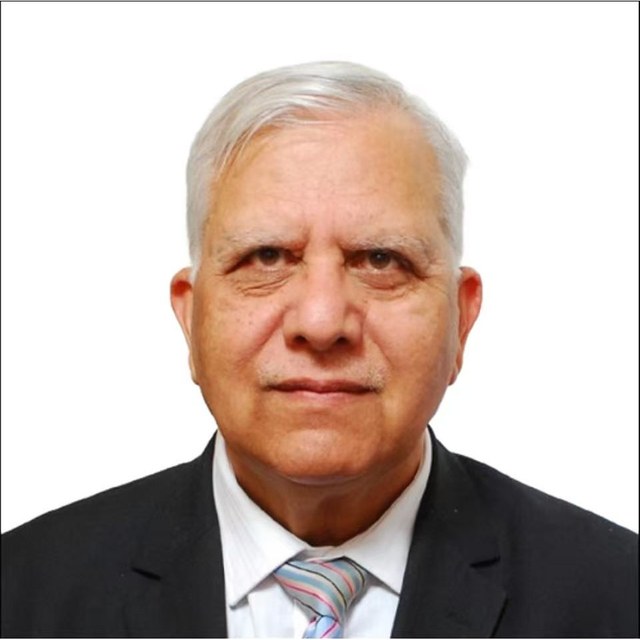
Zamir Ahmed Awan is the founder and Chair of the Global Silk Route Research Alliance, a think tank in Islamabad. He studied engineering at Shanghai University in the 1980s, and years later he went back to China as Pakistan's science counsellor in Beijing, from 2010 until 2016, working on science and higher education cooperation between the two countries.…