China to raise gasoline, diesel prices
Source Xinhua, Dawn, Arab News, Anadolu and Minute Mirror

China will raise the retail prices of gasoline and diesel from Saturday, based on recent changes in international crude oil prices, the country’s top economic planner announced Friday.
Under the adjustment, gasoline and diesel prices will increase by 260 yuan (about 38.38 U.S. dollars) and 250 yuan per tonne, respectively, according to the National Development and Reform Commission (NDRC).
Based on the current pricing mechanism, the ceiling retail prices of gasoline and diesel should have been raised by 435 yuan and 420 yuan per tonne, respectively, this time, according to the NDRC.
Preliminary estimates show that private car owners will spend about 7 yuan less than they otherwise would when filling up their tanks, while truck drivers will spend about 75 yuan less per tank, as the increase was smaller than required by the pricing mechanism.
Since China’s previous adjustment of refined oil prices on August 28, the conflict between the United States and Iran has escalated again, driving international crude oil prices up sharply, the NDRC said, adding that the increase this time is aimed at cushioning the impact of rising international oil prices on the domestic market.
China’s three biggest oil companies — the China National Petroleum Corporation, the China Petrochemical Corporation and the China National Offshore Oil Corporation — and other refineries, have been directed to maintain production and facilitate transportation to ensure stable supplies.
Currently, there exists considerable geopolitical uncertainty and close attention should continue to be paid to how the evolving U.S.-Iran situation affects international oil prices, said the NDRC.
China’s domestic oil and gas supply is expected to reach 440 million tonnes of oil equivalent by 2030, according to a five-year plan for the sector, which was jointly released by the National Energy Administration and the NDRC in August.
The country’s total oil and gas output reached a new record of 420 million tonnes of oil equivalent in 2025, marking a notable improvement in the country’s independent energy security capacity, official data showed.
Reference Link:- https://english.news.cn/20260911/68146d707a89414a8b23412d42e2c6e6/c.html
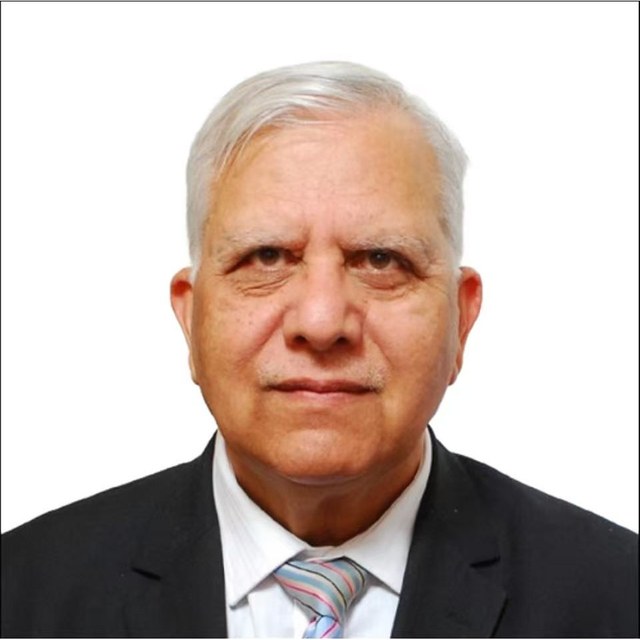
Zamir Ahmed Awan is the founder and Chair of the Global Silk Route Research Alliance, a think tank in Islamabad. He studied engineering at Shanghai University in the 1980s, and years later he went back to China as Pakistan's science counsellor in Beijing, from 2010 until 2016, working on science and higher education cooperation between the two countries.…