
Pakistani astronaut becomes 1st international visitor to China’s Tiangong space station
Source Xinhua, Dawn, Arab News, Anadolu and Minute Mirror

Muhammad Zeeshan Ali and his Shenzhou-24 crewmates arrived at Tiangong at 1:35 a.m. ET today (Nov. 25).

For the first time, a foreign astronaut has set foot inside China’s Tiangong space station.
That pioneer is Pakistan’s Muhammad Zeeshan Ali, who arrived at Tiangong aboard the Shenzhou-24 spacecraft early this morning (Nov. 25).
“The Chinese space station is always something to look forward to!” the China Manned Space Agency (CMSA) wrote in an update today (in Mandarin; translation by Google). “China’s ‘Tiangong’ welcomes partners from all over the world to visit!”
Ali, a former pilot in Pakistan’s armed forces, is a payload specialist on Shenzhou-24. He found his way onto the mission thanks to a space-cooperation agreement that China signed with Pakistan in Islamabad in February 2025.
Ali and his two Shenzhou-24 crewmates — commander Tang Hongbo and flight engineer Wu Yi — enjoyed a short and smooth ride to their orbital destination. They lifted off atop a Long March 2F rocket on Tuesday (Nov. 24) at 7:18 p.m. EST (0018 GMT on Nov. 25) and reached Tiangong a little over six hours later.
 China launches Pakistani astronaut to Tiangong space station, its 1st international visitor, alongside Shenzhou-24 crew (video)
 Pakistani astronaut set to become 1st international visitor to China’s Tiangong space station this month
 China rolls out rocket for launch of 1st international astronaut to Tiangong space station (video)
Tang and Wu will live aboard the outpost for the usual six-month stint. Ali, however, will come home in just a week, hitching a ride with two of the three Shenzhou-23 astronauts, who arrived at Tiangong in May.
Ali will be busy during his short space stay, conducting a set of joint Chinese-Pakistani experiments.
“Four collaborative projects in biotechnology and materials are planned, with Ali also scheduled to conduct an in-orbit experiment involving photosynthetic cyanobacteria,” The Times of India wrote today.
The third Shenzhou-23 crewmate, Zhu Yangzhu, will remain on the station until Shenzhou-24 comes home. Zhu will therefore set a Chinese record, becoming the first astronaut from his country to live in low Earth orbit for a full year.
Astronauts from the Soviet Union/Russia and the United States have already blazed this long-duration trail. The global record for longest continuous space stay is 437 days, set by cosmonaut Valeri Polyakov aboard the Mir space station from January 1994 to March 1995.

Ali is not the first person from Pakistan ever to reach space, by the way. That distinction belongs to adventurer Namira Salim, who traveled to suborbital space on a tourism flight with Virgin Galactic in October 2023.
Shenzhou-24 is the 12th crewed mission to Tiangong, a three-module, T-shaped outpost that China finished assembling in late 2022. Well, “finished” might not be the right term; China plans to expand Tiangong, which is currently about 20% as massive as the International Space Station.
Reference Link:- https://www.space.com/space-exploration/human-spaceflight/pakistani-astronaut-becomes-1st-international-visitor-to-chinas-tiangong-space-station-photos
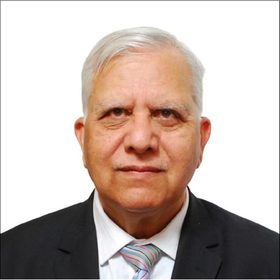
Zamir Ahmed Awan is the founder and Chair of the Global Silk Route Research Alliance, a think tank in Islamabad. He studied engineering at Shanghai University in the 1980s, and years later he went back to China as Pakistan's science counsellor in Beijing, from 2010 until 2016, working on science and higher education cooperation between the two countries.…