
Miliband accuses shadow foreign minister of undermining ICJ’s genocide ruling

Wendy Morton questioned whether intent by the Myanmar government to commit genocide had been proved
Ed Miliband has accused the shadow foreign minister of undermining international law by trying to unpick the International Court of Justice’s judgment that Myanmar’s government committed genocide.
Last week, the court ruled that Myanmar had committed genocide against its Rohingya minority. It was the first time a state had been found responsible for genocide since the passage of the 1948 genocide convention.
However, in the Commons on Monday, Wendy Morton, the shadow foreign minister, condemned the Myanmar government’s atrocities, but questioned whether an intent to commit genocide had been proved. She pointed out the court divided nine to six on the issue, adding it concerned her greatly that the dissenting judges “raise substantial questions about proof of intent, the standard of proof and treatment of evidence”.
She said underlying witness record reports were unavailable for examination and implied the threshold for establishing genocidal intent was being relaxed. A section of the Conservative Party is concerned that any weakening of the test for genocide, including the requirement for no other reasonable inference, is being prepared before a ruling by the ICJ concerning Israel’s behaviour in Gaza.
The Labour chair of the all-party foreign affairs select committee, Emily Thornberry, accused the Tories of “a new low”.
Miliband said: “At a time when international law is under threat, it is so important we respect the court.” A British government disagreeing with the court would give “carte blanche to every other government of the world to start saying ‘well the ICJ may have reached this conclusion, but we ignore the judgment of the ICJ’,” the foreign secretary said.
He added that he thought it would have been “a basic requirement to respect the judgment” and urged the Conservatives to “think really hard about what it means to uphold international law”.
Miliband said the ICJ judgment was a test for the international community and revealed he was going to call within a fortnight for a dedicated meeting of the UN Security Council on this first finding of state responsibility for genocide. The Security Council has been divided on the issue, but he said he would be urging ASEAN countries to respond to the ICJ ruling and not to hide from the responsibility to act.
He called for greater individual criminal responsibility and an immediate pause in hostilities, and announced a package of sanctions against the Myanmar military, including a ban on export of jet fuel to Myanmar.
In the same ruling, the ICJ had declared that countries could be found in breach of the duty to prevent genocide even if it is ultimately determined that the legal threshold for genocide has not been met.
The ruling, described as a major legal development, has implications for third parties such as the UK and Germany as they face legal and political scrutiny over their arming of Israel.
It stated: “International responsibility for breach of the duty to prevent genocide is not conditioned on a finding that genocide has occurred.”
Legal experts say this places a new onus on governments to react to mass atrocities even when it is uncertain whether the legal definition of genocide would be met.
Eirik Bjorge, a professor of law at the University of Bristol in south-west England, said the court had previously said a state could be in breach of the duty to prevent only if genocide was actually committed, an opinion he described as “much criticised”.
He said this week’s judgment “departs from that prior position. The ICJ states clearly that international responsibility for the breach of the duty to prevent genocide for a third state such as the UK is not conditioned on a previous finding by the ICJ that genocide has occurred.”
He said: “I expect the [UK’s] foreign secretary, Ed Miliband, will recognise this and ensure with all due dispatch that the policy is changed.”
During a BBC interview on Sunday, Miliband said the UK had “never adjudicated before the court does”.
It has long been a matter of legal dispute in the UK whether the duty to prevent a genocide requires the UK to make its own legal assessment rather than wait for the ICJ.
The new risk of being in breach of its obligations if it does not intervene to prevent, where there is a serious risk of a genocide, adds to the pressure on national governments to make their own assessments and not hide behind the ICJ.
Prof Tom Dannenbaum, of Stanford University in the US, said: “What has been clarified is that a state can now be found responsible for breaching the duty to prevent without a determination that a genocide occurred.”
He said there had been an “incoherent gap” between the duty to prevent and the requirements necessary to find a breach of that duty, particularly given the preventive purpose of the genocide conventions and the weak legal reasoning that underpinned that gap.
He said a “state could now be held responsible for breaching its duty to prevent – because it failed to act in the face of a serious risk of genocide – even if genocide did not in fact occur. Equally, the court could rule on a failure to prevent genocide without ruling on whether genocide occurred. Both of these possibilities are highly significant going forward.”
The most direct consequences may be for Germany, which is defending a case brought by Nicaragua at the ICJ over its continued arms exports to Israel. Berlin has argued that the court lacks jurisdiction, and a ruling on that objection is expected later this year.
Daniela Huber, an associate professor in the political science department at Roma Tre University, said the judgment “must send shock waves through Berlin as it is under scrutiny at the ICJ for breaches of its obligations under the genocide convention”.
She said: “Whether Germany can be held responsible under the genocide convention no longer necessarily turns on whether Israel’s conduct in Gaza amounts to genocide.” The chance that the case is thrown out simply because Israel is not a party to the proceedings, an argument Berlin has relied on, had been reduced, she said.
The court was divided about the new interpretation of the duty to prevent. In a dissenting note to the majority ruling, Judge Peter Tomka described the ruling as “puzzling if not bizarre” and a revolution that may lead to a politicisation of the court, leading to a proliferation of litigation by countries seeking ICJ orders.
He said it may place an onus on powerful countries to intervene since they would be deemed to have greater influence to deter genocidal actors.
Reference Link:- https://www.theguardian.com/law/2026/nov/23/icj-ruling-duty-to-prevent-genocide-international-court-of-justice
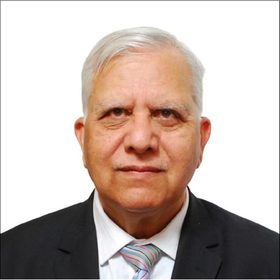
Zamir Ahmed Awan is the founder and Chair of the Global Silk Route Research Alliance, a think tank in Islamabad. He studied engineering at Shanghai University in the 1980s, and years later he went back to China as Pakistan's science counsellor in Beijing, from 2010 until 2016, working on science and higher education cooperation between the two countries.…