India: How the Modi Government Systematically Weakened the Institutions That Check It

The 95-page report by HRW says the Election Commission, courts, investigative agencies, parliament and rights bodies have been bent to suit political ends. It cites the removal of over 13 crore names from voter rolls as the latest flashpoint.
Representative image. Workers remove barricades from the road near Parliament Street Police Station after Jantar Mantar was denotified as an authorised protest site following recommendations by a committee constituted by the Ministry of Home Affairs, in New Delhi, Thursday, Nov. 5, 2026. Photo: PTI.
New Delhi: Human Rights Watch, an international non-governmental watchdog organisation, finds in a new report released today that Prime Minister Narendra Modi’s government has systematically weakened institutions set up to protect human rights and democratic freedoms. In a 95-page report, ”So What’s This Democracy We’re Talking About?’Modi’s Authoritarian Playbook in India,’ it says this has deepened India’s authoritarian slide.
The HRW examines four areas: undermining parliamentary procedures and suppressing the opposition; weaponising federal investigative agencies; weakening constitutional and statutory bodies; and interference in the judiciary, along with the judiciary’s own failings.PlayNextMute
It interviewed over 40 lawyers, journalists, activists, researchers, academics, current and former judges and former government officials between January 2025 and September 2026. The report opens with former Chief Election Commissioner S.Y. Quraishi’s November 2025 remark that the regime is “trying to subjugate every institution”.
13 crore names removed, and an Election Commission in “crisis”
HRW says the Special Intensive Revision (SIR) of electoral rolls, begun in June 2025 to weed out dead, duplicate or ineligible voters, had removed over 130 million names by October 2026. It calls the process deeply flawed, arbitrary and opaque, and says it disproportionately excluded women, the poor and religious minorities, particularly Muslims.
The report says the Election Commission faces a “massive crisis of credibility”. It accuses the Commission of repeatedly failing to hold Modi and senior BJP leaders to account for apparent code-of-conduct violations, including hate speech. It also says the Commission failed to credibly investigate allegations of manipulated voter lists, suppressed polling data, counting irregularities and tampering with voting machines.
After protests, the Commission began reversing some decisions in November, offering deleted voters in six states and Delhi a second chance to re-enter the rolls. The Commission has defended the SIR. It told the Supreme Court that its orders were unanimous and Form 6 was unchanged.
West Bengal: 90 lakh off the rolls, and a ruling that said voters could wait
In West Bengal, HRW says, 90 lakh people, 12% of the electorate, were removed from voter lists before the April 2026 state elections. The Supreme Court effectively said it was acceptable for them not to vote then, so long as they were added back later. The BJP then won control of the state for the first time.
Around 90% of West Bengal voters whose appeals were decided were eventually restored. In May 2026, the court ruled that the data did not indicate “systemic disenfranchisement”. HRW notes it is still hearing petitions on the revision. The Supreme Court in May 27 upheld the exercise’s rationale.
In an October report, HRW noted that the court clarified in May that the SIR was not a citizenship test. It said home minister Amit Shah had defended the exercise in December 2025 as a way to “detect, delete, deport” alleged infiltrators. HRW also noted how the Bharatiya Janata Party governments in West Bengal and Bihar had announced that people deleted from rolls would lose eligibility for some welfare schemes, including food subsidies.
40,000 personnel, mobile internet cut: how the SIR protests were met
When protesters demanded that the SIR be scrapped and the CEC resign, HRW says, the administration restricted movement, suspended mobile internet, deployed over 40,000 security personnel in Delhi and arbitrarily detained thousands. It says the police used excessive force. It also accuses the government of censoring critical online content while using broadcast networks to frame the protests as “anti-national”.
The Wire reported hundreds detained at Jantar Mantar on October 2 and internet services stopped in central Delhi. Deccan Chronicle put the number at nearly 1,000, noting that no permission had been granted. The coalition People Against SIR is restarting its campaign from November 26.
Also read: West Bengal’s SIR, from enumeration to the Supreme Court
A 2023 law and 146 suspended MPs
HRW says that in December 2023 the government adopted a law entrenching executive control over the appointment of election commissioners and giving them sweeping legal immunity for official actions and statements. It passed while 100 Lok Sabha and 46 Rajya Sabha members were suspended for the entire session.
Parliament bypassed: committees, money bills and vacant posts
HRW says the BJP, with a full Lok Sabha majority from 2014 to 2024, bypassed parliamentary committees, kept key opposition posts vacant for years and miscategorised bills as “money bills”. It cites PRS Legislative Research: 28% of bills were referred to committees in 2014–19 and 16% in 2019–24, against 71% and 60% in the two preceding terms.
Money bills need no Rajya Sabha approval, which the BJP lacked until 2024. HRW says the government used them to push through laws with serious rights consequences, including the 2019 amendment expanding the Enforcement Directorate’s powers. It cites Justice D.Y. Chandrachud’s observation that this was “an abuse of the constitutional process”. A civil society analysis of the first decade concluded the government deliberately violated procedures to make law by majority. In 2019, it also amended the UAPA over opposition demands for committee scrutiny.
ED, CBI, NIA: investigative agencies as instruments, says HRW
HRW says the Union government has used the Central Bureau of Investigation, the Enforcement Directorate and the National Investigation Agency for political ends, and has targeted rights groups and media organisations under foreign-funding and financial laws.
The Union finance ministry told Parliament in March 2025 that the ED had registered 193 cases against politicians between April 2015 and February 2025, with two convictions. HRW says that is a rise of more than 600% from 26 politicians investigated in the previous decade, and that most targets were government opponents. The minister said the ED “does not distinguish” cases by political affiliation, and the ministry said it keeps no party-wise data.
HRW also cites reports that at least 23 opposition politicians under investigation received a reprieve after joining the BJP. It quotes a Congress lawmaker who switched in 2019, saying he gets “sound sleep” because there are no inquiries.
UAPA: Saibaba, Stan Swamy and who gets booked
HRW says the NIA has used the Unlawful Activities (Prevention) Act (UAPA) against human rights activists. It describes the case of GN Saibaba, a wheelchair-bound activist detained in May 2014, convicted in 2017 and sentenced to life imprisonment, whom the Supreme Court denied house arrest in 2022. The Bombay High Court acquitted him in March 2024 on procedural grounds and because the state had failed to make a credible case. He died in October 2024, seven months after release.
It also cites Pandu Narote, a co-accused who died in custody in 2022, and Stan Swamy, 84, who died in custody in 2021 in the Bhima Koregaon case. HRW cites a SOAS study of Karnataka: nearly 8 in 10 people booked under the UAPA were booked during the BJP’s 10.5 years in power, and over 84% of them were Muslim. It says civil society activists and lawyers allege the NIA has targeted Muslims without credible evidence.
Bomb cases involving Hindu groups: nearly 30 charged, all but three acquitted
HRW says that in 2011 the NIA took over five bomb attacks from 2006 to 2008 whose victims were mostly Muslims. Nearly 30 Hindus were charged, but by 2025 all but three of the accused had been acquitted. A prosecutor in a 2008 case alleged that the NIA pressured her to “go soft” after the BJP-led government came to power. The agency rejected the claim.
Watchdogs without teeth: NHRC and the RTI regime
HRW says the National Human Rights Commission dismissed civil society complaints about Saibaba’s treatment on the strength of prison reports, even as UN experts called his detention “shameful”. It notes that the global alliance of national human rights institutions recommended in March 2025 that the NHRC be downgraded from “A” to “B” status. The NHRC challenged it, calling the grounds “unjustifiable”.
On transparency, HRW says the 2019 amendment to the Right to Information Act gave the Centre control of information commissioners’ tenure, salaries and service conditions. It says a former chair of the National Commission for Minorities described the national commissions as institutions compromised into tools against critics.
July’s student protests: injuries and silence from the commissions
HRW says security forces used excessive force against students and others in July 2026 after medical entrance exams were cancelled over a paper leak. Over 100 people, mostly students, were injured, it says, in protests led by the Cockroach Janta Party, which started off as a satirical movement.
HRW says several women alleged sexual assault and beating by police officers, and that women and girls faced online abuse after their details were posted online. It says the National Commission for Women and the Child Rights Commission did not act, and neither did the minorities commission when a Muslim man who distributed food and water to protesters said police detained him and his father.
The judiciary: bail, delays and an undependable guarantor
HRW says there has been increasing executive interference in judicial appointments, transfers and promotions, as alleged by sitting and former judges and lawyers. Former Supreme Court judge, Justice Madan Lokur, said the executive has gone too far on civil liberties while the judiciary has not stood up.
It cites the Supreme Court’s January 5 denial of bail to Umar Khalid and Sharjeel Imam, held since 2020 under the UAPA. Delhi Police allege they were part of a larger conspiracy behind the February 2020 riots, which killed 53 people. In May, a different bench said the January ruling ignored binding precedent. The Delhi High Court denied them bail again on September 30.
HRW also cites a 2021 Delhi High Court ruling that warned the state had blurred the line between protest and terrorism. It cites the government’s fast-tracking of Justice S. Muralidhar’s transfer after he questioned Delhi Police inaction against BJP leaders. It says prosecutors withdrew cases in March 2026 against climate activist Sonam Wangchuk, held six months under the National Security Act, and academic Ali Khan Mahmudabad, without the courts reprimanding the authorities. HRW also cites the Supreme Court’s February 2026 order withdrawing an NCERT textbook containing a chapter on corruption in the judiciary. The court subsequently recalled its restriction barring three academics associated with the chapter from future curriculum work.
What HRW asks, and what the government has said before
HRW says the government should stop using state institutions as weapons against critics and rebuild them as safeguards. It urges India’s allies to raise concerns at the UN Human Rights Council and in trade and security talks. “The government has been hollowing out India’s independent institutions,” said Elaine Pearson, HRW’s Asia director.
HRW notes that the Modi administration often calls India the “mother of democracy”. The government has previously dismissed foreign assessments of its human rights record. The MEA once said a US State Department human rights report was “deeply biased”.
Reference Link:- https://thewire.in/rights/human-rights-watch-report-modi-govermment-democratic-institutions-systematically-weakened
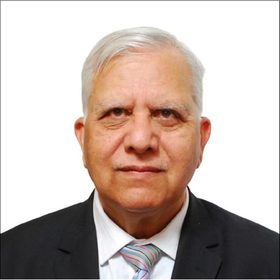
Zamir Ahmed Awan is the founder and Chair of the Global Silk Route Research Alliance, a think tank in Islamabad. He studied engineering at Shanghai University in the 1980s, and years later he went back to China as Pakistan's science counsellor in Beijing, from 2010 until 2016, working on science and higher education cooperation between the two countries.…