Pakistan-China Space Cooperation: From Earth to the Stars, A New Chapter in an Iron-Clad Friendship. 巴基斯坦与中国航天合作:从地球到星辰,铁壁友谊的新篇章.

(下边有中文翻译,请继续看到底。 谢谢。)
Pakistan is preparing to achieve a historic milestone in its scientific and technological journey: sending its first astronaut to China’s Tiangong Space Station aboard the Shenzhou-24 mission. This development represents far more than a spaceflight. It reflects decades of Pakistan-China friendship, growing scientific cooperation, confidence, and a shared commitment to exploring new frontiers of knowledge.
According to Pakistan’s Space and Upper Atmosphere Research Commission (SUPARCO), two Pakistani candidates, Muhammad Zeeshan Ali and Khurram Dawood, have completed their astronaut training in China. One will be selected as a payload specialist for the mission, while the other will serve as the backup candidate.
Pakistan’s Planning Minister Ahsan Iqbal announced November 25, 2026, as the expected launch date from China’s Jiuquan Satellite Launch Centre aboard a Long March-2F rocket. However, the China Manned Space Agency (CMSA) has yet to formally confirm the precise launch schedule. The Pakistani astronaut is expected to spend approximately one week aboard Tiangong before returning to Earth aboard the Shenzhou-23 spacecraft. The exact landing date remains subject to official confirmation.
This will be the first time a foreign astronaut participates in China’s crewed space programme and visits its space station. For Pakistan, it will mark the beginning of its human spaceflight journey.
A remarkable expression of mutual trust
Space exploration is among the most technologically demanding and sensitive areas of international cooperation. Human spaceflight requires extraordinary confidence between participating countries because astronaut safety depends on advanced engineering, rigorous operational procedures, scientific capabilities, and extensive technical coordination.
China’s decision to welcome a Pakistani astronaut aboard Tiangong therefore carries particular significance. It demonstrates the depth of institutional cooperation and confidence between the two countries.
The Shenzhou-24 mission logo, featuring jasmine, Pakistan’s national flower, adds a beautiful cultural dimension to this achievement. It symbolizes the friendship between two nations whose relationship has developed through generations of cooperation.
Pakistan and China enjoy an exceptionally close partnership, built over more than seven decades of diplomatic relations. Their cooperation extends across defense, education, infrastructure, trade, science, technology, agriculture, and now human spaceflight.
This achievement is particularly meaningful because China is opening its crewed space program to an international partner for the first time. Pakistan’s participation reflects the strength of this relationship and creates opportunities for further international scientific collaboration.
From Badr-1 to Tiangong: A history of space cooperation
Pakistan-China space cooperation did not begin with this astronaut mission. It is the result of a long journey of scientific collaboration.
Pakistan established SUPARCO in 1961, becoming one of the early developing countries to establish a national space agency. China subsequently became an important partner in Pakistan’s efforts to develop its space capabilities.
A significant milestone came in July 1990 when Pakistan’s first experimental satellite, Badr-1, was launched aboard a Chinese Long March rocket. This provided valuable experience for Pakistani scientists and engineers in satellite development and space operations.
In April 2007, China and Pakistan signed a framework agreement to deepen aerospace scientific and technological cooperation. This established an institutional foundation for collaboration in communication satellites, training, applications, and research.
In August 2011, Pakistan’s communication satellite PakSat-1R was successfully launched with Chinese cooperation, strengthening the country’s telecommunications and broadcasting capabilities.
Another important achievement followed on July 9, 2018, when Pakistan’s Remote Sensing Satellite PRSS-1 and its indigenously developed PakTES-1A were launched together from China’s Jiuquan Satellite Launch Centre.
These missions strengthened Pakistan’s capabilities in satellite imaging, agricultural monitoring, urban planning, environmental protection, water management, and disaster assessment.
In 2024, China launched Pakistan’s PakSat-MM1 communication satellite and facilitated the deployment of ICUBE-Qamar, Pakistan’s first lunar CubeSat, through the Chang’e-6 lunar exploration mission. The latter represented another important step in Pakistan’s participation in international lunar research.
These achievements demonstrate that bilateral space cooperation has progressively expanded from satellite launches to satellite development, scientific research, lunar exploration, and human spaceflight.
Training Pakistani astronauts and developing scientific talent
One of the most valuable dimensions of this partnership is human-resource development.
Under the agreement signed between SUPARCO and CMSA on February 28, 2025, China undertook to select and train Pakistani astronaut candidates for participation in its space program.
The two selected candidates, Muhammad Zeeshan Ali and Khurram Dawood, underwent extensive medical, psychological, physical, and professional assessments before completing advanced training at China’s astronaut training facilities.
Their preparation included spacecraft operations, practical technical exercises, physical conditioning, adaptation to microgravity, tolerance of high acceleration, scientific payload operations, and intensive Chinese-language instruction.
Their Chinese-language education is particularly interesting. Both candidates previously studied Chinese at the Confucius Institute in Islamabad. This illustrates how language education can become a bridge connecting international scientific cooperation with advanced technological capabilities.
The China Astronaut Research and Training Center has played an important role in preparing the candidates for this demanding assignment.
Beyond the two astronauts, Pakistani students, engineers, and researchers have benefited from educational and technical exchanges with Chinese universities and research institutions. Such cooperation is gradually creating a generation of Pakistani professionals with exposure to satellite engineering, aerospace sciences, remote sensing, space applications, and advanced research.
Institutions including Shanghai Jiao Tong University have also developed collaborative programs with Pakistani space researchers and universities.
China’s contribution should therefore be understood not simply in terms of providing launch facilities or spacecraft but also in terms of developing Pakistani scientific and technical human resources.
Scientific benefits for Pakistan
The Pakistani astronaut will serve as a payload specialist, participating in scientific activities aboard Tiangong. According to reports, four Pakistani research payloads have been selected from more than 300 proposals, with research interests including biotechnology, food security, and climate change.
This is particularly relevant to Pakistan’s development priorities.
Space-based scientific research can contribute to understanding agricultural productivity, environmental changes, biological processes, and the effects of microgravity on living organisms.
The knowledge and experience gained through this mission can strengthen Pakistan’s future research capabilities and encourage universities, laboratories, and technology institutions to participate more actively in space science.
Pakistan can also benefit from future cooperation in satellite navigation, Earth observation, telecommunications, climate monitoring, disaster management, and advanced manufacturing.
The mission should inspire young Pakistanis to pursue careers in science, mathematics, engineering, artificial intelligence, robotics, and aerospace technology.
It also creates an opportunity to establish stronger links between Pakistani universities, SUPARCO, China’s space institutions, and industrial research organizations.
A new horizon for the China-Pakistan partnership
The Shenzhou-24 mission represents a natural extension of the broader strategic relationship between Pakistan and China.
CPEC has strengthened cooperation in infrastructure, energy, transportation, and industrial development. Space cooperation now adds another dimension to this partnership, demonstrating that bilateral collaboration is expanding into increasingly sophisticated scientific and technological fields.
China’s willingness to train Pakistani astronauts and provide access to its space station creates opportunities that Pakistan could not easily develop independently at this stage.
In return, Pakistan brings its scientific expertise, research priorities, and commitment to peaceful international space cooperation.
The future should include joint satellite development, space laboratories, university research programs, astronaut training, lunar exploration, and cooperation in emerging technologies.
Pakistan’s participation in China’s space program should also encourage other developing countries to explore opportunities for peaceful scientific collaboration.
From the mountains to the stars
The forthcoming mission is a proud moment for Pakistan and a significant achievement in China-Pakistan relations.
From Badr-1 in 1990 to the Shenzhou-24 human spaceflight mission in 2026, the two countries have travelled a remarkable distance together. Their cooperation has evolved through changing technological generations, demonstrating the value of long-term partnerships based on trust, continuity, and shared aspirations.
The jasmine flower on the mission emblem carries a message that goes beyond symbolism. It represents a friendship that has expanded from diplomatic relations to scientific laboratories, satellite launch centers, lunar exploration, and now the Chinese space station.
As Pakistan prepares to send its first astronaut into space, the achievement should inspire a new generation of scientists, engineers, researchers, and innovators.
Pakistan and China have built bridges on Earth; together, they are now opening new pathways towards the stars.
This is not merely another milestone in space exploration. It is a new chapter in an extraordinary friendship, with the promise of scientific progress, technological advancement, and shared prosperity for generations to come.
巴基斯坦与中国航天合作:从地球到星辰,铁壁友谊的新篇章.
巴基斯坦正准备在科技发展史上迈出重要一步:通过神舟-24任务,将首位宇航员送往中国天宫空间站。这一成就远不止是一次航天飞行,它体现了巴基斯坦与中国的几十年来深厚的友谊、日益深化的科技合作、彼此间的信心以及共同探索知识新边界的坚定承诺。
据巴基斯坦太空与高层大气研究委员会(SUPARCO)消息,两名巴基斯坦籍候选人——穆罕默德·泽伊尚·阿里和库拉姆·达乌德——已完成在中国的宇航员培训。其中一人将被选为此次任务的载荷专家,另一人则担任备用人选。
巴基斯坦计划部长阿赫桑·伊克巴尔宣布,预计于2026年11月25日由中国酒泉卫星发射中心搭载长征-2F火箭从中国发射升空。不过,中国载人航天工程局(CMSA)尚未正式确认具体发射时间。预计该巴基斯坦宇航员将在天宫空间站停留约一周,之后搭乘神舟-23飞船返回地球。确切的着陆日期仍需官方确认。
这将是外国宇航员首次参与中国载人航天项目并访问中国空间站。对巴基斯坦而言,这标志着其载人航天旅程的开端。
互信的显著体现
太空探索是国际合作中技术要求最高、最敏感的领域之一。载人航天需要参与国之间建立非凡的信任,因为宇航员的安全依赖于先进的工程技术、严格的操作程序、科学能力以及广泛的技术协调。
因此,中国决定邀请一名巴基斯坦宇航员登上天宫空间站具有特殊意义,充分体现了两国在制度层面的合作深度与互信程度。
神舟24号任务标志以巴基斯坦国花茉莉花为设计元素,为这一成就增添了美好的文化内涵,象征着两国世代合作所形成的深厚友谊。
巴基斯坦与中国拥有长达七十余年的外交关系,双方建立了极为紧密的伙伴关系。两国合作涵盖国防、教育、基础设施、贸易、科技、农业,以及如今的人类航天飞行等领域。
这一成就意义非凡,因为中国首次向国际合作伙伴开放载人航天计划。巴基斯坦的参与体现了两国关系的牢固性,并为未来进一步开展国际合作创造了机遇。
从“巴德尔-1”到“天宫”:航天合作的历史
巴基斯坦与中国的航天合作并非始于此次宇航员任务,而是长期科学协作的成果。
1961年,巴基斯坦成立了国家航天局(SUPARCO),成为最早建立国家航天机构的发展中国家之一。此后,中国成为中国在推动巴基斯坦发展航天能力方面的重要合作伙伴。
1990年7月,巴基斯坦首颗实验卫星“巴德尔-1”由长征火箭发射升空,标志着一个重要的里程碑。这为巴基斯坦的科学家和工程师在卫星开发和空间运营方面提供了宝贵的经验。
2007年4月,中国与巴基斯坦签署了一项框架协议,旨在深化航空航天科技合作。该协议为通信卫星、人才培养、应用及科研领域的合作奠定了制度基础。
2011年8月,在中国协助下,巴基斯坦通信卫星PakSat-1R成功发射,进一步增强了该国的电信和广播能力。
2018年7月9日,巴基斯坦遥感卫星PRSS-1与自主研发的PakTES-1A卫星从中国酒泉卫星发射中心联合发射,取得又一重要成就。这些任务显著提升了巴基斯坦在卫星成像、农业监测、城市规划、环境保护、水资源管理和灾害评估等方面的能力。
2024年,中国发射了巴基斯坦的PakSat-MM1通信卫星,并通过嫦娥六号月球探测任务,协助部署了巴基斯坦首颗月球立方星ICUBE-Qamar。后者标志着巴基斯坦参与国际月球研究又迈出了重要一步。
这些成就表明,双边航天合作已从卫星发射逐步扩展到卫星研制、科学研究、月球探测和载人航天领域。
培养巴基斯坦宇航员并发展科学人才
这一合作中最宝贵的方面之一是人力资源的开发。
根据2025年2月28日SUPARCO与CMSA签署的协议,中国将选拔并培训巴基斯坦宇航员候选人,使其参与中国的航天计划。
两名入选的候选人穆罕默德·泽伊尚·阿里和库拉姆·达乌德,在完成中国航天员训练基地的高级培训之前,接受了全面的医学、心理、体能及专业评估。
他们的培训内容包括航天器操作、实际技术演练、体能训练、微重力适应、耐受高加速度、科学载荷操作以及密集的中文教学。
其中,他们的中文教育尤为引人注目。两位候选人都曾在伊斯兰堡孔子学院学习过中文。这表明语言教育可以成为连接国际科技合作与先进科技能力之间的桥梁。
中国航天员科研训练中心在为候选人准备这一艰巨任务方面发挥了重要作用。
除了两名宇航员外,巴基斯坦的学生、工程师和研究人员也受益于与中国高校及科研机构开展的教育与技术交流。这种合作正逐步培养出一批接触卫星工程、航空航天科学、遥感、空间应用和前沿研究的巴基斯坦专业人才。
包括上海交通大学在内的多所院校也已与巴基斯坦的航天研究人员和大学开展了合作项目。
因此,中国的贡献不应仅体现在提供发射设施或航天器方面,更应体现在培养巴基斯坦科技人才方面。
对巴基斯坦的科学意义
巴基斯坦宇航员将担任载荷专家,参与天宫空间站上的科学实验活动。据报道,从300多份提案中选出了4个巴基斯坦科研载荷项目,研究领域涵盖生物技术、粮食安全和气候变化等。这与巴基斯坦的发展重点高度契合。
空间科学研究有助于理解农业生产力、环境变化、生物过程以及微重力对生物体的影响。
通过此次任务获得的知识和经验,将增强巴基斯坦未来的研究能力,并鼓励大学、实验室和技术机构更积极地参与空间科学领域的工作。
巴基斯坦还可从未来在卫星导航、地球观测、通信、气候监测、灾害管理及先进制造等方面的合作中受益。
该任务应激励年轻的巴基斯坦人投身于科学、数学、工程、人工智能、机器人技术和航空航天技术等领域的职业发展。
同时,也为巴基斯坦高校、巴基斯坦航天局(SUPARCO)、中国航天机构以及工业研究组织之间建立更紧密的联系创造了机遇。
中巴伙伴关系的新航程
神舟24号任务是巴基斯坦与中国之间更广泛战略关系的自然延伸。
“一带一路”倡议加强了在基础设施、能源、交通和工业发展方面的合作。如今,航天合作为这一伙伴关系增添了新的维度,表明双边协作正逐步拓展至日益复杂的科技领域。
中国愿意培训巴基斯坦宇航员,并提供其空间站的使用权限,创造了巴基斯坦现阶段难以独立实现的机遇。
作为回报,巴基斯坦则贡献自身的科学专长、研究重点以及对和平国际航天合作的坚定承诺。
未来应包括联合卫星开发、空间实验室、大学科研项目、宇航员训练、月球探索以及新兴技术领域的合作。
巴基斯坦参与中国的航天计划,也应鼓励其他发展中国家探索和平科学合作的机会。
从山川到星辰
即将到来的任务对巴基斯坦而言是值得骄傲的时刻,也是中巴关系中的重要成就。
从1990年的“巴德尔-1”任务,到2026年神舟-24载人航天飞行任务,两国共同走过了非凡的历程。在科技不断更迭的过程中,双方合作不断深化,充分展现了基于信任、持续性和共同愿景的长期伙伴关系的价值。
任务徽章上的茉莉花所传递的信息远不止于象征意义。它代表着一种友谊,已从外交关系扩展至科研实验室、卫星发射中心、月球探测,如今又延伸至中国空间站。
随着巴基斯坦准备将首位宇航员送入太空,这一成就必将激励新一代的科学家、工程师、研究人员和创新者。
巴基斯坦与中国的桥梁已在地球上架起;如今,他们正携手开拓通往星辰的新道路。
这不仅仅是一个太空探索的又一里程碑。这是一段非凡友谊的新篇章,为子孙后代带来了科学进步、技术发展和共同繁荣的希望。
(注意: 本文是用AI翻译的,或有误差。请以原版英文为准。谢谢。)
Reference Link:- https://theopiniondesk.com/pakistan-china-space-cooperation/
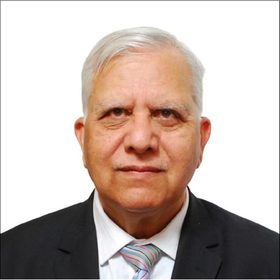
Zamir Ahmed Awan is the founder and Chair of the Global Silk Route Research Alliance, a think tank in Islamabad. He studied engineering at Shanghai University in the 1980s, and years later he went back to China as Pakistan's science counsellor in Beijing, from 2010 until 2016, working on science and higher education cooperation between the two countries.…