Pakistan: ‘Turing research into viable tech’: PC to set up 10 national catapults: Ahsan

Federal Minister for Planning, Development and Special Initiatives Ahsan Iqbal said that the Planning Commission would establish 10 National Catapults to help universities and industry turn research into commercially viable technologies and products.
The minister announced the initiative after he visited IRADA on Friday.
He said that the network would be established under Science, Technology and Engineering for Development (STED), a flagship initiative of URAAN Pakistan.
He said that IRADA would be the first state-owned enterprise formally designated to lead a National Catapult. He said it will lead the Semiconductor and Advanced Electronics Catapult, marking the first step in implementing the national network.
The Minister said, “For decades, Pakistan has recognised the need for closer collaboration between universities and industry. A promising idea may work in a university laboratory, but a manufacturer needs to know whether it can perform reliably on a factory floor, meet the required standards and be produced at a competitive cost. That is where many promising technologies stall. Our researchers and firms need facilities where they can solve those problems together.
“The National Catapults will give university teams, start-ups and manufacturers access to shared testbeds, prototyping facilities and pilot production lines. A university team will be able to refine a prototype with engineers from industry.”
He said a small manufacturer will be able to test a new process before committing capital to a production line. Investors will be able to assess a technology on the strength of its performance under real operating conditions.
To grow our exports, we must be able to design, test and manufacture higher-value products in Pakistan, he said. The Catapults will help firms meet international standards and develop local alternatives to imported technologies where we can compete. They will give industry a direct role in shaping research priorities and help create skilled jobs for young Pakistani engineers, scientists and technicians, he added.
He said we would judge the network by how many technologies reach commercial production, how many Pakistani firms gain access to new markets and how many skilled jobs they create. He said these are the outcomes that will turn investment in science and engineering into stronger industry and better livelihoods.
He said that ten National Catapults would include Semiconductor and Advanced Electronics, High-Value Manufacturing and Industry 4.0, Digital Economy and Artificial Intelligence, AgriTech and Food Technology, Health Technology and MedTech, Clean Energy and Climate Technology, Mines, Minerals and Materials, Defence Technology and Dual-Use, Space Technology, and Chemicals and Composites.
He said that the Catapults will focus on Technology Readiness Levels (TRLs) 4–7, covering the stages from laboratory validation to prototype demonstration in operational settings. He said that they will help universities commercialise intellectual property, identify emerging technologies and future workforce needs, and support firms in validating technologies before investing in full-scale production. He said that the network will also work to attract foreign direct investment and risk capital and inform the development of regulations, standards and certification frameworks.
He said the initiative draws on the experience of the United Kingdom’s Catapult Network, Germany’s Fraunhofer Institutes, Manufacturing USA and Singapore’s A*STAR. It will bring together universities, research institutions, industry, entrepreneurs, investors and government agencies to help more technologies developed in Pakistan reach domestic and international markets.
Reference Link:- https://www.brecorder.com/news/40450096
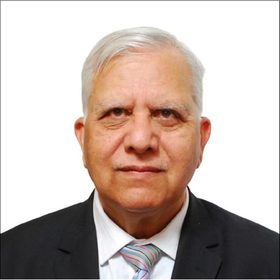
Zamir Ahmed Awan is the founder and Chair of the Global Silk Route Research Alliance, a think tank in Islamabad. He studied engineering at Shanghai University in the 1980s, and years later he went back to China as Pakistan's science counsellor in Beijing, from 2010 until 2016, working on science and higher education cooperation between the two countries.…