

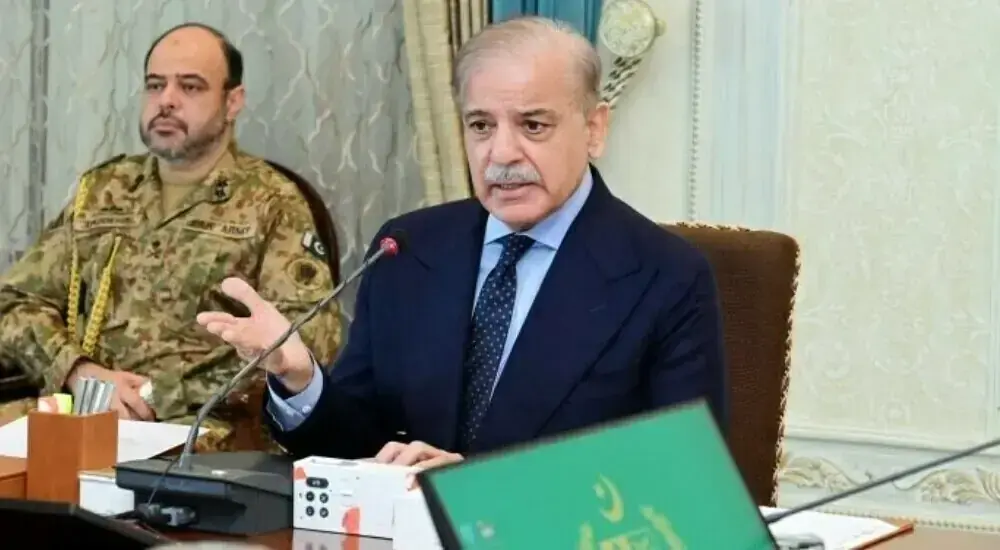

Prime Minister Shehbaz Sharif has called for a shift from stabilization to pro-growth policies with a focus on exports, productivity, employment and technology. While many may consider his call to be a very tall order, in economic theory growth can promote exports, productivity and employment; however, the operative word is ‘can’ because appropriate macroeconomic policies are required to jumpstart growth.
Finance Minister Mohammad Aurengzeb stated in Karachi the same day that Pakistan’s economy is moving in the right direction and outlined six priorities aimed at consolidating macroeconomic stability and creating an enabling environment for private sector-led growth and investment: bringing permanence to macroeconomic stability, through lasting fiscal and external resilience and stronger shock-absorbing capacity, shifting from stabilization to sustainable inclusive and responsible growth driven by productivity, exports, and jobs.
The most recent data uploaded on the Finance Division website indicates that the flow of credit to the private sector was negative 364.5 million rupees (July-August this year), compared with negative 170 million rupees in the same period last year; exports rose marginally from 5.24 billion dollars in July-August 2025 to 5.44 billion dollars in the same period this year, while imports rose from 10.4 to 11.6 billion dollars.
The International Monetary Fund (IMF) document dated 10 October 2024, titled Article IV Consultation and Request for an Extended Fund Arrangement, argues that “Economic volatility has only increased over time, with a tight correlation between Pakistan’s boom-bust economic outcomes and its macroeconomic policies over past decades. These cycles disrupt economic growth, undermine confidence, and adversely affect people’s living standards.
Understanding the role of monetary policy in these cycles can help develop strategies to achieve economic stability.” And in Appendix IV of the document, the Fund clarifies that “repeated attempts to boost economic activity through fiscal and monetary stimulus have not translated into durable growth, as domestic demand increased beyond Pakistan’s sustainable capacity, resulting in inflation and depletion of reserves, given a strong political preference for stable exchange rates. Each subsequent bust has further harmed Pakistan’s policymaking credibility and investment sentiment.”
Today, macroeconomic policies remain very tightly associated with the ongoing EFF – Pakistan’s policy rate at 11.5 percent is one of the highest in the region, tariffs on electricity and gas are higher than in competitor countries, thereby raising input costs to levels that make our exports uncompetitive as well as providing a disincentive to many manufacturing units to produce for the home market because the large porous borders make smuggling extremely attractive. According to independent economists, the unemployment rate has reached a high of 22 percent when considering the Labour Force Survey, while poverty has risen to 44 percent according to the World Bank.
Be that as it may, it is important to note that the economy remains quite fragile. This fragility is evident from two statistics that point to stabilization having been achieved. First, foreign exchange reserves held by the State Bank rose to a historic high of 21,439.2 million dollars as of September 25, 2026. While this amount would have covered more than eight months of imports on February 27 of this year (prior to the conflict in the Middle East), today it is estimated to cover just over three months of imports—the bare minimum recommended by donor agencies.
Second, following improvements in Pakistan’s credit rating (which still remains below investment grade), access to commercial credit has risen; however, this credit typically carries a higher interest rate than loans from multilateral and bilateral lenders.
To increase leverage with multilateral, bilateral, and international commercial markets, the government must focus on creating space within the macroeconomic conditions imposed by the IMF.
Needless to say, consistent implementation of these policies is always critical to reaching the staff-level agreement (the IMF reached a staff-level agreement with Pakistan a couple of days ago), which forms the basis for tranche releases as well as debt rollovers by China and Saudi Arabia.
The options are limited given the pervasive influence of the Fund on both national policies and specific sectors. Indeed, the October 10 document argues that “deviations from consistent implementation of programmed policies have created significant domestic and external imbalances”—a serious charge given that Pakistan is currently on its 25th IMF programme.
Finance Minister Aurangzeb’s focus must therefore be on reducing budgeted current expenditure by at least 2 to 3 trillion rupees. This can be achieved by ushering in pension reforms, slashing all non-operational expenses, and desisting from salary increases at the taxpayers’ expense. To raise revenue, the Federal Board of Revenue would be well advised to seek guidance from the Tax Reform Coordination Group recommendations (2010–13), which were highly appreciated at the time but never implemented.
Reference Link:- https://www.brecorder.com/news/40443480