

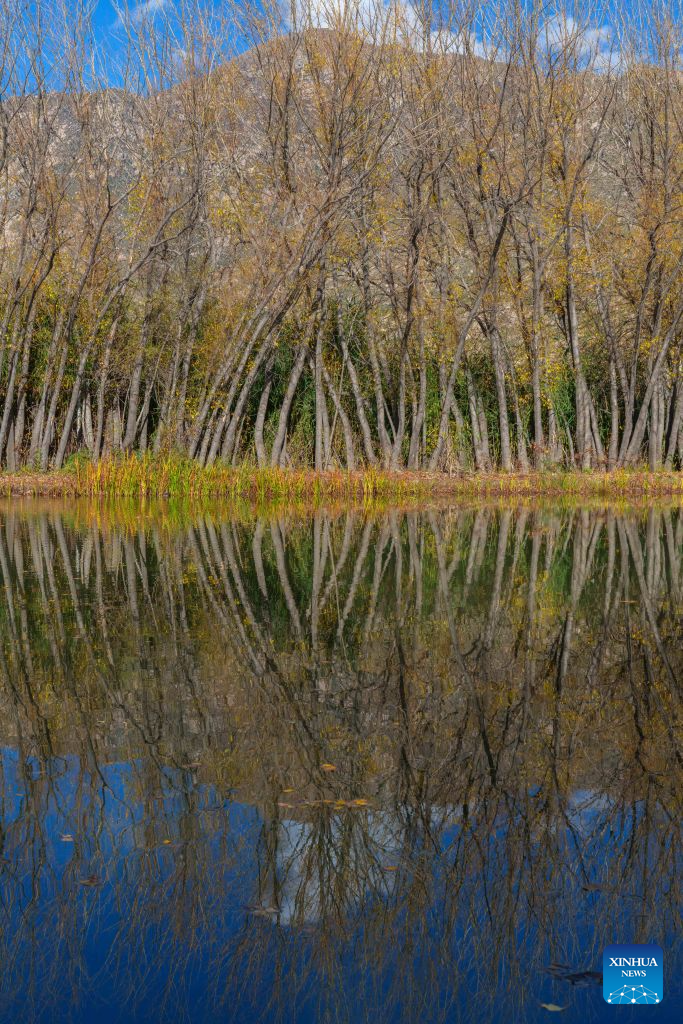

This photo taken on Oct. 6, 2026 shows a view of the Lhalu wetland in Lhasa, southwest China’s Xizang Autonomous Region. Lhalu Wetland National Nature Reserve, known as “the Lung of Lhasa”, features a vibrant and thriving ecological landscape in autumn. (Xinhua/Tenzing Nima Qadhup)

A bird is seen at the Lhalu wetland in Lhasa, southwest China’s Xizang Autonomous Region, Oct. 6, 2026. Lhalu Wetland National Nature Reserve, known as “the Lung of Lhasa”, features a vibrant and thriving ecological landscape in autumn. (Xinhua/Tenzing Nima Qadhup)

A bird is seen at the Lhalu wetland in Lhasa, southwest China’s Xizang Autonomous Region, Oct. 6, 2026. Lhalu Wetland National Nature Reserve, known as “the Lung of Lhasa”, features a vibrant and thriving ecological landscape in autumn. (Xinhua/Tenzing Nima Qadhup)

This photo taken on Oct. 6, 2026 shows the Lhalu wetland and the Potala Palace in distance in Lhasa, southwest China’s Xizang Autonomous Region. Lhalu Wetland National Nature Reserve, known as “the Lung of Lhasa”, features a vibrant and thriving ecological landscape in autumn. (Xinhua/Tenzing Nima Qadhup)

This photo taken on Oct. 6, 2026 shows a view of the Lhalu wetland in Lhasa, southwest China’s Xizang Autonomous Region. Lhalu Wetland National Nature Reserve, known as “the Lung of Lhasa”, features a vibrant and thriving ecological landscape in autumn. (Xinhua/Tenzing Nima Qadhup)

A bird is seen at the Lhalu wetland in Lhasa, southwest China’s Xizang Autonomous Region, Oct. 6, 2026. Lhalu Wetland National Nature Reserve, known as “the Lung of Lhasa”, features a vibrant and thriving ecological landscape in autumn.
Reference Link:- https://english.news.cn/20261006/1a1d94c6f81f4a09bd040f1d9a1be303/c.html