

(下边有中文翻译,请继续看到底。 谢谢。)
At a time when wars, trade disputes, geopolitical rivalry and widening development gaps are testing the international system, China used the 81st session of the United Nations General Assembly to present a clear message: the world needs cooperation, not confrontation.
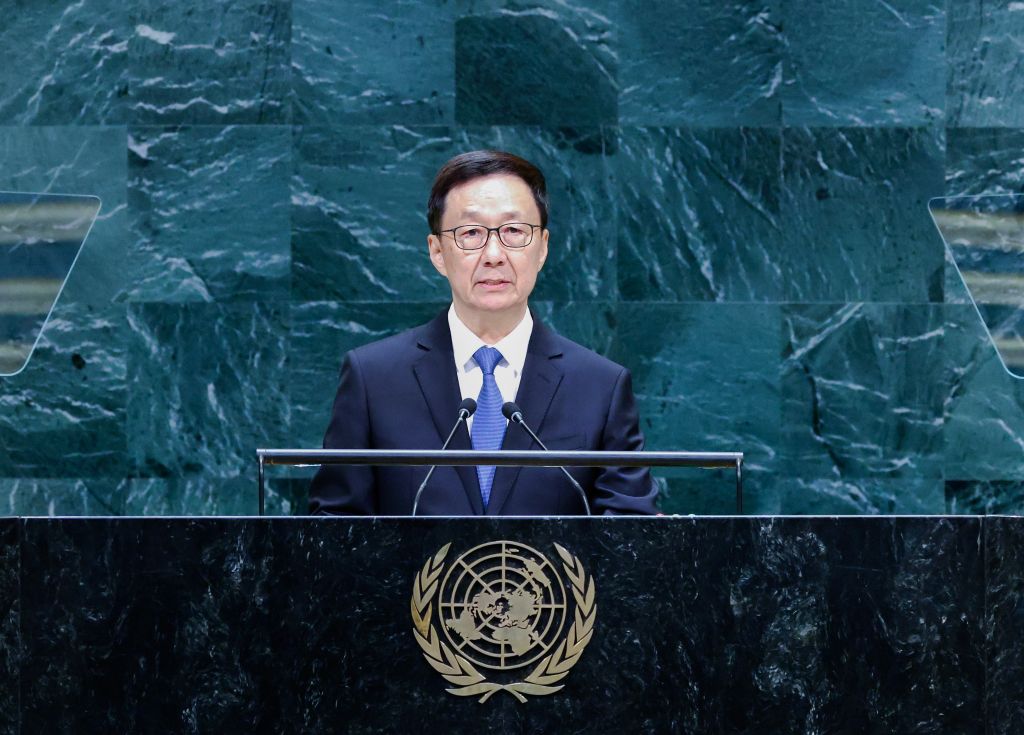
Vice President Han Zheng represented China at the General Debate in New York on September 26, only days after President Xi Jinping’s state visit to Washington. His speech placed peace, development, multilateralism and international law at the center of Beijing’s foreign-policy narrative. The timing was significant. Even as China and the United States seek to manage their differences, Beijing sought to demonstrate that its global role extends beyond bilateral relations with Washington.
Han’s central argument was straightforward: “The world wants peace not war.” He called for protection of the post-Second World War international order centered on the United Nations and international law, while opposing bloc confrontation, a Cold War mentality and unilateral military action that bypasses the UN Security Council. He also argued that major powers have special responsibilities for maintaining international peace and security.
This reflects an important reality of China’s transformation. China is no longer merely a regional economic power. Its economic scale, technological capabilities, diplomatic reach and participation in international institutions have made it one of the principal actors in global affairs. With greater influence comes greater expectations. Beijing increasingly presents its development not only as a national achievement but as a platform for contributing to international development and governance.
China has also sought to translate this message into institutional initiatives. The Global Development Initiative, launched by Xi Jinping in 2021, has been presented as a mechanism for supporting the UN Sustainable Development Goals and strengthening development cooperation with the Global South. At a UN dialogue this week, Han said China had supported more than 10,000 human-resources training programmes and pledged deeper cooperation in areas including artificial intelligence, the digital economy, clean energy and disaster prevention.
China’s record in UN peacekeeping provides another practical dimension to its claim of international responsibility. The UN currently lists Chinese personnel serving in nine peacekeeping missions. Chinese peacekeepers have also provided medical, logistical and community-support services in countries such as South Sudan.
Han’s economic message was equally important. His warning that “protectionism produces no winners” reflected China’s interest in maintaining open trade and stable supply chains. For developing countries, disruptions in trade, energy and investment can have consequences far beyond tariff disputes between major economies. China therefore presented an open, WTO-centered trading system as part of a broader development agenda.
On the Middle East, China called for respect for Gulf states’ sovereignty, reconstruction of Gaza under the principle of “Palestinians governing Palestine” and renewed movement toward a two-state solution. On Ukraine, Han reiterated China’s support for a political settlement. He also called for an end to the Cuba blockade and sanctions. These positions reflect Beijing’s broader preference for negotiated settlements and a greater role for multilateral institutions.
China’s argument that it represents the Global South also deserves attention. Beijing describes itself as the world’s largest developing country and has increasingly sought to give developing states a stronger voice in global governance. Its proposals for UN reform, development financing, climate cooperation and narrowing the digital divide are designed partly around that constituency. Han argued that UN reform should improve the organization’s performance while increasing the voice of the Global South.
Of course, China’s expanding global role will continue to attract debate. Its stated commitment to sovereignty, multilateralism and peaceful development will inevitably be assessed against its actions and policies in different regions. A credible international role ultimately depends not only on diplomatic statements but also on consistency, transparency and willingness to work with others.
Nevertheless, China’s evolution from a developing country into a major global power has changed the international balance. Its responsibility is therefore larger than before. If Beijing can use its economic strength, diplomatic influence, development partnerships and multilateral participation to reduce conflict, support development and strengthen international cooperation, its rise can contribute to a more stable and inclusive international system.
The message from New York was therefore not simply about China’s ambitions. It was also about the responsibilities that China believes accompany its growing power.
中国的全球角色与新兴大国的责任。
在战争、贸易争端、地缘政治竞争以及日益扩大的发展鸿沟不断考验国际体系之际,中国借助第81届联合国大会向世界传递了一个明确的信息:世界需要合作,而不是对抗。
9月26日,中国国家副主席韩正在纽约代表中国出席联合国大会一般性辩论。就在几天前,中国国家主席习近平刚刚对华盛顿进行国事访问。韩正的讲话将和平、发展、多边主义和国际法置于中国对外政策叙事的核心位置。这一时机具有重要意义。即使中美两国正在努力管控分歧,北京也试图表明,中国的全球角色并不仅仅局限于与美国的双边关系。
韩正的核心观点十分明确:“世界要和平,不要战争。”他呼吁维护以联合国和国际法为核心的二战后国际秩序,反对集团对抗、冷战思维以及绕开联合国安理会采取单边军事行动。他同时指出,大国在维护国际和平与安全方面承担着特殊责任。
这反映了中国转型过程中的一个重要现实。中国已不再只是一个地区性经济大国。其经济规模、科技能力、外交影响力以及对国际机构的参与,使其成为全球事务中的主要参与者之一。随着影响力扩大,国际社会对中国承担更多责任的期待也在增加。北京越来越多地将自身的发展不仅视为国家成就,也视为参与国际发展与全球治理的平台。
中国也一直试图通过一系列机制性倡议将这一理念转化为实际行动。习近平主席于2021年提出的全球发展倡议(GDI),被定位为支持联合国可持续发展目标、加强与全球南方发展中国家合作的重要机制。在本周举行的一场联合国对话会上,韩正表示,中国已经支持开展超过1万项人力资源培训项目,并承诺进一步深化人工智能、数字经济、清洁能源和灾害预防等领域的合作。
中国参与联合国维和行动的实践,也为其承担国际责任的主张提供了另一个具体层面。目前,联合国数据显示,中国人员正在9项维和任务中服役。中国维和人员还在南苏丹等国家提供医疗、后勤以及社区支持等服务。
韩正关于经济问题的表态同样值得关注。他警告说,“保护主义没有赢家”,这反映出中国维护开放贸易和稳定供应链的利益。对于发展中国家而言,贸易、能源和投资领域的中断,其影响远不止于主要经济体之间的关税争端。因此,中国将维护以世界贸易组织(WTO)为核心的开放贸易体系,视为更广泛发展议程的一部分。
在中东问题上,中国呼吁尊重海湾国家的主权,按照“巴勒斯坦人治理巴勒斯坦”的原则推动加沙重建,并重新推动“两国方案”。在乌克兰问题上,韩正重申中国支持通过政治方式解决问题。他还呼吁结束对古巴的封锁和制裁。这些立场体现了北京更广泛的政策取向,即倾向于通过谈判解决争端,并加强多边机制在国际事务中的作用。
中国所强调的“全球南方”代表性同样值得关注。北京将中国定位为世界上最大的发展中国家,并越来越积极地推动发展中国家在全球治理中拥有更大的发言权。中国关于联合国改革、发展融资、气候合作以及缩小数字鸿沟的主张,在一定程度上都是围绕这一群体展开的。韩正表示,联合国改革应提升组织运行效率,同时增强全球南方国家的代表性和发言权。
当然,中国不断扩大的全球角色仍将引发广泛讨论。北京所强调的主权、多边主义和和平发展理念,也必然会根据其在不同地区的实际行动和政策受到评估。一个具有公信力的国际角色,最终不仅取决于外交表态,也取决于政策的一致性、透明度以及与其他国家开展合作的意愿。
尽管如此,中国从一个发展中国家逐步成长为世界主要大国,已经改变了国际力量格局。因此,中国所承担的责任也比过去更大。如果北京能够利用自身的经济实力、外交影响力、发展合作伙伴关系以及多边参与来减少冲突、促进发展并加强国际合作,那么中国的发展壮大就有可能为建设一个更加稳定、更具包容性的国际体系作出贡献。
因此,来自纽约的信息并不仅仅关乎中国的雄心,也关乎中国认为自身日益增长的实力所伴随的责任。
(注意: 本文是用AI翻译的,或有误差。请以原版英文为准。谢谢。)
Reference Link:- https://www2.apdnews.cn/en/item/26/0928/axjgakkz4cbb2a298fe399.html