

(下边有中文翻译,请继续看到底。 谢谢。)
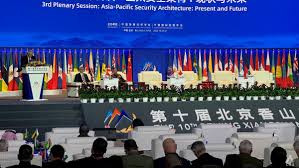
The 13th Beijing Xiangshan Forum, held from September 15 to 17, marked two decades of China’s effort to create a major international platform for defense and security dialogue. Its 20th anniversary comes at a time when geopolitical tensions are rising, traditional arms-control mechanisms are under pressure, and emerging technologies are rapidly changing the character of warfare.
The scale of this year’s gathering was significant. Around 2,000 officials, experts and observers from more than 100 countries, regions and international organizations participated. Since its establishment in 2006, the forum has evolved from a Track-II exchange among defense scholars into a prominent Track 1.5 platform involving defense officials, military leaders, diplomats and academics.
The central message of the 20th anniversary forum was captured in its theme: “Build Consensus on Stability, Advance Security Governance Together.” That message is particularly relevant when military competition increasingly risks overshadowing diplomacy.
Chinese Defense Minister Dong Jun argued that global security is at a critical juncture and called for multilateralism, dialogue, negotiated solutions and practical cooperation. He also stressed the need for greater international coordination in emerging areas of security.
The forum’s discussions extended beyond conventional military questions. Participants examined international order and strategic stability, regional conflicts, Asia-Pacific security, maritime security, outer-space governance and the risks associated with military applications of emerging technologies.
This broader agenda is one of the forum’s most important contributions. Security today cannot be understood solely through troop numbers or weapons systems. Artificial intelligence, autonomous weapons, cyber capabilities, drones, space technologies and critical infrastructure are creating challenges that cannot be managed effectively by individual countries acting alone.
The Xiangshan Forum also demonstrates China’s expanding role in international security diplomacy. Its growing participation does not mean that all governments share Beijing’s views. Nevertheless, dialogue remains valuable precisely because differences exist. A security forum becomes meaningful not when participants agree on everything, but when competing perspectives can be discussed without automatically becoming confrontation.
China has increasingly presented multilateral dialogue, negotiated dispute resolution and cooperation on emerging security challenges as elements of its approach to global governance. At the Xiangshan Forum, Chinese officials again emphasized dialogue, international cooperation and the development of rules for emerging technologies.
The forum’s China-Africa dimension was also noteworthy. The concurrent China-Africa Peace and Security Forum provided an additional channel for discussing maritime security, peace and security cooperation and capacity building between China and African partners. This reflects the growing importance of developing countries in debates about the future international security architecture.
After 20 years, the most important takeaway from the Beijing Xiangshan Forum is therefore not simply that China has established another major international conference. Its greater significance lies in the creation of a continuing venue where countries with different political systems, strategic interests and security priorities can meet.
In an increasingly fragmented international environment, communication itself is a form of risk management. The Xiangshan Forum cannot resolve major geopolitical disputes by itself, but it can contribute to maintaining channels of communication, building confidence and identifying areas where cooperation remains possible.
China’s positive contribution to global security will ultimately be measured not only by the forums it hosts, but by whether dialogue is translated into practical cooperation, crisis prevention and responsible behavior. The 20th anniversary of the Xiangshan Forum provides an opportunity to move in that direction: from managing rivalry through confrontation toward managing differences through sustained diplomacy and shared security interests.
北京香山论坛20:碎片化世界中的对话平台。
第十三届北京香山论坛于9月15日至17日举行,标志着中国二十年来致力于打造重大国际防务与安全对话平台的努力。在地缘政治紧张局势加剧、传统军控机制面临压力、新兴技术正在快速改变战争形态的背景下,本届论坛迎来二十周年。
今年论坛规模空前,来自100多个国家和地区以及国际组织的约2000名官员、专家和观察员参与了活动。自2006年成立以来,该论坛已从国防学者之间的“二级”交流平台,发展为涵盖国防官员、军事领导人、外交官和学者的具有重要影响力的“一级五”平台。
本届论坛的主题“构建稳定共识,携手推进安全治理”准确概括了其核心信息。这一主题在军事竞争日益可能超越外交的背景下显得尤为关键。
中国国防部长董俊指出,全球安全正处于关键时期,呼吁多边主义、对话、协商解决和务实合作。他还强调,在新兴安全领域需要加强国际协调。
论坛讨论内容超越了传统的军事议题,与会者还探讨了国际秩序与战略稳定、地区冲突、亚太安全、海上安全、外空治理以及新兴技术军事应用所带来的风险等问题。
这一更广泛的议程是论坛最重要的贡献之一。当今的安全问题不能仅通过军队数量或武器系统来理解。人工智能、无人武器、网络能力、无人机、航天技术和关键基础设施正在带来诸多挑战,单靠各国单独行动难以有效应对。
香山论坛也体现了中国在国际安全外交中日益增长的作用。中国的积极参与并不意味着所有国家都认同北京的观点。然而,正是由于存在分歧,对话才显得弥足珍贵。一个安全论坛的意义不在于与会者在所有问题上达成一致,而在于能够讨论不同的观点,而不自动演变为对抗。
中国日益将多边对话、协商解决争端以及应对新兴安全挑战的合作,作为其全球治理方式的重要组成部分。在香山论坛上,中方官员再次强调了对话、国际合作以及制定新兴技术规则的重要性。
论坛的中非维度也值得关注。同期举行的中非和平与安全论坛为讨论海上安全、和平与安全合作以及中国与非洲伙伴之间的能力建设提供了额外渠道,反映出发展中国家在国际安全架构未来议题上的日益重要地位。
因此,北京香山论坛二十年后最重要的收获,并不仅仅是中国又举办了一场重要的国际会议。其更重要的意义在于,为不同政治体制、战略利益和安全优先事项的国家提供一个持续性的交流平台。
在日益碎片化的国际环境中,沟通本身也是一种风险管理方式。香山论坛无法独自解决重大地缘政治争端,但它能够有助于维持沟通渠道,增进互信,并识别出仍可开展合作的领域。
中国对全球安全的积极贡献,最终不仅体现在其所主办的论坛数量上,更在于对话能否转化为实际合作、危机预防以及负责任的行为。香山论坛成立二十周年,为我们提供了迈向这一方向的契机:从通过对抗来管理竞争,转向通过持久外交与共同安全利益来化解分歧。
(注意: 本文是用AI翻译的,或有误差。请以原版英文为准。谢谢。)
Reference Link:- https://en.people.cn/n3/2026/0921/c90000-20502111.html