
Here’s how we turn Pakistani sport into a lean, mean, medal-winning machine
Source Xinhua, Dawn, Arab News, Anadolu and Minute Mirror

Pakistan’s sports crisis is a failure of institutional architecture, and our next Olympic medal is going to come by creating a durable federal-provincial settlement of sports governance

Every four years, Pakistan conducts the same post-mortem. Another Olympic Games ends in disappointment, another World Cup campaign slips away, and another international ranking declines. Athletes are questioned, coaches are criticised, federations are blamed, and governments respond with familiar promises: a new academy, a foreign coach, another committee or another stadium. For a few weeks, sport becomes a national conversation. Then the headlines disappear, public attention moves elsewhere, and the cycle begins again.
Pakistan has become remarkably adept at explaining sporting failure, but far less successful at diagnosing it. The usual explanations that we lack talent, quality coaching, modern facilities or adequate funding are not entirely wrong. But they focus on symptoms rather than the underlying problem. Pakistan’s sporting crisis is fundamentally a failure of institutional architecture: a system in which authority, responsibility and resources are dispersed across different institutions without being properly connected or aligned.
The easiest way to understand this problem is to follow the money. Punjab alone allocated approximately Rs 13 billion to sport last year, while the Pakistan Sports Board received roughly Rs 2.2 billion from the federal government. Yet the 23 national sports federations responsible for preparing Pakistani athletes for the Olympics, Asian Games and other major international competitions shared just Rs 10.2 crore, an average of approximately Rs 44 lakhs per federation for the entire year. These figures do not, by themselves, prove that Pakistan spends enough on sport. They demonstrate something more important: there is a significant disconnect between public expenditure and the institutions responsible for producing sporting outcomes.
That distinction matters. The argument should not be reduced to whether Pakistan needs a larger sports budget. If substantial public resources are already being spent but facilities remain inadequate, competitions are irregular, federations struggle to finance high-performance programs, and athletes lack consistent pathways to international competition, then the first question must be whether existing resources are being governed effectively. If we cannot demonstrate that the money already available is being translated into better facilities, stronger athlete development and improved performance, it is difficult to argue that simply increasing allocations will solve the problem. More money may be necessary in particular areas, but money alone cannot compensate for fragmented institutions, poor coordination and weak accountability.
The problem, therefore, is not simply how much Pakistan spends on sport. It is how that spending is planned, distributed, coordinated and evaluated. Public expenditure is too often treated as an achievement in itself. Budgets are allocated, projects are announced, facilities are constructed and programs are launched, but there is rarely a sufficiently strong institutional mechanism asking what those investments have actually produced. A stadium is not a sporting outcome. An academy is not a sporting outcome. A competition is not a sporting outcome. They are inputs into a system whose ultimate purpose is to expand participation, develop athletes and produce international performance.
The Pakistan Cricket Board provides an instructive contrast, although not because it represents a perfect model of governance. The PCB has itself experienced political intervention, changes in leadership and recurring governance controversies. Yet despite those weaknesses, it has developed the institutional and commercial capacity to sustain itself through broadcasting rights, sponsorships, international cricket and the HBL Pakistan Super League. Its significance is therefore not that it has solved governance in Pakistani sport, but that it demonstrates a degree of institutional and financial independence and resilience that the rest of the sporting system has struggled to develop.
The success of the HBL PSL, for example, did not result from Pakistan suddenly discovering exceptional cricketing talent. That talent already existed. The difference was that an institution was able to organise, commercialise and build a sustainable competitive platform around it. The lesson is not that every sport can simply copy cricket’s commercial model. It is that talent requires institutions capable of converting potential into opportunity, competition and sustained development. The question Pakistan should therefore be asking is why similar institutional capacity has not been built, where appropriate, across other sports.

This becomes particularly important when we consider the constitutional structure of Pakistani sport. The 18th Amendment devolved sport to the provinces. Devolution itself should not be treated as the problem. Provincial governments are better placed to develop grassroots participation, community sport, schools, clubs and infrastructure according to local needs. The problem is that Pakistan did not develop an effective mechanism to connect provincial responsibility with national sporting objectives.
Today, provincial governments control a substantial share of public expenditure on sport, while national federations remain responsible for preparing athletes to represent Pakistan internationally. The Pakistan Sports Board sits between these levels, expected to oversee and coordinate a system over which it exercises only partial authority. In effect, resources are concentrated largely at the provincial level, international sporting responsibility remains largely with national institutions, and accountability is dispersed between them. Devolution distributed authority, but the mechanisms required to coordinate that authority were never adequately developed.
This is where Pakistan’s outdated sports governance framework becomes particularly problematic. The existing National Sports Policy dates from 2005, when the institutional and constitutional circumstances of Pakistani sport were fundamentally different. Its provisions were designed around a much more centralised sports architecture and cannot, by themselves, provide a sufficiently coherent framework for a system in which provinces now carry constitutional responsibility for sports development. The issue is therefore not merely that Pakistan needs another sports policy. It needs a governance framework designed for the constitutional reality that exists today.
Pakistan should therefore develop and adopt a comprehensive National Sports Code that becomes the principal governance framework for sport across the federation. The purpose of such a Code should not be to re-centralise sport or undermine the autonomy of national federations. It should do the opposite: establish clear institutional boundaries so that every actor knows the extent of its authority, responsibility and accountability.
A modern National Sports Code should define the respective roles of the federal government, provincial governments, the proposed Pakistan Sports Commission, national sports federations, provincial and district associations, educational institutions and clubs. It should establish how provincial sporting investment connects with national high-performance objectives, how national teams and international representation are governed, how public funding is allocated and monitored, and how infrastructure standards are established and enforced. It should also provide a transparent framework for federation elections, tenure, financial reporting, conflict-of-interest rules, athlete welfare, safeguarding, dispute resolution and performance accountability.
Most importantly, the Code should resolve the central question created by devolution: where does provincial responsibility end and national sporting responsibility begin, and what mechanism connects the two?
That question cannot be answered through administrative practice or ad hoc arrangements. It requires a common framework agreed across the federation. The Council of Common Interests is therefore particularly important. A National Sports Code should provide the basis for a durable federal-provincial settlement in sports governance, allowing provinces to retain their constitutional responsibilities while establishing mechanisms through which national sporting objectives can be jointly pursued.
Such a Code would also provide the legal and institutional foundation for the reforms that Pakistan’s sports system requires. The Pakistan Sports Board should evolve into an independent statutory Pakistan Sports Commission, with a clearly defined mandate, merit-based appointments, fixed-term leadership and sufficient institutional independence from day-to-day political direction. Its core responsibility should be regulation, standards, oversight and performance accountability rather than the simultaneous delivery of every function within the sporting ecosystem.
This separation is important because the PSB has historically been expected to perform several fundamentally different functions: regulate sport, allocate public funding, operate facilities, implement development programs and oversee national federations. These responsibilities require different incentives and different forms of accountability. A regulator should be sufficiently independent of the organisations it regulates. An operator should be judged on service delivery and asset management. A funding institution should allocate resources transparently against clearly defined priorities. An evaluator should be able to assess performance independently of those responsible for delivering it.
When these functions are concentrated within one institution, accountability becomes blurred. The regulator becomes the operator, the operator becomes the funder, and the funder becomes the evaluator. The result is an institutional structure in which responsibility is difficult to locate and performance is difficult to measure. A National Sports Code should therefore establish clear institutional separation while providing the coordination mechanisms necessary to make the system function as a whole.
The Code must also provide the basis for a more disciplined approach to public financing. The objective should not simply be to increase or decrease allocations, but to ensure that funding is tied to clearly defined priorities and measurable outcomes. National federations should be required to demonstrate how public resources will support athlete development, competition structures, coaching standards and international preparation. Infrastructure investment should be assessed not merely on whether a facility has been constructed, but whether it meets technical standards, is properly maintained and contributes to athlete development.

A permanent Pakistan Sports Endowment Fund could provide a longer-term financing mechanism for high-performance sport, drawing on federal seed funding, structured corporate contributions and other sustainable sources. But such a fund would only be effective if it operates within a stronger governance framework. An additional source of money cannot solve a system that does not know clearly who is responsible for converting that money into results. Financial reform without institutional reform risks simply putting more resources into the same fragmented architecture.
The National Sports Code should also establish a formal relationship between provincial investment and national sporting performance. A Provincial Sports Compact, negotiated through the Council of Common Interests, could provide that bridge. Provinces would retain their constitutional responsibility for grassroots participation, community sport and infrastructure while jointly aligning a portion of their investment with nationally agreed high-performance priorities. National federations, meanwhile, would retain technical authority over their respective sports, including coaching standards, talent identification, competition structures and national teams.
Such a framework would help create the athlete pathway Pakistan currently lacks: schools feeding clubs, clubs feeding district competitions, districts feeding provincial programs, provincial programs feeding national federations and national federations preparing athletes for international competition. The objective would not be to centralise sport, but to connect institutions that currently operate largely in parallel.
This also requires a clearer division of responsibilities. Governments should create the conditions in which sport can develop; they should not attempt to become the technical administrators of every sport. National federations should be responsible for the technical development of their respective disciplines. Provinces should provide infrastructure, participation opportunities and public investment. Schools and clubs should form the grassroots base. An independent national commission should establish standards, regulate, monitor, and evaluate. The National Sports Code should provide the framework within which all of these institutions operate.
Pakistan’s sporting history demonstrates that talent is not the fundamental problem. From the golden era of hockey to Arshad Nadeem’s historic Olympic triumph, exceptional athletes have repeatedly emerged. What has remained elusive is a system capable of producing such excellence consistently. Individual champions continue to appear, often succeeding despite institutional weaknesses rather than because of institutional strength. Pakistan has produced champions; it has struggled to produce a championship system.
Reference Link:- https://profit.pakistantoday.com.pk/2026/09/07/heres-how-we-turn-pakistani-sport-into-a-lean-mean-medal-winning-machine
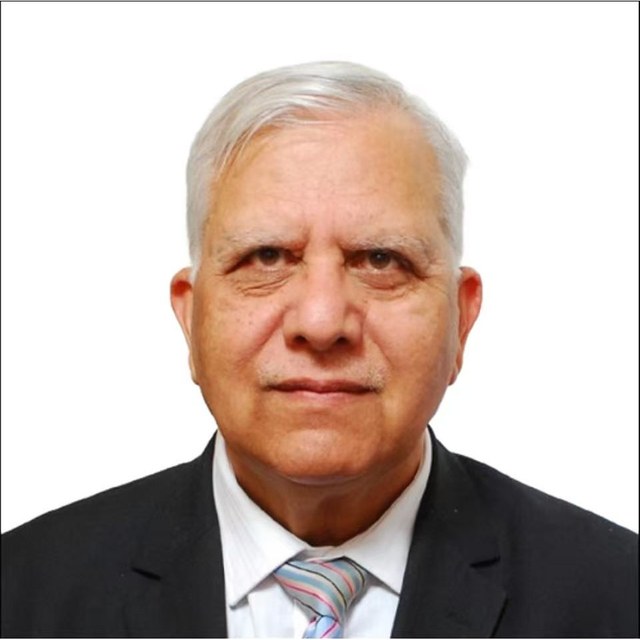
Zamir Ahmed Awan is the founder and Chair of the Global Silk Route Research Alliance, a think tank in Islamabad. He studied engineering at Shanghai University in the 1980s, and years later he went back to China as Pakistan's science counsellor in Beijing, from 2010 until 2016, working on science and higher education cooperation between the two countries.…