
SCO and Pakistan: A Partnership for a More Connected Eurasia. SCO与巴基斯坦:构建更紧密欧亚合作的伙伴关系。

(下边有中文翻译,请继续看到底。 谢谢。)
The Shanghai Cooperation Organisation (SCO) has evolved considerably since its establishment in Shanghai on June 15, 2001. What began with six countries—China, Russia, Kazakhstan, Kyrgyzstan, Tajikistan and Uzbekistan—has developed into one of Eurasia’s most significant multilateral organisations. Pakistan joined as a full member in 2017, and Belarus became the tenth member in 2024.
The SCO should not be misunderstood as a military bloc directed against any particular country. Its founding principles emphasize mutual trust, sovereignty, equality, consultation, good-neighbourliness and non-targeting of other states. Its mandate covers both security and economic cooperation: countering terrorism, extremism, separatism, drug trafficking and transnational crime, while promoting trade, investment, energy, transport, technology, education, health and cultural cooperation.
Its expansion demonstrates its growing international relevance. The SCO now has 10 full members, alongside two observer states—Afghanistan and Mongolia—and 15 dialogue partners, including Saudi Arabia, Türkiye, Egypt, Qatar, the UAE, Nepal, Sri Lanka, Azerbaijan and Laos. In 2025, the organisation decided to replace the observer and dialogue-partner categories with a broader “SCO Partner” status, although the existing arrangements remain during the legal transition.
The appetite for wider engagement is considerable. The SCO secretary-general said in June 2026 that roughly 20 applications had been received from countries seeking to join or participate in the organisation in some capacity. Expansion, however, is not automatic; future admissions require consensus among existing members.
The numbers explain the attraction. The SCO member states represent approximately 40 percent of the world’s population and around one-quarter of global GDP, according to the SCO Secretariat. Their share of global trade has risen dramatically—from 5.4 percent in 2001 to about 17.5 percent in 2020; more recent SCO statements put the organisation’s share at more than 15 percent.
Its resource base is equally formidable. The SCO space contains some of the world’s largest reserves and producers of oil and natural gas, coal, uranium, rare earths and other strategic minerals, alongside enormous agricultural and water resources. Russia, Iran and Kazakhstan are major energy producers; China dominates critical-mineral processing and rare-earth supply chains; and Central Asian members possess substantial hydrocarbons, uranium and mineral resources. There is no single authoritative figure for the “number” of natural resources held by the SCO, but its combined resource endowment is clearly one of its greatest economic assets.
For Pakistan, this is an opportunity rather than merely a diplomatic label.
Pakistan occupies a strategically important position connecting South Asia with Central Asia, China, the Middle East and the wider Eurasian market. Through the China-Pakistan Economic Corridor, Gwadar, road and rail networks, and potential links with Central Asian economies, Pakistan can contribute to the SCO’s central objective of improving regional connectivity.
Pakistan has already demonstrated that it understands the organisation’s responsibilities. It hosted the SCO Council of Heads of Government in Islamabad in 2024 and currently chairs the SCO Regional Anti-Terrorist Structure. It also holds the permanent chairmanship of the SCO Special Working Group on Poverty Alleviation—an initiative originally proposed by Pakistan.
These are not symbolic contributions. Pakistan’s experience in counterterrorism, its geographical position, its large market, agricultural potential, young population and access to the Arabian Sea give it a meaningful role in advancing the SCO’s economic and security agenda. A peaceful and stable Pakistan is in the interest of the entire region.
The timing is particularly important. Following the August 31–September 1, 2026 SCO summit in Bishkek, Pakistan is scheduled to assume the organisation’s rotating chairmanship for 2026–27. The defining event will be the 2027 SCO Council of Heads of State Summit in Islamabad.
Pakistan should use this opportunity ambitiously but pragmatically. Its priorities should include regional transport corridors, trade facilitation, digital connectivity, food and energy security, counterterrorism cooperation, tourism, public health and poverty reduction. Islamabad should also encourage greater intra-SCO trade and investment rather than allowing the organisation to remain primarily a political and security forum.
The SCO represents an increasingly important pillar of the Global South. China, with its enormous economic, technological and infrastructural capabilities, is a major source of strength within this wider cooperation framework. Pakistan is well placed to work with China and other SCO members without sacrificing its independent foreign policy.
The coming year should therefore be viewed not simply as Pakistan’s turn to chair the SCO, but as a test of what Pakistan can contribute to Eurasian cooperation. If Islamabad converts its geography into connectivity, its market into trade, and its diplomatic credibility into practical initiatives, the 2027 summit could become a milestone—not only for the SCO, but for Pakistan’s role in shaping a more connected, peaceful and prosperous Eurasia.
SCO与巴基斯坦:构建更紧密欧亚合作的伙伴关系。
上海合作组织(SCO)自2001年6月15日在上海成立以来,已发生了巨大变化。最初由中、俄、哈、吉、塔、乌六国组成,如今已发展成为欧亚地区最重要的多边组织之一。巴基斯坦于2017年加入成为正式成员国,白俄罗斯则于2024年成为第十个成员。
不应将上海合作组织误解为针对特定国家的军事联盟。其成立原则强调相互信任、主权平等、协商一致、睦邻友好以及不针对其他国家。该组织的宗旨涵盖安全与经济合作:打击恐怖主义、极端主义、分裂主义、贩毒和跨国犯罪,同时推动贸易、投资、能源、交通、科技、教育、卫生及文化交流合作。
其不断扩大的成员规模体现了其日益增强的国际影响力。目前,上海合作组织拥有10个正式成员国,两个观察员国——阿富汗和蒙古,以及15个对话伙伴,包括沙特阿拉伯、土耳其、埃及、卡塔尔、阿联酋、尼泊尔、斯里兰卡、阿塞拜疆和老挝。2025年,该组织决定将观察员和对话伙伴类别替换为更广泛的“上海合作组织伙伴”地位,尽管在法律过渡期间,现有安排仍将保留。
对更广泛参与的意愿十分强烈。上海合作组织秘书长在2026年6月表示,已有约20个国家提交申请,希望以某种形式加入或参与该组织。然而,扩张并非自动实现;未来的成员接纳需经现有成员国达成共识。
数字说明了其吸引力。根据上海合作组织秘书处的数据,该组织成员国约占全球人口的40%,全球GDP的约四分之一。其在全球贸易中的份额也大幅上升——从2001年的5.4%增长至2020年的约17.5%;近期的上海合作组织声明指出,该组织的市场份额已超过15%。
其资源基础同样雄厚。上海合作组织区域拥有世界上最大的石油、天然气、煤炭、铀、稀土及其他战略矿产资源储量和生产地,同时还具备巨大的农业和水资源。俄罗斯、伊朗和哈萨克斯坦是主要的能源生产国;中国在关键矿产加工和稀土供应链方面占据主导地位;而中亚成员国则拥有丰富的碳氢化合物、铀及矿产资源。尽管目前尚无统一权威数据明确说明上海合作组织(SCO)所掌握的自然资源“数量”,但其总体资源禀赋无疑是该组织最重要的经济资产之一。
对巴基斯坦而言,这不仅是一个外交标签,更是一次机遇。
巴基斯坦地处南亚与中亚、中国、中东以及更广泛的欧亚市场之间,具有重要的战略位置。通过中巴经济走廊、瓜达尔公路和铁路网络,以及与中亚经济体潜在的互联互通,巴基斯坦能够为实现上海合作组织改善区域互联互通这一核心目标作出贡献。
巴基斯坦已展现出其对组织职责的理解。2024年,它在伊斯兰堡主办了上海合作组织政府首脑理事会会议,目前还担任上海合作组织地区反恐结构的主席国。它还担任上海合作组织减贫特别工作组的常任主席国——该倡议最初由巴基斯坦提出。
这些贡献并非象征性的。巴基斯坦在反恐方面的经验、其地理位置、庞大的市场、农业潜力、年轻的人口以及对阿拉伯海的通道,使其在推动上合组织经济与安全议程方面发挥着重要作用。一个和平稳定的巴基斯坦符合整个地区的利益。
时机尤为关键。继2026年8月31日至9月1日在比什凯克举行的上合组织峰会之后,巴基斯坦将于2026至2027年度担任该组织轮值主席国。而2027年在伊斯兰堡举行的上合组织成员国元首理事会峰会将是这一时期的重要事件。
巴基斯坦应抓住这一机遇,既雄心勃勃又务实行事。其优先事项应包括区域交通走廊建设、贸易便利化、数字互联、粮食与能源安全、反恐合作、旅游业、公共卫生以及减贫工作。伊斯兰堡还应鼓励加强上海合作组织内部的贸易与投资,而不是让该组织主要停留在政治和安全论坛层面。
上海合作组织已成为全球南方日益重要的支柱。中国凭借其强大的经济、科技和基础设施能力,是这一更广泛合作框架中的重要力量来源。巴基斯坦在不损害其独立外交政策的前提下,完全有能力与中国及其他上合组织成员国开展合作。
因此,即将到来的一年不应仅仅被视为巴基斯坦担任上合组织轮值主席国的契机,而应看作检验巴基斯坦对欧亚合作所能作出贡献的考验。如果伊斯兰堡能将地理优势转化为互联互通,把市场潜力转化为贸易往来,将外交信誉转化为切实可行的倡议,那么2027年峰会有望成为一座里程碑——不仅对上合组织意义重大,也将彰显巴基斯坦在塑造更加紧密、和平与繁荣的欧亚地区中所发挥的重要作用。
(注意: 本文是用AI翻译的,或有误差。请以原版英文为准。谢谢。)
Reference Link:- https://www2.apdnews.cn/en/item/26/0831/axjgznmc4cf3d3d0d32f60.html
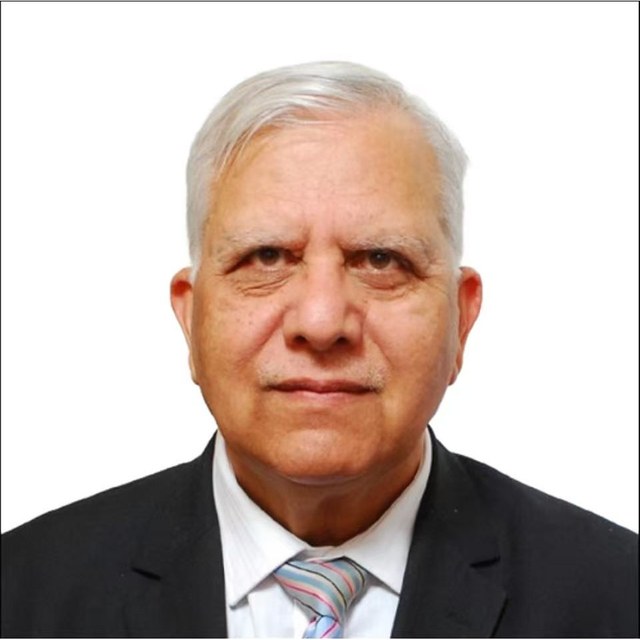
Zamir Ahmed Awan is the founder and Chair of the Global Silk Route Research Alliance, a think tank in Islamabad. He studied engineering at Shanghai University in the 1980s, and years later he went back to China as Pakistan's science counsellor in Beijing, from 2010 until 2016, working on science and higher education cooperation between the two countries.…




That’s a really interesting look at the SCO’s growth. It seems like adding Pakistan was a key step in broadening its influence.