Pakistan: Selling Treasure for Pennies

Pakistan’s Khewra Salt Mine supplies genuine Himalayan pink salt, yet exporters sell raw for pennies while Western brands charge $8–$15/kg. The article calls for value-add, processing, and branding to capture the market.

Himalayan pink salt is not being profited from
Pakistan holds a vast treasure of Himalayan Pink Salt, often called pink gold, yet sells it for the price of dirt. The world’s second-largest salt mine, Khewra Salt Mine in Punjab, contains over a billion tonnes of salt reserves. This mine is the only source of genuine Himalayan Pink Salt, which is famous for its rarity, unique characteristics, rich mineral content, health benefits, and significant appeal in international markets.
Pakistan mainly exports it as raw salt at $0.15-$0.30 per kg. This salt sells for $8-$15 per kg in Western markets. From Toronto to Dubai, it holds even greater value in the wellness segment. In foreign markets, it is labeled “Himalayan”; it doesn’t say Pakistan, nor is there any mention of Khewra. The global Himalayan salt market is worth more than $1 billion. Yet, as the only undisputed source of every gram of genuine Himalayan Pink Salt, Pakistan captures only a small fraction of the global market, with annual revenue from salt exports of only about $76 million.
It is a striking paradox: a country that holds some of the world’s largest reserves of one of the most sought-after premium commodities derives only a small fraction of the total global salt market. This is not a missed opportunity; it is a national embarrassment, not for lack of resources, but for lack of policy, value addition and ambition.
Khewra is by no means a unique situation. It is part and parcel of Pakistan’s overall attitude towards the utilisation of its natural resources: a resourceful state, always poor in monetisation of natural resources. From European living rooms to American kitchen shelves, Himalayan Pink Salt has become a global lifestyle product. What many consumers do not realize is that the origin of this rare resource is Pakistan. The resource is ours, but too often the value is not. It is not flowing here because Pakistan has not yet taken a serious decision to streamline the structural issues and to claim what is its own
The economics of the Himalayan Salt trade in Pakistan is a textbook case of how to lose a game in which you have no losing option. The average exporters in Pakistan get less than a dollar per kg of raw salt exported. The same kilogram, after being processed and branded in New York or London, is sold for $8 to $15 per kg in the branded retail market. The mineral’s composition is the same. It is only its presentation that takes place in factories in India, the USA, and Europe, not in Lahore or Karachi.
India was the biggest beneficiary over the years. Before 2019, Pakistan was exporting more than 74,000 metric tons of raw Himalayan Pink salt to India every year. It was refined by Indian traders, repackaged by them, and sold abroad with the Indian trademark without giving credit to the source. However, after 2019, exports to India dropped due to political reasons and high tariffs. However, the structural issue still exists. It was never a failure with India; it was a failure of Pakistan’s inability to add value.
The global Himalayan Pink salt market is expected to reach over $3 billion with a Compound Annual Growth Rate of 8 percent by 2034. The product has evolved from gourmet kitchens to spas, skin care, wellness centres, and decorative interiors. Pakistan dominates the supply of Himalayan salt, but it does not get the full value. By targeting high-value products such as salt lamps, premium gifts, spa sets, bath salts, body scrubs, cooking blocks, along with proper processing, premium packaging, branding, and marketing, Pakistan can increase its current salt export revenue many times. The opportunity lies in this value gap; therefore, the following concrete strategies can narrow this gap.
First, a five-year Himalayan Salt Value Chain Programme. Pakistan should discontinue raw mineral export and start exporting the finished product by establishing Common Facility Centres in Khewra, getting FDA and EFSA certifications for “Khewra Pink Rock Salt,” and introducing a national “Khewra Certified” brand. Rock salt used as raw material is worth $0.15 – $0.3 per kg, whereas certified and branded Himalayan Pink Salt is worth 50 times more in the Western market. That’s the difference.
The second is the Regional First Strategy. Pakistani exporters have targeted distant markets like the USA and EU, where they have less brand recognition, less control over distribution, and no readiness to comply with regulations. This is proven in research to be an incorrect sequence. China, Japan, and South Korea are geographically closer, growing more and more in the premium salt consumption and wellness segment, and much easier and controllable for Pakistani SMEs to enter and run. There are hundreds of millions of consumers in China, Japan, and South Korea. TDAP should start immediately using the trade facilitation resources on these three markets, opening dedicated desks, fast-tracking certifications, and registering Pakistan’s GI claims.
Khewra is by no means a unique situation. It is part and parcel of Pakistan’s overall attitude towards the utilisation of its natural resources: a resourceful state, always poor in monetisation of natural resources. From European living rooms to American kitchen shelves, Himalayan Pink Salt has become a global lifestyle product. What many consumers do not realize is that the origin of this rare resource is Pakistan. The resource is ours, but too often the value is not. It is not flowing here because Pakistan has not yet taken a serious decision to streamline the structural issues and to claim what is its own.
Reference Link:- https://www.pakistantoday.com.pk/2026/08/30/selling-treasure-for-pennies
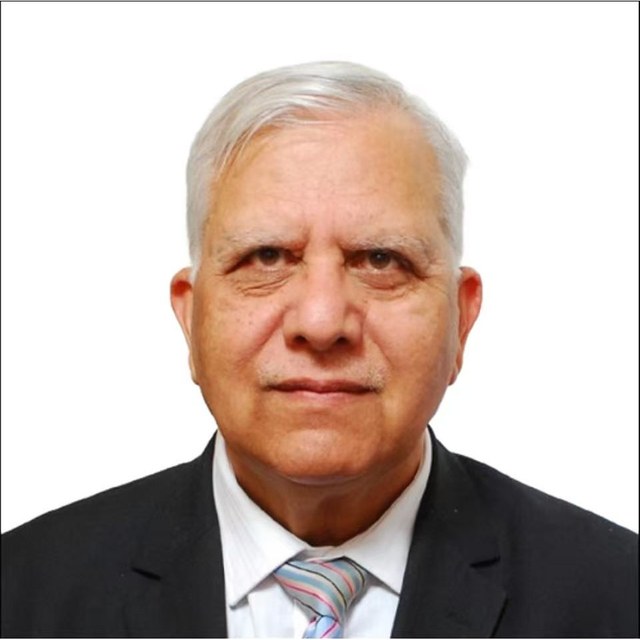
Zamir Ahmed Awan is the founder and Chair of the Global Silk Route Research Alliance, a think tank in Islamabad. He studied engineering at Shanghai University in the 1980s, and years later he went back to China as Pakistan's science counsellor in Beijing, from 2010 until 2016, working on science and higher education cooperation between the two countries.…