
What do Portugal’s Tomar and Porto look like through the eyes of a Pakistani historian?
I went to the city for a conference and found the age of crusades turning quietly into the age of empire.
If you walk into the round church in Portugal’s Tomar, you will understand in about four seconds that it was not built for walking. It was built for horses. The Charola — a 16-sided drum of painted saints, gilded columns and Portuguese light — let armoured Templar knights hear Mass without dismounting. Eight centuries on, the gold is still there, and so is the strangeness: a building in western Iberia that is, in its bones, a copy of the round churches of Jerusalem.
I came to it from Germany, where I currently teach and study, carrying questions that formed thousands of miles away, in Urdu writing across the Indian subcontinent. The Crusades — the series of religious military campaigns launched by Western European Christians between 1095 and 1291, with the declared aim of taking the Holy Land from Muslim rule — reached me first not through Latin chronicles but through Urdu novels written under British rule.
Standing inside the Charola, I felt as if I were looking at the very event itself.
800 scholars, once every four years
The Society for the Study of the Crusades and the Latin East (SSCLE) meets in full congress only once every four years, which gives its conferences a slightly Olympic quality. Most delegates arrive visibly older, clutching books that did not exist last time the event was held. Delegates gathering at Faculty of Letters and Humanities at University of Porto
This year, the host was the University of Porto, and the turnout was the largest the congress has ever seen: well over 800 delegates working on crusading, Christian–Muslim encounters and the Mediterranean world from the medieval to the modern era.
I presented my own work there — on how the Crusades were read, translated, and reimagined by Muslim intellectuals in colonial and post-colonial South Asia. Talking about chronicles written in Urdu texts from Delhi and Lahore in front of a room of scholars who have spent their lives with Latin chronicles was not a small thing for me. Pakistani scholars are extremely rare in this field anyway. It was, quietly, a proud week.
What struck me most was where the field had moved. The best-attended panels were not about kings and grand masters. They were about women — as patrons, pilgrims, captives, financiers and rulers in their own right — and about the ordinary people whose labour and displacement made these wars possible. The “great man” version of the Crusades, the one built around Saladin and Richard the Lionheart, is being dismantled from within.
For a historian trained on South Asian material, where the same argument is being had about empire, it felt entirely familiar.
The five days also did what good conferences do: they put us on buses, out to the crusader-era interior.
Tomar: The fortress that held the river
Statue of Gualdim Pais, Tomar
Tomar began as a military problem rather than a town. In 1160, Gualdim Pais — a Portuguese knight who had fought in the eastern Mediterranean — chose a hill above the Nabão River and built a castle for the Order of the Temple. This was the raw edge of the Christian advance: south and east lay Al-Andalus, and the Tagus valley was the hinge on which the frontier swung. Modern view of Town of Tomar
In 1190, the Almohad caliph’s armies came north and pressed hard against these positions. Tomar held — an episode that barely registers in the great narratives of the Crusades, and yet without it the map of Iberia would look different.
What fascinated me, walking along the walls, was the architecture. Gualdim Pais had seen how fortresses were built in the Crusader states of the eastern Mediterranean — in what is today Syria, Lebanon, Jordan and Israel/Palestine — and he brought some of that engineering home with him. Historians have long treated the military orders as a transmission belt for military technology across Latin Christendom, carrying techniques refined on one frontier to fortifications on another. Tomar Fortress from afar
I have spent much of my own academic life reading Al-Andalus from the Muslim side — its poets, its jurists, its long elegiac literature of loss. Tomar is what the same centuries looked like from the other side of the wall; logistics, not nostalgia. Stone, water, sightlines, grain — and, of course, Christian triumph.
The town keeps its ambiguity, though. Tomar’s name is sometimes argued to carry an Arabic root, a linguistic relic from before the Templars arrived.
A short walk from the castle stands one of the oldest surviving synagogue buildings in Portugal: a plain 15th-century room with astonishing acoustics that now serves as a museum. Old synagogue
No medieval mosque survives here, though — the mosques of reconquered Iberia were generally converted or pulled down rather than left standing, which is its own kind of historical evidence. Thus, three civilisational histories collide in this very small town from a global perspective, none of them willing to erase the others.
Tomar in between the Crusades and Caravel
The Manueline “Chapter House” window (Janela do Capítulo), Convento de Cristo, Tomar
Here is the twist that makes Portugal unlike anywhere else in the crusading story. When the Templars were suppressed across Europe in 1312, the Portuguese crown declined to destroy them. King Dinis had them reconstituted as the Order of Christ, which inherited their properties and eventually made Tomar its headquarters. In the 15th century, the Order’s governor was Prince Henry — whom the English-speaking world today remembers as Henry the Navigator.
So, the wealth of a crusading order was redirected into caravel ships. The red cross of the Order of Christ went onto the sails that ran down the African coast, around it, and eventually to the shores of the Indian subcontinent — to us. Casa do Infante/monument or church associated with Prince Henry the Navigator, Porto
The assault on Ceuta in 1415 — then a Marinid Moroccan port, today a Spanish exclave still claimed by Morocco and rarely out of the news on migration — was launched in the language of crusade, and is conventionally where Europe’s overseas empires begin. The small town of Tomar had a big role to play in that Imperial birth.
Back to the future: Porto, where the past refuses to stay past
Ribeira waterfront and the Dom Luís I Bridge, Porto
The fleet that took Ceuta was built and provisioned on the River Douro, and Porto has never quite let go of it. What surprised me on returning to the city was not that the medieval past survives here — that is true of most of Europe — but that the modern city keeps going back for it, rebuilding the Middle Ages in iron, in painted tiles and in midsummer fire. Porto is not a ruin you visit. It is a set of images that the 19th and 20th centuries chose for themselves and are choosing still.
Porto is a city built at an angle. The old riverside quarter of Ribeira drops towards the Douro River in terraces of tiled façades, laundry lines and impossibly narrow staircases, and above it the iron span of the Ponte Dom Luís I bridge — a 19th-century flex from the workshop world of Gustave Eiffel — hangs over everything like punctuation.
It was from this water that the Ceuta fleet sailed. Porto’s people call themselves tripeiros — tripe-eaters — and every restaurant on the Ribeira riverfront will explain why: in 1415 the city handed over all its meat to provision Prince Henry’s ships and kept only the offal for itself. The story is legend rather than record. But it is why the city still eats tripas à moda do Porto on Thursdays, slowly cooked with white beans and cumin: a crusading expedition, 600 years on, still on the lunch menu.
Meanwhile, a few streets uphill is the São Bento railway station, its entrance hall covered wall to wall in blue-and-white azulejos depicting battles, harvests and royal weddings — perhaps the most beautiful railway station I have seen, and I say that having travelled fairly widely across Europe.Azulejo tile panels at São Bento railway station
What I had not expected was what the tiles on the walls showcased. Painted by Jorge Colaço between 1905 and 1916, the great panel on the southern wall is the conquest of Ceuta — the expedition I had spent the week thinking about at Tomar, laid out in blue and white above the departure boards. Even the word has travelled: azulejo comes from the Arabic Al-Zulayj, the little polished stone. The past is not lingering here — it has been put to work.
Saint John’s night
Festa de São João crowds, garlands and street celebrations, Porto
Walking further downtown, I realised I had the luck to be there for the Festa de São João: nominally a feast of St John the Baptist, functionally the largest street party in northern Portugal. Grandmothers sell garlands of garlic flowers. Strangers hit you on the head with squeaky plastic hammers, gently and without explanation. Sardines grill on every pavement, paper balloons drift over the Douro River, and the city stays out until sunrise.
It is a useful corrective to the idea that European public life has gone entirely secular. The Catholic calendar is still the armature on which the year is built here, but it has simply been colonised, joyfully, by everyone. And yet the calendar is itself a palimpsest: a midsummer fire festival far older than the saint, baptised and then kept. Layer over layer, the same habit as the tiles depicting Porto’s past to the contemporary times.
Porto’s Harry Potter bookshop
As I moved somewhere between the fortress cathedral and the street party sat at Livraria Lello on Rua das Carmelitas, and no honest account of Porto or Portugal can leave it out. Opened in 1906, it is a neo-Gothic fever dream: a crimson staircase pouring down through the middle of the room like something spilled, stained glass overhead, carved galleries stacked to the ceiling with books. It went up in the same decade as the São Bento tiles, and is doing much the same work: a bookshop of the electric age dressed as a late-medieval chapel, down to the neo-Manueline flourishes borrowed from the architecture of the caravels. Porto was thus performing its own past long before anyone thought to look for Hogwarts in it.
The bookshop’s fame rests on a rumour — that JK Rowling, who lived in Porto in the early 1990s and taught English here, drew on the shop for Hogwarts. She has denied it. And yet, she spent two years in a city of granite staircases and university students in long black academic capes, with a bookshop like this one a short walk from where she worked.
It’s hard to believe that none of it settled anywhere.
Either way, it is among the finest bookshops I have set foot in. The only real drawback is the entry charge that comes with being a tourist attraction: as I write, it’s a minimum of 15 euros, redeemable against the purchase of a book — sensible crowd control, no doubt, but a cost to factor in.
Leaving Porto and Portugal
On my last evening, I sat by the Douro River and thought about the ships that left this river with a crusader’s cross on their sails and came back with maps that would eventually reach my own part of the world. In the textbooks I grew up with in Pakistan, the Crusades end in 1291 with the fall of Acre. In Portugal, they do not end at all.
They are still part of how people describe themselves. That, to me, is what travelling to a place does that reading about it from afar cannot. The historical account that you inherited was never wrong — it was, however, only a fragment.
On my last evening, I sat by the Douro River and thought about the ships that left this river with a crusader’s cross on their sails and came back with maps that would eventually reach my own part of the world. In the textbooks I grew up with in Pakistan, the Crusades end in 1291 with the fall of Acre. In Portugal, they do not end at all.
They are still part of how people describe themselves. That, to me, is what travelling to a place does that reading about it from afar cannot. The historical account that you inherited was never wrong — it was, however, only a fragment.
Reference Link:- https://images.dawn.com/news/1195742
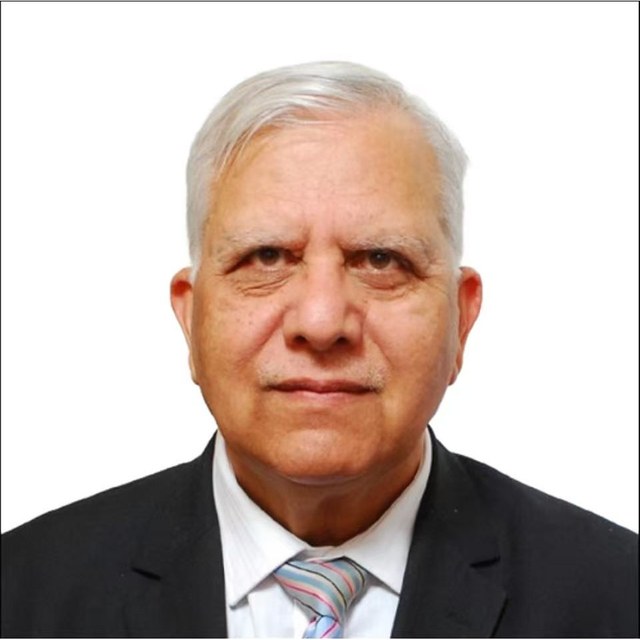
Zamir Ahmed Awan is the founder and Chair of the Global Silk Route Research Alliance, a think tank in Islamabad. He studied engineering at Shanghai University in the 1980s, and years later he went back to China as Pakistan's science counsellor in Beijing, from 2010 until 2016, working on science and higher education cooperation between the two countries.…