South China’s Greater Bay Area deepens integration through tech collaboration

About 30 years ago, when Hong Kong businessmen came to Dongguan, less than 100 kilometers away in the Pearl River Delta, they invested in the production of toys, clothing, and other low-value-added items that earned the city the nickname “world factory.”
Today, scientists and young entrepreneurs in Hong Kong are once again heading to Dongguan, now an emerging innovative hub in south China’s Guangdong Province, in search of research equipment and experienced talent.
This is more than a story of Dongguan’s industrial upgrading. Across China’s nine Pearl River Delta cities and two special administrative regions, which make up the Guangdong-Hong Kong-Macao Greater Bay Area, collaboration among enterprises, universities, and research facilities has grown at an unprecedented pace. It has been fueled by technological innovation needs and supportive policies.
RESEARCH COOPERATION
Since the term of Guangdong-Hong Kong-Macao Greater Bay Area was first mentioned in China’s government work report in 2017, a series of experimental facilities and research institutions have been put into operation in the Pearl River Delta, enabling easier access for Hong Kong and Macao researchers to resources that were previously less available.
In Dongguan, one of the most iconic facilities is the China Spallation Neutron Source (CSNS) owned by the Institute of High Energy Physics of the Chinese Academy of Sciences, located near Songshan Lake on the city’s outskirts.
Following Britain, the United States, and Japan, the CSNS is the world’s fourth pulsed neutron source facility, and the first in China. Spallation Neutron Source (SNS) is regarded as a more efficient and safe way to produce neutrons — which are highly useful to material probes — by using a process that sends high-energy ions into a heavy metal target.
For researchers based in Hong Kong and Macao, the CSNS has also become the closest facility to carry out material-related experiments since it began operation in 2018.
“We have cooperated with the University of Hong Kong, the City University of Hong Kong (CityUHK), the University of Macau and several other universities in the two regions, which followed the same process as mainland institutions in applying to use the facility,” said Tong Xin, deputy director of the Spallation Neutron Source Science Center.
According to the center, researchers from seven Hong Kong and Macao universities have so far used the CSNS to conduct 131 research projects in fields such as high-entropy alloys, lithium-battery materials, polymer films and biomedicine.
The center also worked with Dongguan University of Technology and CityUHK to build China’s first multi-physics spectrometer, which began operation in 2021 for use in various fields of materials science. In 2024, it signed agreements with eight universities in Hong Kong and Macao to jointly build the Southern Advanced Light Source. This synchrotron radiation light source can produce intense beams of light that enable detailed material probing.
“We expect to see the Southern Advanced Light Source operate complementarily with the CSNS in micro material probing, better serving the development of the Greater Bay Area,” Tong said.
TECHNOLOGY COMMERCIALIZATION
As a close partner of the CSNS, CityUHK has worked with the Dongguan government to set up a new university near the facility in the Songshan Lake area. City University of Hong Kong (Dongguan), or CityUHK (Dongguan), was officially established in 2024.
One reason behind CityUHK’s cooperation with Dongguan is the city’s exceptional capacity to commercialize technologies from its strong manufacturing base, said Chiu Chi-yue, vice president of CityUHK (Dongguan).
“CityUHK has been leading Hong Kong universities in terms of the number of patents. At the same time, the commercialization of patents is not always easy in Hong Kong, but is relatively convenient here in Dongguan,” he said.
Chiu noted that CityUHK (Dongguan) currently offers five undergraduate programs and 10 master’s programs, including materials science and engineering, artificial intelligence (AI), and data science. All are of strategic importance for the development of the Greater Bay Area and the country.
Compared with traditional universities, CityUHK (Dongguan) places particular emphasis on fostering innovation and entrepreneurship, encouraging students to participate in faculty-led research early in their university studies.
Nearby, the university has found a perfect partnership with Xbot Park, a startup incubator in the Songshan Lake area, which has developed into an industrial cluster spanning research and commercialization.
Drawing on the Greater Bay Area’s integrated supply chain, Xbot Park, established in 2014, has set up a so-called “shared factory.” It collaborates with supply-chain service providers to offer startups support in trial production, project management, and other stages from an initial idea to mass production.
“The shared factory helps address core challenges facing startups, such as limited access to supply chains and weak bargaining power,” said Yu Chunhua, who is in charge of Xbot Park’s supply chain division.
The incubator has attracted innovative startups and companies across the Greater Bay Area. CYC Group, a Hong Kong company that develops electronic bikes, opened an office there in 2023.
Founder and CEO Jon Chan said the Dongguan office puts the company’s supply chain close at hand and makes it possible to hire experienced engineers from the mainland — talent that is now hard to find in Hong Kong.
According to Gao Min, dean of the Guangzhou HKUST Fok Ying Tung Research Institute, professional experimental laboratories and an abundant pool of skilled engineers are among the mainland’s key advantages in helping Hong Kong and Macao commercialize technologies.
Founded by the Hong Kong University of Science and Technology in Nansha in 2007, the institute was Guangzhou’s first scientific research institution with a Hong Kong background. It is currently the university’s major mainland-based platform for technology innovation and commercialization.
“Only on the mainland can we find highly capable, yet not prohibitively expensive, engineers who are demanded in large numbers for turning an original technology into an outstanding product,” Gao said.
OVERSEAS CONNECTION
Meanwhile, research and production collaboration with partners in Hong Kong and Macao is helping enterprises in the Pearl River Delta expand more smoothly into overseas markets, according to local business leaders.
Guangzhou Pharmaceutical Holdings Limited, a leading traditional Chinese medicine (TCM) manufacturer, has set up a joint laboratory with the University of Macau and a factory in Macao. It also plans to build a modern TCM manufacturing center on Hengqin island in Zhuhai adjacent to Macao.
“The Hengqin facility will apply the most advanced international production standards to ensure its products are qualified for Hong Kong and Macao markets, and we hope they can subsequently reach Portuguese-speaking countries and other overseas markets,” said Chen Jiehui, vice chairperson and general manager of the enterprise.
PCI Technology Group Co., LTD. (PCITECH), a Guangzhou-based enterprise that provides AI solutions for urban traffic management, established an R&D center in Hong Kong at the beginning of this year.
Wang Yuemiao, executive director of PCITECH’s central research institute, said the center will be responsible for its products’ adaptation to international technical standards and development for overseas markets, and serve as a platform to connect cooperation resources and expand markets.
Wang said that for mainland companies, Hong Kong can help them connect with overseas markets more efficiently with its mature international business networks and well-developed services in areas such as law, finance, and accounting.
Hong Kong also has the strength in helping companies adapt technologies and solutions already proven in China to international standards as well as regulations and business models in foreign markets, he said. “This will help projects realize long-term operations after entering overseas markets.”
Yet Wang believes that mainland enterprises should see Hong Kong as more than a gateway. Instead, they should bring in the technological, industrial and application capabilities they have developed on the mainland and combine them with Hong Kong’s strengths in research, internationalization and professional services.
“The goal is to actually integrate the mainland’s industrial strengths with Hong Kong’s international advantages, so that we can jointly build innovation capacity for global markets,” he said.
Reference Link:- https://english.news.cn/20260829/63d5d69bd0564dd4a9144d7d7206fedb/c.html
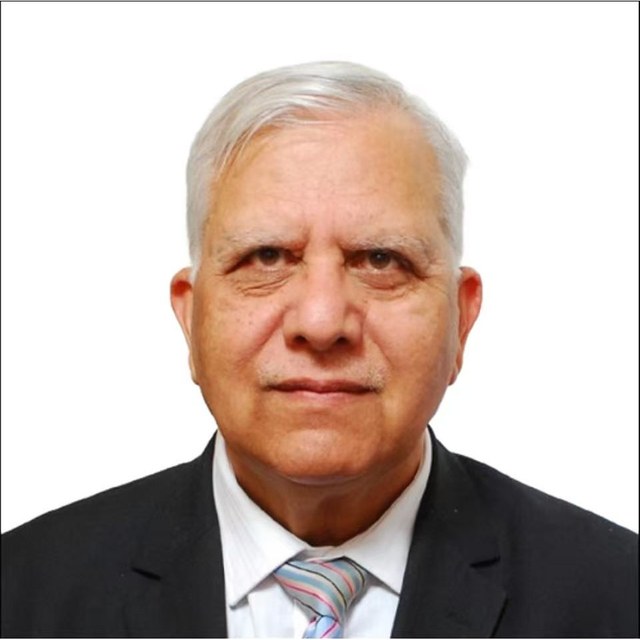
Zamir Ahmed Awan is the founder and Chair of the Global Silk Route Research Alliance, a think tank in Islamabad. He studied engineering at Shanghai University in the 1980s, and years later he went back to China as Pakistan's science counsellor in Beijing, from 2010 until 2016, working on science and higher education cooperation between the two countries.…