
Pakistan’s textile waste could unlock $773m export opportunity
Wire desk byline Sourced from Xinhua, Dawn, Arab News, Anadolu and Minute Mirror. Translated and abridged by the GSRRA Desk.


MG News | August 19, 2026 at 12:40 PM GMT+05:00
August 19, 2026 (MLN): As global markets rapidly tighten environmental and sustainability mandates, Pakistan’s textile industry stands at a critical strategic junction.
The European Union (EU), which consumes 40% of Pakistan’s textile exports, is aggressively rolling out binding circularity frameworks, such as the Eco-design for Sustainable Products Regulation (ESPR).
Furthermore, with the expected expansion of the EU’s Carbon Border Adjustment Mechanism (CBAM) to textiles by 2030, the State Bank of Pakistan (SBP), in its Half-Year Economic Report 2025–26, warns that evolving environmental regulations pose risks to Pakistan’s export competitiveness, with circular economy practices increasingly becoming a prerequisite for market access and export resilience.
Currently, Pakistan’s textile sector is highly vulnerable, with over 80% of its exports concentrated in just the EU, US, and UK.
These destination markets are rapidly phasing in strict ESG-aligned procurement, climate disclosure laws, and product traceability rules.
To secure the country’s export frontier, SBP’s Half Year Economic Report highlights a massive, untapped domestic resource: textile waste.
Pakistan generates an estimated 1.7m tons of textile waste annually. SBP calculates that if just 50% (850,000 tons) of this waste were formally collected and processed, it could unlock a massive economic opportunity worth $773m in export-equivalent value.
Even when utilizing basic mechanical recycling, which suffers sorting losses but yields a 65% usable fiber rate, local manufacturers could generate high-value recycled bleached fibers worth an average of $1.4 per kilogram.
Scaling this domestic system would also slash the industry’s costly reliance on imported virgin fibers, lower carbon footprints, and bolster compliance with international traceability requirements.
A highly successful circular template already exists within Pakistan’s second-hand clothing market, where imported used textiles worth $180m are sorted, upgraded, and re-exported to low-income nations at a value of $266m.
However, a staggering 90% of collected domestic textile waste is currently “downcycled” into low-value items like mops and cleaning rags due to a highly fragmented, informal waste-picking system and a complete lack of technical sorting infrastructure.

To turn this bottleneck into a competitive differentiator, SBP recommends that the government develop a National Textile Circularity Roadmap aligned with EU timelines.
Critical policy interventions include establishing a Digital Product Passport (DPP) to track material flows, training and certifying formal waste handlers, and accelerating private investments in chemical recycling and AI-driven sorting systems.
Reference Link:- https://mettisglobal.news/Pakistans-textile-waste-could-unlock-773m-export-opportunity-62775
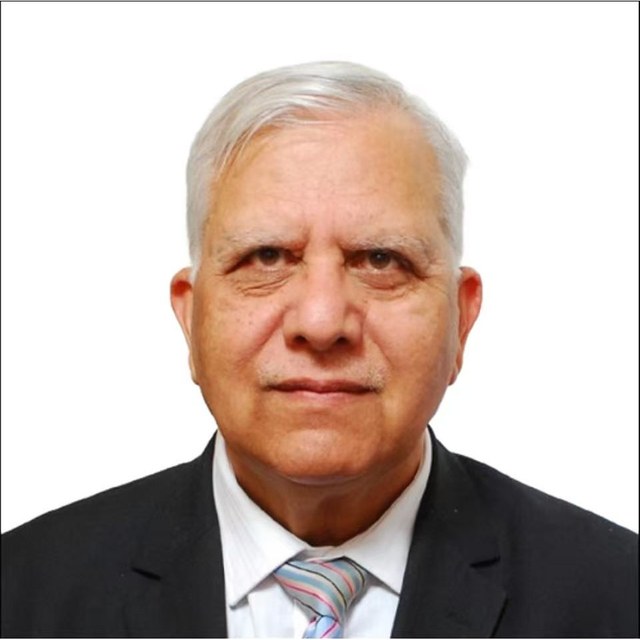
Zamir Ahmed Awan is the founder and Chair of the Global Silk Route Research Alliance, a think tank in Islamabad. He studied engineering at Shanghai University in the 1980s, and years later he went back to China as Pakistan's science counsellor in Beijing, from 2010 until 2016, working on science and higher education cooperation between the two countries.…