
Gulf security realignment gathers pace with new trilateral defence pact
Wire desk byline Sourced from Xinhua, Dawn, Arab News, Anadolu and Minute Mirror. Translated and abridged by the GSRRA Desk.

A new Pakistan-Saudi Arabia-Turkiye defence pact signals a wider Gulf security shift as regional states seek added protection alongside existing US-backed arrangements. The agreement focuses on defence coordination, intelligence and joint training.

A new defence agreement among Pakistan, Saudi Arabia and Turkiye points to a broader shift in Gulf security thinking, with the three states seeking to add a regional layer to existing security arrangements rather than replace them.
The pact, signed in Makkah, comes as Gulf states reassess their exposure after repeated attacks on energy infrastructure, disruptions to commercial shipping and prolonged tensions involving Iran, the United States and Israel. The arrangement is described as defensive in nature and does not amount to an Islamic version of NATO or create a standing integrated military command.
A supplementary security mechanism
Ad powered by advergic.com
Instead, the agreement is meant to formalise mutual defence planning, intelligence sharing, joint training, interoperability and coordinated responses to common threats, while leaving each country in control of any decision on the use of force.
The move follows months of regional instability marked by the Iran-US-Israel war, repeated disruptions in the Strait of Hormuz, Houthi attempts to obstruct shipping in the Red Sea and Bab el-Mandeb, and mounting concern in Gulf capitals over the security of maritime energy routes. A recent Saudi push for a multinational maritime coalition reflects the same strategic direction.
What each country brings
Saudi Arabia is central to the arrangement because of its geography, resources and strategic exposure. As a major oil exporter whose infrastructure has faced missile, drone and maritime threats in recent years, the kingdom has strong incentives to widen its deterrence options while protecting the stability needed for Vision 2030.
Pakistan brings one of the Muslim world’s largest and most experienced militaries, along with expertise in conventional operations, counter-terrorism, strategic deterrence and operational planning. Its long defence relationship with Saudi Arabia, naval experience in multinational maritime missions and location along the Arabian Sea approaches add to its relevance for Gulf security and its own energy and economic interests.
Turkiye adds a technological and industrial dimension. Its defence sector has expanded rapidly in areas including unmanned systems, precision-guided munitions, naval platforms, electronic warfare and aerospace, while its armed forces have gained operational experience across several theatres.
Built on earlier Pakistan-Saudi ties
The trilateral framework builds on the Pakistan-Saudi Strategic Mutual Defence Agreement signed last year rather than replacing it. That earlier bilateral arrangement is likely to remain the main institutional basis for defence cooperation between Islamabad and Riyadh, while Turkiye’s entry broadens the partnership’s scope.
Even so, the agreement is not expected to fundamentally alter the region’s balance of power. Iran retains significant missile and drone capabilities, extensive proxy networks and geographical leverage around the Strait of Hormuz, while Israel continues to hold overwhelming qualitative military superiority backed by the United States. American military infrastructure across the Gulf also remains unmatched in scale and sophistication.
The pact’s significance, therefore, lies less in creating a rival power centre and more in complicating the calculations of any actor considering coercive action against one of its members by raising the possibility of coordinated political, military or logistical backing from the other two.
Saudi Arabia, which offers an added layer of deterrence. For Pakistan, it reinforces its role as a key Gulf security partner at a time when Islamabad has also taken on a diplomatic role during the Iran-US crisis, with possible gains in defence exports, joint production, intelligence cooperation and military modernisation. For Turkiye, the agreement provides another opening to extend its strategic influence and defence industrial reach.
Reference Link:- https://www.pakistantoday.com.pk/2026/08/07/gulf-security-realignment-gathers-pace-with-new-trilateral-defence-pact
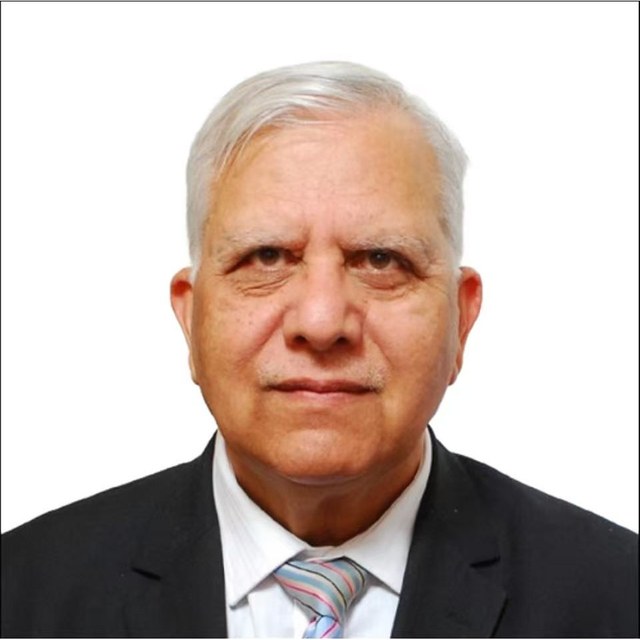
Zamir Ahmed Awan is the founder and Chair of the Global Silk Route Research Alliance, a think tank in Islamabad. He studied engineering at Shanghai University in the 1980s, and years later he went back to China as Pakistan's science counsellor in Beijing, from 2010 until 2016, working on science and higher education cooperation between the two countries.…