

(下边有中文翻译,请继续看到底。 谢谢。)

- Over more than seven decades, the relationship has witnessed periods of close strategic cooperation, moments of mutual disappointment, and repeated efforts at rebuilding trust.
- Today, amid shifting geopolitical realities, economic transformation, and emerging technological opportunities, both countries have a rare chance to redefine their partnership based on equality, mutual respect, and long-term shared interests rather than short-term strategic expediency.
- Pakistan’s leadership has correctly emphasized that mature strategic partnerships are increasingly measured not by military cooperation alone but by the depth of economic, technological, and commercial engagement.
Pakistan and the United States have maintained one of the most consequential yet complex bilateral relationships in South Asia. Over more than seven decades, the relationship has witnessed periods of close strategic cooperation, moments of mutual disappointment, and repeated efforts at rebuilding trust. Today, amid shifting geopolitical realities, economic transformation, and emerging technological opportunities, both countries have a rare chance to redefine their partnership based on equality, mutual respect, and long-term shared interests rather than short-term strategic expediency.
Pakistan recognized the United States soon after its independence in 1947, and diplomatic relations were formally established in 1948. During the Cold War, Pakistan emerged as an important security partner, joining U.S.-backed regional alliances such as SEATO and CENTO. The relationship deepened further during the Soviet intervention in Afghanistan in the 1980s, when both countries cooperated closely in support of the Afghan resistance.
Following the end of the Cold War, however, strategic priorities diverged. The imposition of sanctions under the Pressler Amendment, differences over nuclear policy, and declining geopolitical convergence created a period of mistrust. After the tragic events of September 11, 2001, Pakistan again became a frontline partner in global counterterrorism efforts. While this cooperation produced significant security outcomes, it also imposed enormous economic, human, and social costs on Pakistan. Differences over regional security, Afghanistan, drone operations, and counterterrorism strategies periodically strained bilateral ties.
Despite these fluctuations, the relationship never completely lost its strategic relevance. Both countries continued cooperation in defense, education, health, agriculture, energy, and people-to-people exchanges. Millions of Pakistani-Americans have served as an enduring bridge between the two societies, making valuable contributions to American economic, academic, technological, and public life while strengthening bilateral understanding.
Recent diplomatic engagement indicates that both Islamabad and Washington recognize the need to move beyond a security-centric relationship. The visit of senior members of the U.S. Congress and American business leaders to Pakistan, alongside growing high-level diplomatic exchanges, demonstrates renewed interest in expanding cooperation across multiple sectors. Pakistan’s leadership has correctly emphasized that mature strategic partnerships are increasingly measured not by military cooperation alone but by the depth of economic, technological, and commercial engagement.
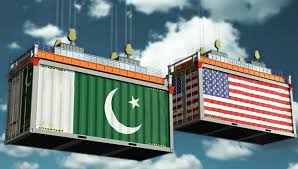
Economic cooperation offers perhaps the greatest untapped potential. The United States remains Pakistan’s largest single-country export destination, while bilateral trade has continued to grow steadily. Pakistan imports American cotton, soybeans, advanced technology, and industrial equipment, while exporting textiles, apparel, surgical instruments, sporting goods, agricultural products, and information technology services. However, the current trade volume remains far below its potential. Expanding bilateral trade toward the proposed target of $20 billion over the coming years would benefit businesses, workers, and consumers in both countries.
Pakistan’s improving macroeconomic stability, structural reforms, investment facilitation through the Special Investment Facilitation Council (SIFC), expanding digital economy, growing technology sector, critical minerals, renewable energy projects, and improved logistics infrastructure provide new opportunities for American investors. The recent financing support for the Reko Diq mining project demonstrates that confidence in Pakistan’s long-term economic prospects is increasing.
At the same time, the relationship should not overlook cooperation in emerging sectors such as artificial intelligence, cybersecurity, higher education, climate resilience, healthcare, agricultural modernization, clean energy, semiconductor supply chains, and digital entrepreneurship. These areas represent the future of global competitiveness and can become new pillars of bilateral cooperation.
Yet lasting partnerships require addressing historical shortcomings. For decades, Pakistan-U.S. relations have often been shaped by transactional calculations linked to immediate regional crises. This cyclical engagement has produced recurring trust deficits whenever strategic priorities shifted. Both sides should now avoid allowing temporary geopolitical developments to define a relationship with far broader potential.
Several steps can help transform bilateral relations into a more durable partnership. First, both governments should institutionalize regular strategic dialogue covering trade, investment, technology, education, climate, and regional security. Second, expanding private-sector investment should become a central objective alongside government-to-government cooperation. Third, greater parliamentary exchanges, academic collaboration, and cultural diplomacy can reduce misconceptions and strengthen public understanding. Fourth, both countries should respect each other’s sovereignty, security concerns, and national priorities while managing differences through sustained dialogue. Finally, cooperation should increasingly be guided by equality, transparency, reciprocity, and mutual benefit rather than dependency or short-term geopolitical calculations.
The Pakistan-United States relationship has survived changing global orders because it rests on shared interests that extend beyond any single issue or region. In today’s interconnected world, economic resilience, technological innovation, and regional stability require partnerships built on trust and consistency. By embracing a forward-looking agenda centered on trade, investment, innovation, and people-to-people ties, Islamabad and Washington can transform a relationship shaped by history into one driven by shared opportunity.
The future of Pakistan-U.S. relations need not be defined by the ups and downs of the past. It can instead become a model of pragmatic cooperation—one based on sincerity, equality, mutual respect, and a common commitment to peace, stability, and shared prosperity.
巴基斯坦—美国关系:从战略需要到共享繁荣的伙伴关系。
巴基斯坦与美国保持着南亚地区最具影响力且最复杂的双边关系之一。七十余年来,两国关系经历了战略合作的黄金时期、相互失望的阶段,以及多次努力重建互信的历程。如今,在地缘政治格局变化、经济转型以及新兴技术机遇不断涌现的背景下,两国迎来了一个难得的机会,可以基于平等、相互尊重和长期共同利益,重新定义双方的伙伴关系,而非仅追求短期的战略便利。
巴基斯坦在1947年独立后不久便承认了美国,于1948年正式建立外交关系。冷战期间,巴基斯坦成为重要的安全伙伴,加入了由美国支持的地区联盟,如东南亚条约组织(SEATO)和中央条约组织(CENTO)。20世纪80年代苏联入侵阿富汗期间,两国进一步深化合作,共同支持阿富汗抵抗运动。
然而,冷战结束后,战略重点开始分化。根据普雷施勒修正案实施制裁、在核政策上的分歧以及地缘政治趋同的减弱,导致了一段相互猜忌的时期。2001年9月11日悲剧事件发生后,巴基斯坦再次成为全球反恐行动中的前线伙伴。尽管这种合作带来了显著的安全成果,但也给巴基斯坦带来了巨大的经济、人道和社会代价。在地区安全、阿富汗问题、无人机行动以及反恐战略等方面存在的分歧,时常使双边关系受到牵连。
尽管存在这些变化,两国关系始终保持着重要的战略意义。双方在国防、教育、卫生、农业、能源以及人文交流等领域持续开展合作。数以百万计的巴基斯坦裔美国人成为连接两国社会的持久桥梁,在促进美国经济、学术、科技和公共生活方面作出宝贵贡献,同时加强了双边理解。
近期的外交互动表明,伊斯兰堡和华盛顿均认识到有必要超越以安全为中心的关系。美国国会高级成员及商界领袖对巴基斯坦的访问,以及日益增多的高层外交交流,显示出各方重新关注在多个领域扩大合作的意愿。巴基斯坦领导层已正确指出,成熟的战略伙伴关系如今不再仅以军事合作为衡量标准,而是越来越看重经济、科技和商业层面的深度合作。
经济合作或许蕴藏着最大的未开发潜力。美国仍是巴基斯坦最大的单一出口市场,双边贸易也持续稳步增长。巴基斯坦进口美国的棉花、大豆、先进技术及工业设备,同时出口纺织品、服装、外科器械、体育用品、农产品以及信息技术服务。然而,当前的贸易额仍远低于其潜在水平。未来几年将双边贸易扩展至目标200亿美元,将惠及两国的企业、工人和消费者。
巴基斯坦日益改善的宏观经济稳定、结构性改革、通过特别投资便利委员会(SIFC)促进的投资便利化、不断扩展的数字经济、蓬勃发展的科技产业、关键矿产资源、可再生能源项目以及完善的物流基础设施,��美国投资者创造了新的机遇。近期对雷科迪克矿业项目的融资支持表明,外界对巴基斯坦长期经济前景的信心正在增强。
同时,双方关系也不应忽视在人工智能、网络安全、高等教育、气候韧性、医疗健康、农业现代化、清洁能源、半导体供应链以及数字创业等新兴领域的合作。这些领域代表着全球竞争力的未来,有望成为双边合作的新支柱。
持久的伙伴关系需要正视历史上的不足。几十年来,巴基斯坦与美国的关系常常受到与地区即时危机相关的交易性考量所左右。这种循环性的互动在战略重点发生变化时,屡次导致信任缺失。双方现在应避免让暂时的地缘政治局势主导关系发展,而应着眼于更广阔的合作潜力。
采取若干措施有助于将双边关系转变为更加持久的伙伴关系。首先,两国政府应建立定期的战略对话机制,涵盖贸易、投资、科技、教育、气候和区域安全等领域。其次,扩大私营部门投资应成为与政府间合作并重的核心目标。第三,加强议会交流、学术合作和文化外交,有助于减少误解并增强公众理解。第四,双方应在管理分歧时尊重彼此的主权、安全关切和国家优先事项,并通过持续对话加以解决。最后,合作应越来越多地以平等、透明、互惠和共同利益为导向,而非依赖或短期的地缘政治考量。
巴基斯坦与美国的关系之所以能够经受住全球秩序的变迁,是因为其基础在于超越任何单一议题或地区的共同利益。在当今互联互通的世界中,经济韧性、技术创新和区域稳定需要建立在互信与一致性之上的伙伴关系。通过秉持以贸易、投资、创新和人文交流为核心的前瞻性议程,伊斯兰堡与华盛顿能够将一段由历史塑造的关系转变为一种由共同机遇驱动的关系。
巴基斯坦与美国关系的未来不必由过去起伏不定的状况所决定,而应成为务实合作的典范——建立在诚意、平等、相互尊重以及共同致力于和平、稳定和繁荣的基础之上。
(注意: 本文是用AI翻译的,或有误差。请以原版英文为准。谢谢。)
Reference Link:- https://minutemirror.com.pk/pakistan-united-states-relations-from-strategic-necessity-to-a-partnership-of-shared-prosperity-606596/