

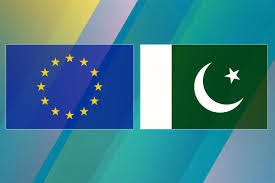
From the Iran war to Red Sea insecurity, shifting global risks are pushing the EU to view Pakistan as much more than a trade partner

Europe’s strategic environment is changing rapidly. Russia’s war in Ukraine, instability across the Middle East, growing insecurity in the Red Sea and renewed concerns over supply-chain resilience have prompted the European Union (EU) to reassess its external partnerships.
At the same time, competition between the EU’s Global Gateway initiative and China’s Belt and Road Initiative (BRI), coupled with Europe’s pursuit of greater strategic autonomy, has expanded the geopolitical significance of countries linking Europe with Asia and the Gulf.
Against this backdrop, Pakistan is becoming increasingly difficult to view primarily through the traditional lens of trade preferences, governance debates and human rights.
Recent meetings between Pakistan’s Deputy Prime Minister and Foreign Minister Ishaq Dar and the EU’s High Representative for Foreign Affairs and Security Policy, Kaja Kallas, together with the 8th Pakistan-EU Strategic Dialogue in Islamabad, suggest that the relationship is entering a more strategic phase.
Europe’s priorities are evolving faster than its policy toward Pakistan, and that gap is becoming increasingly difficult to sustain. The question is no longer whether Pakistan and the European Union should cooperate, but whether Brussels can move beyond a relationship centered on GSP+ and governance debates toward one that reflects today’s geopolitical realities.
Economic partner turned strategic stakeholder
The European Union remains Pakistan’s largest export destination, with the Generalized Scheme of Preferences Plus (GSP+) forming the foundation of bilateral economic relations.
Preferential access to European markets has strengthened Pakistan’s export industries, created employment and encouraged progress in implementing international conventions on labor rights, environmental protection and governance.
GSP+ remains an important pillar of the relationship, but it no longer defines it. As Europe diversifies supply chains, expands connectivity through Global Gateway and strengthens its engagement across the Indo-Pacific, South Asia and the Gulf, Pakistan’s strategic location has become increasingly relevant.
Positioned at the crossroads of South Asia, Central Asia, the Middle East and the Arabian Sea, Pakistan occupies a critical space for regional trade, energy corridors, maritime security and emerging connectivity networks.
Reference Link:- https://asiatimes.com/2026/07/why-europe-needs-pakistan-now-more-than-ever/