

(下边有中文翻译,请继续看到底。 谢谢。)
Illustration: Xia Qing/GT.
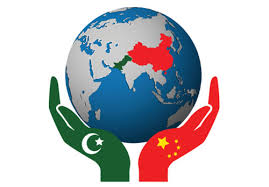
The year 2026 marks the 75th anniversary of the establishment of diplomatic relations between China and Pakistan. Over the past seven and a half decades, the friendship between the two neighboring countries has transformed from cordial diplomatic engagement into an all-weather strategic cooperative partnership. At a time when global politics is increasingly characterized by uncertainty, turbulence and confrontation, China-Pakistan relations stand out as a model of consistency, stability and strategic vision.
One of the most important pillars of this partnership has been political trust. Both countries have consistently respected each other’s sovereignty, territorial integrity and development paths. Pakistan has firmly adhered to the one-China principle and supported China on issues related to its core interests. Similarly, China has consistently supported Pakistan’s sovereignty, territorial integrity, economic development and national stability.
Economic cooperation has emerged as another cornerstone of the bilateral relationship. The launch of the China-Pakistan Economic Corridor (CPEC), a flagship project of the Belt and Road Initiative, opened a new chapter in China-Pakistan cooperation. Projects under CPEC have contributed to Pakistan’s socio-economic development, generated employment opportunities, enhanced transportation networks, and strengthened energy security. The development of Gwadar Port, in particular, reflects the long-term strategic vision shared by both countries for regional connectivity and economic integration. Importantly, CPEC is not merely an economic initiative; it is also a symbol of South-South cooperation, offering a valuable example of how strategic partnerships can contribute to national development without political conditionalities.
Another significant dimension of China-Pakistan relations is defense and security cooperation. Over the decades, the two countries have maintained close collaboration in defense production, counterterrorism, security coordination and strategic communication. Defense cooperation has contributed to regional stability and strengthened Pakistan’s defense capabilities while promoting peace and deterrence in the region.
The collaboration between the two countries in science, technology, and innovation is also expanding rapidly. The recent selection of two Pakistani candidates as part of China’s first group of foreign astronaut trainees is a historic milestone. It reflects China’s openness and willingness to share scientific advancement with friendly countries, while also symbolizing Pakistan’s growing participation in advanced technological cooperation.
The enduring strength of China-Pakistan relations also carries broader international significance. As the world undergoes profound geopolitical and economic transformation, the Global South is increasingly seeking greater representation, connectivity, and development opportunities. China and Pakistan have consistently advocated for multilateralism, peaceful coexistence, economic inclusiveness and win-win cooperation. Their partnership reflects the aspirations of developing countries to pursue modernization while preserving sovereignty and independent decision-making.
The China-Pakistan all-weather strategic cooperative partnership is more than a bilateral relationship. It is a unique example of solidarity between two neighboring countries committed to common development and regional peace. The resilience of the China-Pakistan partnership offers several important lessons for the international community. First, genuine friendships are built on mutual respect and consistency rather than temporary interests. Second, strategic cooperation becomes sustainable when it delivers tangible benefits to the people. Third, trust remains the most valuable currency in international relations. Finally, developing countries can achieve meaningful progress through solidarity, partnership and shared vision. In many ways, the partnership represents a successful model of cooperation among Global South nations.
Looking ahead, the future of China-Pakistan relations appears exceptionally promising. Both countries are entering a new phase of cooperation focused on high-quality development, technological innovation, green economy, digital connectivity, agriculture modernization, and industrial collaboration. The shared vision of building a closer China-Pakistan community with a shared future aligns closely with the broader aspirations of peace, prosperity, and sustainable development. In the years to come, the China-Pakistan partnership will continue to inspire the Global South and contribute positively to regional peace, connectivity, and common prosperity.
中巴伙伴关系的韧性激励着全球南方国家.
中国与巴基斯坦建交75周年:全天候战略合作伙伴关系的典范
2026年是中国与巴基斯坦建立外交关系75周年。过去七十五年来,这两个邻国之间的友谊已从友好的外交往来,发展成为全天候战略合作伙伴关系。在全球政治日益充满不确定性、动荡和对抗的背景下,中巴关系以其持续性、稳定性和战略远见,成为国际关系中的典范。
这种伙伴关系最重要的支柱之一是政治互信。两国始终相互尊重彼此的主权、领土完整和发展道路。巴基斯坦坚定奉行一个中国原则,在涉及中国核心利益的问题上给予坚定支持。同样,中国也始终支持巴基斯坦维护国家主权和领土完整,支持其经济发展和国家稳定。
经济合作已成为双边关系的另一大基石。作为“一带一路”倡议的旗舰项目,中巴经济走廊(CPEC)的启动开启了中巴合作的新篇章。中巴经济走廊项目为巴基斯坦社会经济发展作出了重要贡献,创造了大量就业机会,完善了交通网络,并增强了能源安全。其中,瓜达尔港的发展尤其体现了两国在区域互联互通和经济融合方面的长期战略愿景。更重要的是,中巴经济走廊不仅是一项经济合作倡议,更是南南合作的象征,为战略伙伴关系如何在不附加政治条件的情况下促进国家发展提供了宝贵范例。
中巴关系的另一重要维度是国防与安全合作。数十年来,两国在国防工业、反恐合作、安全协调和战略沟通等领域保持密切协作。国防合作不仅提升了巴基斯坦的国防能力,也促进了地区稳定,并在维护地区和平与威慑方面发挥了积极作用。
与此同时,两国在科技创新领域的合作也在迅速拓展。近期,两名巴基斯坦候选人入选中国首批外国航天员培训计划,这具有里程碑意义。这不仅体现了中国愿意与友好国家共享科技发展成果的开放姿态,也象征着巴基斯坦在高端科技合作领域参与程度的不断提升。
中巴关系持久稳固的力量还具有更广泛的国际意义。随着世界经历深刻的地缘政治和经济变革,“全球南方”国家正日益寻求更多代表权、更强互联互通和更多发展机遇。中国和巴基斯坦始终倡导多边主义、和平共处、包容性经济发展以及合作共赢。两国伙伴关系反映了发展中国家在维护主权独立和自主决策的同时,实现现代化发展的共同愿望。
中巴全天候战略合作伙伴关系已不仅仅是一种双边关系,它更是两个致力于共同发展与地区和平的邻国团结合作的独特典范。中巴伙伴关系所展现出的韧性,为国际社会提供了若干重要启示。首先,真正的友谊建立在相互尊重和始终如一的基础之上,而非短期利益。其次,战略合作只有为人民带来切实福祉,才能实现可持续发展。第三,信任始终是国际关系中最宝贵的财富。最后,发展中国家完全可以通过团结协作、伙伴关系和共同愿景实现实质性进步。从许多方面来看,中巴关系代表了“全球南方”国家合作共赢的成功模式。
展望未来,中巴关系前景广阔、潜力巨大。两国正迈入合作的新阶段,重点聚焦高质量发展、科技创新、绿色经济、数字互联互通、农业现代化以及产业合作。构建更加紧密的中巴命运共同体这一共同愿景,与和平、繁荣和可持续发展的时代诉求高度契合。
未来,中巴伙伴关系将继续为“全球南方”国家提供启示,并为促进地区和平、加强互联互通以及实现共同繁荣作出积极贡献。
(注意: 本文是用AI翻译的,或有误差。请以原版英文为准。谢谢。)
Reference Link:- https://www.globaltimes.cn/page/202605/1361499.shtml
It’s interesting to see how this partnership has evolved over such a long time. The commitment to strategic cooperation is really significant for the region.
Strengthen Pakistan-China Traditional Friendship.