

(下边有中文翻译,请继续看到底。 谢谢。)
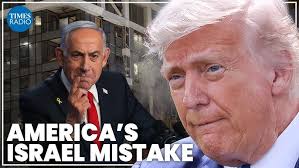
The Middle East is once again standing at the edge of a dangerous abyss. What began as a localized conflict has expanded into a wider regional crisis involving Israel, Palestine, Lebanon, Iran, and major global powers. Every new military strike increases the possibility of a broader war whose consequences could extend far beyond the region.
Recent developments have raised important questions about the future of American policy in the Middle East. Reports suggesting that President Donald Trump expressed frustration with Israeli military actions in Lebanon indicate growing concern within Washington itself. If true, such concerns reflect an important reality: military escalation has not brought peace, stability, or security to the region. Instead, it has generated greater instability, humanitarian suffering, and geopolitical uncertainty.
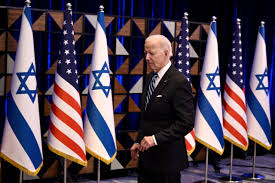
The central question today is straightforward: If the United States genuinely desires peace in the Middle East, should it continue providing virtually unconditional military, diplomatic, and political support to Israel?
This is not a question of hostility toward Israel or support for its adversaries. Rather, it is a question of accountability, responsible statecraft, and the pursuit of lasting peace.
For decades, Israel has been the largest cumulative recipient of American foreign assistance. According to the Council on Foreign Relations and U.S. government data, Israel has received well over $300 billion in American assistance since its establishment, when adjusted for inflation. Under the current ten-year Memorandum of Understanding, Israel receives approximately $3.8 billion annually in military assistance. Following the Gaza conflict that erupted in October 2023, Washington approved an additional $16.3 billion in military aid.

The scale of support extends beyond financial assistance. The United States has supplied advanced fighter aircraft, missile-defense systems, precision-guided munitions, intelligence-sharing capabilities, cyber-security cooperation, surveillance technologies, and logistical support. Israeli officials have stated that approximately 90,000 tons of military equipment have been delivered through hundreds of aircraft and maritime shipments since the Gaza conflict began.
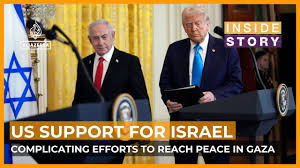
Equally significant is the diplomatic protection provided by Washington. The United States has repeatedly exercised its veto power at the United Nations Security Council to block resolutions calling for immediate ceasefires or stronger international pressure regarding military operations in Gaza. While American policymakers justify these actions as necessary to protect a strategic ally, critics argue that such support weakens incentives for restraint and accountability.
The humanitarian catastrophe in Gaza has become one of the defining tragedies of our time. Tens of thousands of Palestinians have reportedly been killed during the conflict, according to Palestinian authorities and widely cited international reports. Entire neighborhoods have been reduced to rubble. Hospitals, schools, and civilian infrastructure have suffered extensive damage. Millions have faced displacement, shortages of food, medicine, water, and necessities.
International humanitarian organizations, including various United Nations agencies, have repeatedly warned of famine conditions and severe humanitarian distress. Human rights organizations have raised serious concerns regarding civilian casualties and alleged violations of international humanitarian law. International legal institutions continue to examine allegations concerning war crimes and genocide. Israel strongly rejects these accusations and maintains that its military operations are directed against armed groups rather than civilians.
Regardless of legal determinations that may emerge in the future, the scale of human suffering is impossible to ignore.
The crisis extends beyond Gaza.
- The occupied West Bank continues to witness settlement expansion, which much of the international community considers contrary to international law and an obstacle to a viable two-state solution. Palestinian communities face increasing uncertainty regarding land rights, mobility, and security.
- Lebanon has repeatedly experienced military confrontations that threaten regional stability. Israeli military operations and cross-border exchanges have increased fears of a wider war involving multiple actors. Every new escalation risks drawing neighboring countries deeper into conflict.
- Syria remains affected by recurring military strikes and territorial disputes. The Golan Heights continues to be a source of international disagreement, with much of the international community maintaining that the territory remains occupied Syrian land despite Israeli control.
- The confrontation with Iran presents perhaps the most dangerous dimension of all. Direct military conflict between Israel and Iran risks transforming a regional crisis into a global security emergency. Such a conflict could disrupt international energy markets, threaten maritime trade routes, increase inflationary pressures, and destabilize economies worldwide.
The overwhelming majority of people across the Middle East do not want endless war.
- Israelis want security.
- Palestinians want dignity, justice, and statehood.
- Lebanese citizens want stability.
- Iranians want peace and economic opportunity.
- The people of the region desire prosperity, development, education, healthcare, and hope for future generations.
- Ordinary people pay the highest price whenever leaders choose military solutions over diplomatic alternatives

History repeatedly demonstrates that wars rarely solve the political problems that create them. Military campaigns may achieve tactical objectives, but they seldom produce lasting peace. The destruction of infrastructure, economic disruption, psychological trauma, and loss of human life often generate grievances that persist for generations.
The United States occupies a unique position in this equation. No other country possesses comparable influence over Israeli strategic decision-making. This influence creates both power and responsibility.
- If Washington genuinely seeks peace, it possesses practical tools to encourage de-escalation.
- Military assistance could be linked to compliance with international humanitarian law.
- Diplomatic pressure could encourage meaningful negotiations.
- Humanitarian access could be expanded and protected.
- Support could be directed toward political solutions rather than military escalation.
- Confidence-building measures could be promoted between adversaries.
Such policies would not constitute abandonment of Israel. Rather, they would reflect a broader understanding that genuine security cannot be achieved solely through military superiority.
True friendship requires honesty. Genuine allies help one another avoid strategic mistakes. They encourage wisdom, restraint, and long-term thinking.
The broader international community also has responsibilities. China, the European Union, Russia, Türkiye, Pakistan, Gulf countries, and the United Nations all play important roles in supporting diplomacy and reducing tensions. Peace cannot be achieved through unilateral action. It requires collective commitment.
The world today faces enormous challenges. Climate change, poverty, economic uncertainty, public health crises, energy security concerns, and technological disruption already demand unprecedented international cooperation. Humanity can ill afford additional wars that consume resources, destroy lives, and deepen divisions.
Wars may benefit a limited number of actors in the short term, but they almost always impose devastating long-term costs on societies. The true beneficiaries of peace are entire populations.

Peace should therefore become a global movement rather than merely a diplomatic objective.
- Governments should prioritize dialogue over confrontation.
- Religious leaders should promote reconciliation over hatred.
- Civil society should advocate coexistence over division.
- Academics and media should encourage understanding rather than polarization.
- Citizens everywhere should recognize their shared humanity.
- The ultimate measure of leadership is not the ability to wage war but the wisdom to prevent it.
Missiles, bombs, sanctions, blockades, or military campaigns should not determine the future of the Middle East. It should be shaped through diplomacy, economic cooperation, regional integration, technological development, cultural exchange, and mutual respect.
- Lasting security cannot emerge from perpetual conflict.
- It must be built upon justice, dignity, sovereignty, and international law.
At this pivotal moment, peace-loving nations, organizations, and individuals should unite behind a simple principle: war must never become the default instrument of policy.
- The people of the Middle East deserve peace.
- The world deserves peace.
- Humanity deserves peace.
The path forward is undoubtedly difficult. Yet history reminds us that the greatest achievements of civilization have emerged not from endless wars but from courageous acts of reconciliation.
Today, the international community faces a defining choice: continue the cycle of escalation or embrace a future based on dialogue and coexistence.
For the sake of future generations, the choice should be clear.
和平需要勇气:重新思考美国对以色列的无条件支持.
中东地区再次站在危险深渊的边缘。原本局限于局部范围的冲突,如今已扩大为涉及以色列、巴勒斯坦、黎巴嫩、伊朗以及多个全球大国的地区性危机。每一次新的军事打击,都增加了爆发更大规模战争的可能,而其后果可能远远超出该地区本身。
近期事态发展引发了关于美国中东政策未来的重要思考。有报道称,美国总统唐纳德·特朗普曾对以色列在黎巴嫩的军事行动表示不满。如果这些报道属实,那么这种担忧反映了一个重要现实:军事升级并未给中东地区带来和平、稳定或安全。相反,它导致了更大的不稳定、人道主义苦难以及地缘政治的不确定性。
当前最核心的问题其实非常直接:如果美国真心希望中东实现和平,那么它是否应该继续向以色列提供几乎无条件的军事、外交和政治支持?
这并非一个敌视以色列或支持其对手的问题,而是一个关于责任、理性治国以及追求持久和平的问题。
数十年来,以色列一直是美国对外援助累计金额最大的受援国。根据美国外交关系协会(Council on Foreign Relations)及美国政府相关数据,按通货膨胀因素调整后,自以色列建国以来,美国向其提供的援助总额已超过3000亿美元。根据现行的十年谅解备忘录,美国每年向以色列提供约38亿美元的军事援助。自2023年10月加沙冲突爆发以来,华盛顿又批准了额外163亿美元的军事援助。
这种支持远不止财政援助。美国向以色列提供了先进战斗机、导弹防御系统、精确制导弹药、情报共享能力、网络安全合作、监视技术以及后勤支持。以色列官员曾表示,自加沙冲突爆发以来,已有约9万吨军事装备通过数百架运输机和海运渠道运抵以色列。
同样重要的是华盛顿提供的外交保护。美国多次在联合国安理会行使否决权,阻止要求立即停火或加强国际社会对加沙军事行动施压的相关决议。尽管美国决策者认为这些举措是保护战略盟友所必需的,但批评者认为,这种支持削弱了各方保持克制和承担责任的动力。
加沙的人道主义灾难已成为这个时代最令人痛心的悲剧之一。根据巴勒斯坦方面的数据以及被广泛引用的国际报告,数以万计的巴勒斯坦人在冲突中丧生。整个社区被夷为废墟,医院、学校和民用基础设施遭受严重破坏。数百万人面临流离失所、食品短缺、药品匮乏、饮水不足以及基本生活必需品缺失的问题。
包括多个联合国机构在内的国际人道主义组织反复警告,加沙正面临饥荒风险和严重的人道主义危机。人权组织对平民伤亡及涉嫌违反国际人道法的行为表达了严重关切。国际司法机构也持续调查有关战争罪和种族灭绝的指控。以色列则坚决否认这些指控,并坚持认为其军事行动针对的是武装组织,而非平民。
无论未来法律裁决如何,大规模的人类苦难都是无法忽视的事实。
危机并不仅限于加沙。
被占领的约旦河西岸持续出现定居点扩张现象。国际社会普遍认为,这些行为违反国际法,并阻碍了建立可行“两国方案”的前景。巴勒斯坦社区在土地权利、行动自由以及人身安全方面面临日益严峻的不确定性。
黎巴嫩也多次经历军事对抗,严重威胁地区稳定。以色列的军事行动以及跨境交火不断加剧外界对更大范围战争的担忧。每一次升级都可能将更多邻国卷入冲突。
叙利亚仍然受到反复军事打击和领土争端的影响。戈兰高地问题继续成为国际争议焦点。尽管以色列实际控制该地区,但国际社会大多仍认为其属于被占领的叙利亚领土。
而与伊朗的对抗,则可能是最危险的因素。以色列与伊朗之间一旦爆发直接军事冲突,极有可能使地区危机演变为全球安全紧急事件。这种冲突不仅会扰乱国际能源市场、威胁海上贸易航线,还可能加剧全球通胀压力,并导致世界经济动荡。
事实上,中东绝大多数人民并不希望无休止的战争。
以色列人民渴望安全。
巴勒斯坦人民渴望尊严、正义和建国权利。
黎巴嫩人民渴望稳定。
伊朗人民渴望和平与经济发展机遇。
这一地区的人民都希望拥有繁荣、发展、教育、医疗以及对子孙后代未来的希望。
每当领导人选择军事手段而非外交途径时,普通民众总是付出最沉重的代价。
历史反复证明,战争很少真正解决导致冲突的政治问题。军事行动或许能够实现某些战术目标,但往往无法带来持久和平。基础设施遭到破坏、经济发展受挫、心理创伤加深以及大量生命损失,都会在社会中留下持续数代人的伤痕。
在这一复杂局势中,美国拥有独特地位。没有其他国家能够像美国一样,对以色列的战略决策施加如此深远的影响。这种影响力既意味着权力,也意味着责任。
如果华盛顿真诚寻求和平,那么它拥有推动局势降温的现实工具。
军事援助可以与遵守国际人道法挂钩。
外交压力可以促使各方展开真正有意义的谈判。
人道主义援助通道可以得到扩大和保护。
支持重点可以从军事升级转向政治解决方案。
可以推动敌对双方采取建立互信的措施。
这些政策并不意味着放弃以色列,而是体现出一种更广阔的认识:真正的安全不能仅靠军事优势来实现。
真正的友谊需要坦诚。真正的盟友会帮助彼此避免战略失误,鼓励智慧、克制以及长远思维。
国际社会同样负有责任。中国、欧盟、俄罗斯、土耳其、巴基斯坦、海湾国家以及联合国,都在推动外交努力、缓和紧张局势方面发挥着重要作用。和平无法通过单边行动实现,它需要国际社会的共同承诺。
当今世界正面临诸多严峻挑战。气候变化、贫困、经济不确定性、公共卫生危机、能源安全问题以及技术变革,都迫切需要前所未有的国际合作。人类已经无力承受更多消耗资源、摧毁生命、加深分裂的战争。
战争或许会在短期内使少数人受益,但从长远来看,它几乎总会给社会带来毁灭性的代价。和平的真正受益者,是所有人民。
因此,和平应当成为一场全球运动,而不仅仅是外交目标。
各国政府应优先选择对话,而非对抗。
宗教领袖应倡导和解,而非仇恨。
公民社会应推动共存,而非分裂。
学术界和媒体应促进理解,而非极化。
世界各地的公民都应认识到彼此共同的人性。
衡量领导力的最终标准,不是发动战争的能力,而是防止战争的智慧。
导弹、炸弹、制裁、封锁或军事行动,不应决定中东的未来。中东的未来应建立在外交合作、经济协作、区域融合、科技发展、文化交流以及相互尊重的基础之上。
持久安全无法从永无止境的冲突中产生。
它必须建立在正义、尊严、主权以及国际法之上。
在这一关键时刻,所有热爱和平的国家、组织和个人都应团结在一个简单而重要的原则之下:战争绝不能成为政策的默认工具。
中东人民值得拥有和平。
世界值得拥有和平。
人类值得拥有和平。
通往和平的道路无疑充满艰难。然而,历史提醒我们,人类文明最伟大的成就,并非诞生于无尽战争,而是源于勇敢的和解行动。
今天,国际社会面临一个决定性的选择:是继续陷入不断升级的冲突循环,还是拥抱一个建立在对话与共存基础上的未来。
为了子孙后代的福祉,这个选择本应十分明确。
(注意: 本文是用AI翻译的,或有误差。请以原版英文为准。谢谢。)
Reference Link:- https://sovereignista.com/2026/06/09/peace-requires-courage-rethinking-americas-unconditional-support-for-israel/
It’s really sobering to see how quickly things can escalate in that region. The potential for wider conflict is a serious concern that needs careful consideration.
Thank you.