

(下边有中文翻译请继续看到底。 谢谢。)
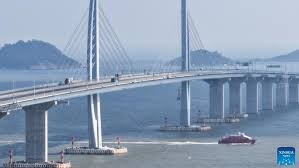
In an era when regions compete not only through resources but through vision, innovation, and connectivity, the Guangdong-Hong Kong-Macao Greater Bay Area (GBA) stands out as one of the most compelling development stories of the 21st century. More than a geographical cluster, the GBA has evolved into a dynamic symbol of Chinese modernization, regional integration, and global openness. It is increasingly seen not only as an engine of China’s high-quality development, but also as a model with global relevance.
For foreign experts, scholars, and think tank representatives invited recently by the International Department of the Communist Party of China (IDCPC) to attend a seminar and field visits in the Greater Bay Area, this was not merely an academic engagement. It was an eye-opening journey into a region where ambitious planning has been translated into visible achievements. Participants widely appreciated IDCPC’s thoughtful hospitality, excellent arrangements and the intellectual richness of the seminar, which offered a rare opportunity to witness firsthand the scale, speed and sophistication of developments transforming the region.
The experience left a strong impression: the Greater Bay Area is not only a Chinese success story, but a window into the future.
From Historical Foundations to National Strategy
The GBA did not emerge overnight. Its roots lie in decades of reform and opening-up. Guangdong was among the earliest frontiers of China’s reform era in the late 1970s and 1980s. Shenzhen, once a fishing town, rose as a symbol of transformation through the Special Economic Zone experiment. Guangzhou maintained its role as a trading hub, while Hong Kong and Macao contributed unique strengths as global financial, legal, logistics and cultural bridges.
The concept of integrating these strengths gradually matured into a national strategy. A major milestone came in 2019 when the Outline Development Plan for the Guangdong-Hong Kong-Macao Greater Bay Area was officially launched, setting a long-term vision through 2035.
Today, the GBA encompasses Hong Kong, Macao, and nine Guangdong cities—Guangzhou, Shenzhen, Zhuhai, Foshan, Dongguan, Huizhou, Zhongshan, Jiangmen, and Zhaoqing. Together they form one of the world’s most vibrant bay economies, often compared with the San Francisco Bay Area, the New York Metropolitan Area, and Tokyo Bay.
But comparisons only go so far. The GBA has charted its own path—one rooted in Chinese characteristics, guided by innovation, inclusiveness, and coordinated development.
Infrastructure as the Architecture of Integration
One of the most visible achievements of the GBA is infrastructure connectivity.
The region demonstrates how physical connectivity can generate economic integration and social cohesion. Landmark projects such as the Hong Kong-Zhuhai-Macao Bridge have become symbols of engineering excellence and practical regional integration. High-speed rail networks, modern ports, advanced airports and smart logistics systems are reducing distances and creating a highly interconnected urban cluster.
Visitors to the seminar were particularly impressed by how infrastructure in the GBA is not viewed merely as construction, but as an ecosystem for productivity, mobility and innovation.
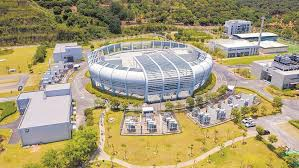
From the Qianhai cooperation zone to the Hetao Shenzhen-Hong Kong innovation zone, from advanced transport corridors to smart urban systems, the region offers practical examples of how infrastructure can support long-term competitiveness.
This is connectivity with purpose.
Innovation at the Heart of Development
Perhaps the GBA’s most remarkable feature is its rise as a global innovation powerhouse.
Shenzhen has become synonymous with technological dynamism. Guangzhou continues expanding in advanced manufacturing and research. Hong Kong contributes world-class universities, finance, and international services. Macao is diversifying through technology, tourism, and cooperation platforms.
Together, they form a highly complementary innovation ecosystem.
Artificial intelligence, robotics, biotechnology, digital finance, green technologies, and smart manufacturing are not abstract ambitions in the GBA—they are realities shaping industries and livelihoods.
Seminar participants repeatedly noted that what distinguishes the region is not merely innovation output, but innovation integration: research, finance, talent, supply chains and policy support working together.
This reflects a broader strength of China’s development model—the ability to combine strategic planning with practical implementation.
“One Country, Two Systems” in Practice
Another unique strength of the Greater Bay Area lies in its institutional innovation.
Cross-border financial connectivity, professional exchanges, legal cooperation, talent mobility and youth programs continue expanding.
The GBA demonstrates how “one country, two systems” can generate synergy through diversity. Different legal systems, financial arrangements, and governance traditions are not treated as barriers but as assets.
This institutional creativity makes the GBA more than an economic zone; it is also a platform for experimentation in governance, openness, and cooperation.
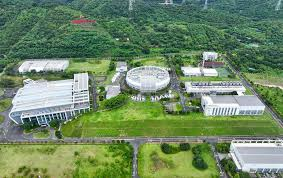
For many foreign participants, this was among the seminar’s most striking lessons—that development can be driven not only by capital and technology, but also by institutional imagination.
Green and People-Centered Development
A particularly important dimension often overlooked in outside narratives is the GBA’s emphasis on quality-of-life development.
This is not growth for growth’s sake.
Ecological protection, green urban planning, smart public services and sustainable development are increasingly central. The region is pursuing innovation alongside environmental stewardship, economic dynamism alongside livability.
Participants observed that many cities in the GBA reflect a people-centered approach: clean urban spaces, efficient public services, digital convenience, strong transport, and growing cultural vitality.
This combination of prosperity and quality living is an important marker of mature development.
A Gateway Linking China and the World
The Greater Bay Area is also emerging as a major platform linking domestic development with global opportunity.
Its significance extends far beyond southern China.
As a key node in the Belt and Road Initiative, the GBA serves as a bridge for trade, finance, innovation, and people-to-people exchanges. Its ports connect global supply chains. Its innovation networks attract global collaboration. Its financial systems support international investment.
Foreign experts at the seminar saw clearly that the region is not inward-looking. It is outward-oriented and increasingly global.
For developing countries, the GBA offers lessons in industrial upgrading, innovation ecosystems and regional cooperation.
For international investors, it offers opportunities.
For scholars, it offers a living laboratory.
For the world, it offers partnership.
IDCPC Seminar: Dialogue that Deepened Understanding
The seminar organized by IDCPC deserves particular recognition.
At a time when understanding China often suffers from distance, stereotypes, or selective narratives, such exchanges play an important role.
Participants consistently praised the professionalism, warmth, and excellent arrangements of the organizers. More importantly, they valued the substance.
The seminar was informative not only because of the presentations and discussions, but because it connected policy concepts with real-world observation.
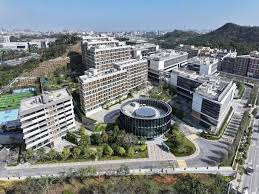
Seeing the GBA firsthand transformed understanding.
Many participants described the experience as inspiring. Others called it an eye opener. There was broad admiration for the scale of China’s achievements and the strategic vision behind them.
This kind of engagement matters.
It builds understanding through dialogue rather than assumption.
It creates trust through exposure rather than abstraction.
And it reinforces the importance of international scholarly exchanges in a changing world.
Future Prospects: Even Brighter Horizons
If current achievements are impressive, prospects may be even more significant.
The Greater Bay Area is entering a new stage—moving from rapid growth toward deeper quality-driven development.
Advanced manufacturing, digital economy, green transition, financial integration, scientific research and global cooperation are likely to define its next chapter.
Its contribution to China’s modernization will continue expanding.
Its contribution to global innovation could be profound.
Its role as a model of regional integration may grow even more relevant at a time when the world searches for new pathways of development.
The future of the Greater Bay Area is bright because its foundations are strong: visionary planning, institutional support, talent concentration, technological capability, and openness to the world.

That optimism was strongly shared by foreign delegates at the seminar.
Many left convinced that the GBA is not approaching its peak—it is still rising.
A Story the World Should Watch Closely
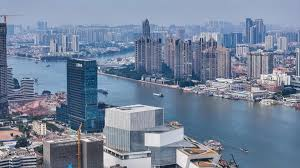
There are places where development is discussed.
And there are places where development is visibly happening.
The Greater Bay Area belongs to the latter.
It tells a story of what long-term vision, reform, innovation, and cooperation can achieve. It reflects confidence, pragmatism, and ambition. It embodies not only China’s economic vitality but also the broader aspirations of Chinese modernization.
For those who visited through the IDCPC seminar, the message was clear: the Greater Bay Area is one of the world’s most significant development experiments—and one of its most successful.
Its rise is contributing to China.
Its openness is benefiting the world.
And its future promises even greater possibilities.
In a century increasingly shaped by connectivity and innovation, the Greater Bay Area is not simply keeping pace with the future. It is helping define it.
大湾区:中国现代化进程与全球机遇的鲜活范例。
在一个区域竞争不仅依赖资源,更取决于愿景、创新与互联互通的时代,粤港澳大湾区(GBA)已成为21世纪最具吸引力的发展故事之一。它不仅仅是一个地理集群,更已发展成为中国式现代化、区域融合与全球开放的生动象征。如今,大湾区不仅被视为中国高质量发展的重要引擎,也越来越被看作具有全球意义的发展范式。
近日,应中共中央对外联络部(IDCPC)邀请,来自多个国家的专家、学者及智库代表赴粤港澳大湾区参加研讨会并开展实地参访。对他们而言,这不仅是一次学术交流,更是一场开阔视野、启发思考的深度考察之旅。在此次活动中,与会嘉宾高度赞赏中联部周到细致的接待安排、卓越的组织工作以及研讨会丰富深刻的思想内容。这次难得的机会,使大家亲身见证了推动区域变革的规模、速度与发展水平。
此次考察留下了深刻印象:粤港澳大湾区不仅是中国发展的成功故事,更是一扇观察未来的窗口。
从历史积淀到国家战略
粤港澳大湾区并非一朝形成,其根基植根于数十年的改革开放进程。
广东是中国改革开放最早的前沿阵地之一。上世纪70年代末和80年代,深圳从一个渔村崛起为经济特区奇迹的象征;广州持续巩固其商贸枢纽地位;香港和澳门则凭借金融、法律、物流与文化优势,发挥连接世界的重要桥梁作用。
这些优势的整合逐步演化为国家战略。2019年,《粤港澳大湾区发展规划纲要》正式出台,提出面向2035年的长远发展蓝图,成为重要里程碑。
今天,大湾区涵盖香港、澳门以及广东九市——广州、深圳、珠海、佛山、东莞、惠州、中山、江门和肇庆,构成全球最具活力的湾区经济体之一,常被拿来与旧金山湾区、纽约都会区和东京湾区相提并论。
但比较只能说明部分问题。粤港澳大湾区走出了一条自身独特的发展道路——扎根中国国情,以创新驱动、包容发展和协同合作为鲜明特征。
基础设施:融合发展的架构
大湾区最直观的成就之一,就是基础设施互联互通。
这一地区充分展示了物理联通如何推动经济融合和社会凝聚。港珠澳大桥等标志性工程,不仅是工程技术卓越的象征,也是区域融合的现实写照。高速铁路网络、现代化港口、先进机场和智慧物流体系不断缩短空间距离,塑造高度联通的城市群。
参与研讨会的嘉宾尤其赞赏,大湾区对基础设施的理解并不局限于建设本身,而是将其视为提升生产力、促进流动性和推动创新的生态系统。
从前海合作区到河套深港科技创新合作区,从现代交通走廊到智慧城市系统,这里为基础设施如何支撑长期竞争力提供了丰富实践案例。
这是一种有目标、有内涵的联通。
创新:发展的核心驱动力
大湾区最令人瞩目的特征,也许是其崛起为全球创新高地。
深圳已成为科技活力的代名词;广州持续拓展先进制造和科研实力;香港贡献世界级大学、金融体系和国际服务平台;澳门也正通过科技、旅游及合作平台推动经济适度多元。
它们共同构成了高度互补的创新生态。
人工智能、机器人、生物科技、数字金融、绿色技术和智能制造,在大湾区不是抽象愿景,而是正在重塑产业和民生的现实力量。
与会者多次指出,这一区域最独特之处,不仅在于创新产出,更在于创新整合——科研、金融、人才、产业链与政策支持协同运作。
这也体现了中国发展模式更深层的优势:战略规划与务实执行能力的有机结合。
“一国两制”的实践样本
粤港澳大湾区另一独特优势,在于制度创新。
它展示了“一国两制”如何通过多样性产生协同效应。不同法律体系、金融制度和治理传统,不被视为障碍,而被转化为优势资源。
跨境金融互联、专业服务合作、法律协同、人才流动及青年交流持续深化。
这种制度创造力,使大湾区不仅是经济区域,更是治理创新、开放合作和制度探索的平台。
对许多外国与会代表而言,这是研讨会最具启发性的内容之一——发展不仅依赖资本和技术,也离不开制度想象力。
绿色与以人为本的发展
外界叙事中常被忽视的重要维度,是大湾区对高品质生活发展的重视。
这不是单纯追求增长的增长。
生态保护、绿色城市规划、智慧公共服务和可持续发展日益成为重点。创新发展与环境保护并进,经济活力与宜居品质并重。
与会嘉宾注意到,大湾区许多城市体现了鲜明的以人为本理念:整洁宜人的城市空间、高效便捷的公共服务、数字化生活体验、完善交通网络和不断增强的文化活力。
繁荣与优质生活并存,是成熟发展的重要标志。
联通中国与世界的重要门户
粤港澳大湾区也正在成为连接国内发展与全球机遇的重要平台。
其意义远超华南地区本身。
作为共建“一带一路”的关键节点,大湾区正成为贸易、金融、创新及人文交流的重要桥梁。其港口连接全球供应链,其创新网络吸引国际合作,其金融体系支撑国际投资。
参加研讨会的外国专家清晰感受到,大湾区并非向内封闭,而是高度面向世界。
对发展中国家而言,它提供产业升级、创新生态和区域合作的经验。
对国际投资者而言,它提供机遇。
对学者而言,它是一座活的实验室。
对世界而言,它意味着合作伙伴关系。
中联部研讨会:深化理解的对话平台
中联部组织的此次研讨会值得特别肯定。
在国际社会对中国认知有时受到距离、偏见或片面叙事影响的背景下,这类交流具有重要意义。
与会者普遍赞赏主办方的专业精神、热情接待和高水平组织,更高度评价活动内容本身。
研讨会不仅因报告和讨论富有价值,更因为它把政策理念与现实观察连接起来。
亲眼看到大湾区,让认知发生了变化。
不少与会者称此行“深受启发”,也有人称之为“大开眼界”。大家普遍钦佩中国发展的规模成就及其背后的战略远见。
这样的交流十分重要。
它通过对话而非臆测增进理解。
通过接触而非抽象建立信任。
也进一步彰显国际学术交流在变局时代的重要性。
前景展望:更加光明的未来
如果现有成就已令人赞叹,那么未来前景或许更加可期。
粤港澳大湾区正迈向新阶段——从高速增长走向更深层次、高质量发展。
先进制造、数字经济、绿色转型、金融融合、科技创新和全球合作,将塑造其下一篇章。
它对中国现代化建设的贡献将持续扩大。
对全球创新体系的影响可能更加深远。
在全球寻找新发展路径的时代,其作为区域融合范例的意义将进一步凸显。
大湾区未来光明,因为其基础坚实:战略远见、制度支撑、人才汇聚、科技实力以及面向世界的开放姿态。
这种乐观预期,也在外国代表中得到广泛共鸣。
许多人离开时坚信,大湾区并未接近巅峰,而仍处于上升之中。
一个值得世界持续关注的发展故事
有些地方在讨论发展。
有些地方则让人看到发展正在发生。
粤港澳大湾区属于后者。
它讲述了长期愿景、改革开放、创新驱动和合作共赢能够创造怎样的成就。它体现信心、务实与雄心,也展现了中国式现代化更广阔的追求。
对于通过中联部研讨会到访的嘉宾而言,信息非常明确:粤港澳大湾区是当今世界最重要的发展实验之一,也是最成功的实践之一。
它的崛起正在贡献中国。
它的开放正在惠及世界。
它的未来蕴藏更大可能。
在一个由互联互通与创新日益塑造的世纪里,粤港澳大湾区不仅在跟上未来,更在参与定义未来。
( 注意: 本文是用AI翻译的,或有误差。请以原版英文为准。谢谢。)
Reference Link:- https://www2.apdnews.cn/en/item/26/0428/axjfmacke649dc5c51e8b2.html
That’s a really interesting perspective on the GBA. The focus on connectivity seems key to its success, doesn’t it?
加强友谊, 学习,交流,与合作。 Strengthen friendship, understanding and collaboration.