

(下边有中文翻译请继续看到底。 谢谢。)
In diplomacy, symbolism matters. But in cross-Strait relations, symbols alone are never enough. What changes public sentiment, reduces mistrust, and creates political momentum are practical steps that improve daily life. That is why the latest package of mainland measures toward Taiwan deserves close attention. It is not just another statement of principle. It is an effort to translate political intent into transport links, market access, youth exchanges, cultural cooperation, and institutional dialogue. Taken together, these measures could widen the social base for peace and give new force to the long-standing objective of national reunification.
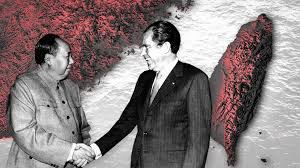
To understand why this matters, one must begin with the history of the Taiwan question. The modern dispute grew out of the Chinese civil war. After the Communist Party of China won control of the mainland and the People’s Republic of China was founded in 1949, the defeated Kuomintang retreated to Taiwan. Since then, the two sides of the Strait have remained politically divided, even as history, culture, language, family ties, and economic interdependence continued to bind them together. Beijing’s position has remained consistent: there is only one China, Taiwan is part of China, and the Taiwan question is a matter to be resolved by the Chinese people themselves. Official Chinese statements also anchor this claim in wartime instruments such as the Cairo Declaration and the Potsdam Proclamation, which Beijing says affirmed the restoration of Taiwan to China after Japan’s defeat.
The “one-China” framework is central to this issue. In the PRC’s official formulation, the one-China principle means there is but one China in the world, Taiwan is an inalienable part of China’s territory, and the government of the People’s Republic of China is the sole legal government representing the whole of China. That principle has become the political foundation of Beijing’s relations with countries around the world. It is also the basis on which Beijing opposes any move toward “Taiwan independence” or any attempt to create “two Chinas” or “one China, one Taiwan.”
At the United Nations, the key document is General Assembly Resolution 2758, adopted on October 25, 1971. The resolution restored the lawful rights of the People’s Republic of China in the UN and recognized the representatives of its government as the only lawful representatives of China to the United Nations. It also led to the PRC taking China’s seat, including the permanent seat on the Security Council. The text of Resolution 2758 was about China’s representation in the UN system. It did not set out, line by line, a detailed political settlement for Taiwan’s internal governance. Even so, Beijing has long argued that the resolution, together with subsequent UN practice, firmly embeds the one-China principle in the international order. The UN’s own historical materials record the adoption of Resolution 2758 as the moment the PRC assumed China’s lawful place in the organization.
That international backdrop is important, but the real question today is practical: how can cross-Strait ties be made more stable, more humane, and more resilient? The answer cannot rest only on military deterrence, rhetorical confrontation, or mutual suspicion. It must include visible benefits for ordinary people. This is where the latest mainland package is significant.
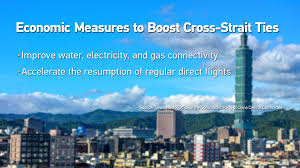
Following the visit of Kuomintang chairwoman Cheng Li-wun to the mainland, Beijing announced 10 policies and measures covering party-to-party communication, infrastructure, transport, trade, youth, tourism, and culture. Reports from official mainland sources and international media show that these steps include exploring a regular communication mechanism between the Communist Party of China and the KMT, supporting water, electricity and gas links from Fujian to Kinmen and Matsu, considering sea-crossing bridge projects when conditions allow, fast-tracking the resumption of regular direct passenger flights, facilitating market access for Taiwan agricultural, fishery, and food products, expanding business opportunities for Taiwan small and medium-sized enterprises, inviting Taiwan youth groups for regular exchanges, and opening more space for Taiwan cultural products and media content on the mainland.
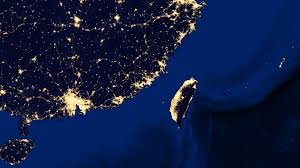
These are not abstract gestures. They are concrete confidence-building tools.
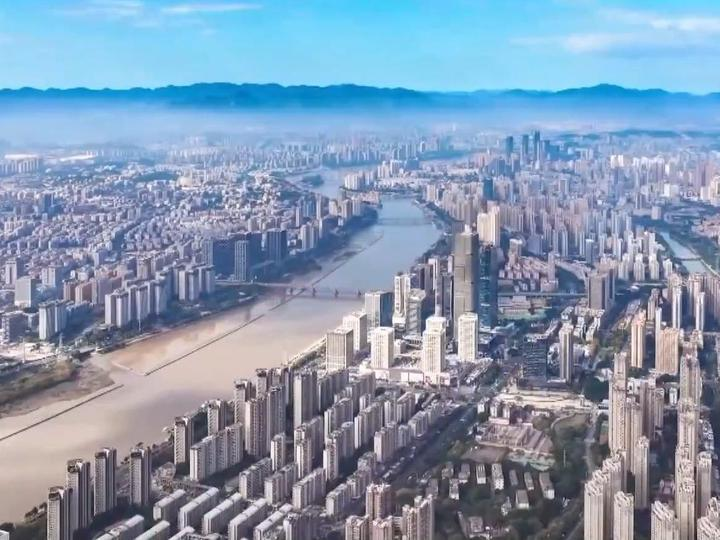
First, connectivity reduces political distance. When direct flights increase, when travel becomes easier, and when people can move for study, tourism, work, or family reasons without exhausting detours, hostility becomes harder to sustain. Infrastructure is not just about convenience. It is about normalizing contact. In divided political environments, routine interaction can do what slogans cannot: lower fear. Plans involving Fujian, Kinmen, Matsu, and aviation routes to more mainland cities point in exactly that direction.
Second, economic incentives matter because prosperity creates constituencies for stability. For farmers, fishers, food producers, and small businesses in Taiwan, easier access to the mainland market can mean jobs, sales, cash flow, and long-term planning. This is especially relevant in sectors where livelihoods depend on steady demand rather than ideological positioning. If Taiwan producers see real gains from trade fairs, smoother registration, easier quarantine-based access, and more small-item trading platforms, then engagement stops being a theory and becomes a material interest. That changes the domestic political conversation.
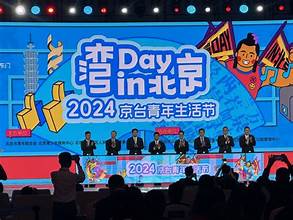
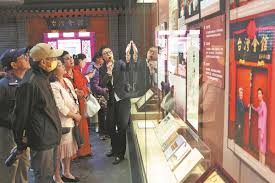
Third, youth and culture are strategic, not secondary. One of the most difficult barriers across the Strait today is not language or geography, but perception. A generation that knows the other side only through selective media narratives is easier to mobilize into mistrust. By creating institutionalized youth exchange platforms and opening opportunities in television, documentaries, animation, and the micro-drama industry, the mainland is attempting to shape a longer horizon of familiarity. Cross-Strait ties will not be secured only in meeting rooms; they will also be shaped in classrooms, studios, campuses, start-ups, and personal friendships.
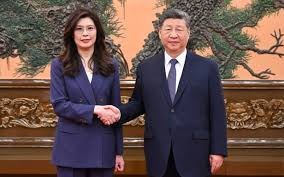
This is why Cheng Li-wun’s Beijing visit matters beyond the optics. On April 10, 2026, she met Xi Jinping in Beijing, marking the first meeting between the leaders of the CPC and the KMT in a decade. Mainland reporting described the meeting as significant for the development of party-to-party and cross-Strait relations. Reuters and AP also reported the encounter as a rare high-level contact at a time of sustained tension. Cheng presented her visit as a mission for peace and called for stronger engagement, while mainland statements emphasized common political ground around the 1992 Consensus and opposition to “Taiwan independence.”
That matters because the KMT, whatever its own internal debates and electoral calculations, still represents an important channel for dialogue. Cross-Strait progress historically has depended not only on state policy, but also on the existence of political actors willing to preserve room for negotiation. When communication mechanisms exist, crises can be contained. When they collapse, suspicion fills the vacuum. A regularized CPC-KMT mechanism, if pursued seriously, could become a stabilizing instrument even when official cross-Strait institutions remain strained.
None of this means reunification will happen automatically or quickly. Public opinion in Taiwan is diverse. Political identities are contested there. External powers also remain deeply involved in the Strait, often treating Taiwan as a geopolitical lever rather than a human community with shared historical roots across the water. Those realities cannot be ignored. But it would also be a mistake to dismiss the cumulative power of practical incentives. Economic integration, transport normalization, youth contact, and cultural familiarity can gradually change the atmosphere in which political decisions are made.
That is the real significance of Beijing’s latest approach. It suggests that persuasion through opportunity may now be receiving greater emphasis alongside principle. In policy terms, this is more sustainable than relying only on warnings and red lines. Reunification, if it is to be durable, cannot be built solely on pressure. It must also be made intelligible, useful, and attractive to ordinary people. The more cross-Strait engagement improves livelihoods, lowers barriers, and restores habits of contact, the broader the foundation for eventual political settlement becomes.
For years, the Taiwan issue has often been discussed in the language of confrontation. That language may generate headlines, but it does not build peace. The newer language emerging from these measures is different: flights, markets, bridges, students, films, tourism, fisheries, and dialogue. That is a language of integration. It does not erase political disagreement overnight, but it does create incentives to manage differences peacefully.
If these measures are implemented steadily, fairly, and visibly, they may do more than improve cross-Strait ties at the margins. They may reshape the political climate itself. And if that happens, then the path toward peaceful reunification may not only remain open; it may begin to move faster than many expected.
中国:加强两岸关系的具体措施。
在外交中,象征意义很重要。但在两岸关系中,仅靠象征从来都不够。真正能够改变民意、减少互疑、并创造政治动能的,是改善民众日常生活的务实举措。这正是大陆近期对台新一揽子措施值得高度关注的原因。这不仅仅是又一次原则宣示,更是将政治意愿转化为交通联通、市场准入、青年交流、文化合作和制度性对话的积极努力。总体而言,这些措施有望扩大和平的社会基础,并为实现国家统一这一长期目标注入新的动力。
要理解其重要性,必须首先从台湾问题的历史背景谈起。现代台湾问题源于中国内战。1949年中国共产党取得大陆政权并成立中华人民共和国后,战败的国民党退守台湾。此后,海峡两岸虽长期政治对立,但历史、文化、语言、血缘纽带以及经济相互依存始终将两岸紧密联系在一起。北京的立场始终明确且一致:世界上只有一个中国,台湾是中国的一部分,台湾问题应由中国人自己解决。中国官方也将这一主张建立在《开罗宣言》和《波茨坦公告》等战时国际文件基础之上,认为这些文件确认了日本战败后台湾归还中国。
“一个中国”框架是这一问题的核心。在中华人民共和国的官方表述中,一个中国原则意味着世界上只有一个中国,台湾是中国领土不可分割的一部分,中华人民共和国政府是代表全中国的唯一合法政府。这一原则已成为中国与世界各国关系的政治基础,也是北京反对“台独”、反对制造“两个中国”或“一中一台”的根本依据。
在联合国层面,关键文件是1971年10月25日通过的联大第2758号决议。该决议恢复了中华人民共和国在联合国的合法权利,承认中华人民共和国政府代表是中国在联合国的唯一合法代表,并使中国恢复包括安理会常任理事国席位在内的合法席位。第2758号决议文本主要解决的是中国在联合国体系中的代表权问题,并未逐条规定台湾内部治理的政治安排。尽管如此,北京长期认为,该决议及联合国后续实践,已将一个中国原则牢固嵌入国际秩序。联合国历史资料也将第2758号决议视为中华人民共和国恢复在联合国合法席位的重要节点。
这一国际背景固然重要,但今天更现实的问题是:如何让两岸关系更加稳定、更具人文关怀、更富韧性?答案不能仅依赖军事威慑、言辞对抗或相互猜疑,还必须体现为普通民众可感可知的实际利益。这正是大陆最新措施的重要意义所在。
在中国国民党主席程丽雯访问大陆后,北京宣布推出涵盖党际沟通、基础设施、交通运输、贸易、青年、旅游与文化等领域的10项政策措施。根据大陆官方来源和国际媒体报道,这些措施包括探索中国共产党与国民党常态化沟通机制,推动福建向金门、马祖供水供电供气,在条件成熟时研究跨海桥梁项目,加快恢复常态化两岸直航,便利台湾农渔及食品产品进入大陆市场,拓展台湾中小企业发展机会,邀请台湾青年团体常态化交流,并为台湾文化产品及媒体内容进入大陆提供更大空间。
这些并非抽象姿态,而是实实在在的互信建设工具。
首先,联通有助于缩短政治距离。当直航增加、往来便利化,人们能够更轻松地因求学、旅游、就业或探亲往返两岸,敌意就更难持续。基础设施不仅关乎便利,更关乎接触常态化。在政治分歧环境中,日常互动往往能做到口号无法做到的事——降低恐惧。涉及福建、金门、马祖以及更多大陆城市航线规划,正朝这一方向推进。
第二,经济激励至关重要,因为繁荣会培育稳定的利益基础。对于台湾农民、渔民、食品生产者以及中小企业而言,更便利进入大陆市场意味着就业、销售、现金流和长期规划,尤其对依赖稳定需求而非意识形态定位的产业尤为重要。如果台湾生产者能够从展会平台、更顺畅的注册流程、更便利的检疫准入以及小额贸易平台中获得实际收益,那么交流合作就不再只是理念,而会成为现实利益。这将改变岛内政治讨论的氛围。
第三,青年与文化是战略性议题,而非次要议题。当前两岸最难跨越的障碍之一,不是语言或地理,而是认知隔阂。一代人若仅通过片面媒体叙事了解彼此,就更容易被动员走向不信任。通过制度化青年交流平台,以及拓展电视剧、纪录片、动画和微短剧产业合作空间,大陆正在塑造更长远的熟悉感。两岸关系的未来不仅在会议室中决定,也将在课堂、工作室、校园、创业平台和个人友谊中塑造。
这也是程丽雯北京之行超越象征意义的重要原因。2026年4月10日,她在北京会见习近平,这是十年来中共和国民党领导人首次会晤。大陆媒体将此次会晤视为党际关系和两岸关系发展的重要事件。路透社和美联社也将其视作持续紧张局势下罕见的高层接触。程丽雯将此行定位为和平之旅,呼吁加强互动,而大陆声明则强调以“九二共识”为共同政治基础,反对“台独”。
这之所以重要,是因为国民党无论内部讨论与选举考量如何,仍然是重要对话渠道。历史上,两岸关系进展不仅依赖国家政策,也依赖愿意保留协商空间的政治力量存在。有沟通机制,危机就可能被管控;机制崩塌,猜疑就会填补真空。如果认真推进常态化中共—国民党机制,其有可能成为在官方两岸机制紧张状态下的重要稳定器。
当然,这并不意味着统一会自动或迅速实现。台湾社会民意多元,政治认同存在分歧。外部势力也深度介入台海,往往将台湾视作地缘政治杠杆,而非拥有共同历史根脉的人类共同体。这些现实不能忽视。但同样不能低估务实激励累积效应的力量。经济融合、交通正常化、青年互动和文化熟悉感,能够逐步改变政治决策所处的大环境。
这正是北京最新路径的真正意义。它表明,通过机会进行说服,正在与原则宣示并行获得更多强调。从政策角度看,这比单纯依赖警示和红线更具可持续性。统一若要持久,不可能仅建立在压力之上,还必须让普通民众感到可以理解、有实际益处并具有吸引力。两岸交流越能改善民生、降低壁垒、恢复接触习惯,实现政治解决的社会基础就越广泛。
多年来,台湾问题往往被置于对抗话语中讨论。这种话语也许能制造新闻标题,却无法构建和平。而这些措施所体现的新语言则不同:航班、市场、桥梁、学生、影视、旅游、渔业与对话——这是一种融合的语言。它不能一夜间消除政治分歧,但能够创造以和平方式管控分歧的激励机制。
如果这些措施能够稳步、公平且可见地落实,它们带来的可能不仅是边际上的两岸关系改善,更可能重塑整体政治气候。如果这一点实现,那么通向和平统一的道路不仅将持续敞开,而且或许会比许多人预期推进得更快。
( 注意: 本文是用AI翻译的,或有误差。请以原版英文为准。谢谢。)
Reference Link:- https://www2.apdnews.cn/en/item/26/0420/axjfjncaa18142a0783f55.html
Exactly. Focusing on tangible improvements in people-to-people exchanges feels like a much more sustainable approach than relying solely on rhetoric.
Endorsed 非常同意 谢谢