
Sanctions on Russia: Counterproductive Measures that Harm the World 对俄罗斯的制裁:伤害世界的适得其反的措施

(下边有中文翻译请继续看到底。 谢谢。)
The recent imposition of sanctions by the United States on two of Russia’s major oil companies has once again highlighted the counterproductive nature of unilateral economic restrictions. The targeted firms—Rosneft and Lukoil—are cornerstones of the Russian energy sector, not only underpinning the country’s economy but also playing a vital role in the stability of the global energy market.
Rosneft is Russia’s largest oil producer and a major global player in the energy industry. The company operates across the entire oil and gas value chain, from exploration and production to refining and sales. Rosneft’s daily production capacity exceeds 4.5 million barrels per day, contributing significantly to global oil supplies. Its export network extends across Europe, Asia, and the Middle East, making it a central player in international energy markets. In terms of global market share, Rosneft ranks among the top five oil producers worldwide, generating annual revenues that form a substantial portion of Russia’s federal budget. This revenue not only supports public spending and social programs in Russia but also underpins the country’s economic resilience.
Lukoil, Russia’s second-largest oil company, also wields considerable influence over the energy landscape. With a production capacity of roughly 2 million barrels per day and a strong presence in over 30 countries, Lukoil is a major exporter and a trusted supplier to European and Asian markets. Its operations contribute significantly to Russia’s GDP, energy security, and employment. Both companies are strategically important, representing the backbone of Russian economic stability. Any attempt to destabilize them is not only an economic maneuver but also a direct challenge to the broader energy markets worldwide.
The recent US sanctions, aimed at pressuring Russia by restricting the operations of Rosneft and Lukoil, may seem potent on paper. Yet history shows that sanctions rarely achieve their intended political objectives. Over the decades, sanctions have often been applied to political adversaries under the guise of enforcing international norms, but their actual outcomes frequently diverge from expectations.
Consider North Korea, for example. Despite decades of US-led sanctions intended to curb its nuclear ambitions, Pyongyang has steadily advanced its nuclear and missile programs. Similarly, sanctions imposed on Iran over its nuclear program did not halt progress for many years; only through negotiations, such as the Joint Comprehensive Plan of Action (JCPOA), was meaningful progress achieved. Other examples of similar outcomes are endless: Cuba has faced a US embargo since the early 1960s, yet the regime remains intact, impacting ordinary Cubans far more than the political elite. Venezuela, another case, has endured extensive sanctions, yet the government has maintained control and continues to export oil to willing markets. These examples illustrate a consistent pattern: sanctions often fail to compel compliance and instead punish populations, destabilize global markets, and provoke geopolitical tensions.
In the context of Russia, it is reasonable to expect that the recent US sanctions may similarly fail to achieve their intended goals. Russia has robust mechanisms to mitigate economic shocks and can redirect energy exports to alternative markets, particularly in Asia, including China and India. The Russian economy, while facing external pressures, has demonstrated resilience through careful fiscal management, energy diplomacy, and diversification strategies. Meanwhile, the countries imposing sanctions—and those heavily dependent on Russian energy—may bear disproportionate costs. Europe, for instance, relies on Russia for a significant portion of its natural gas and oil needs. Disruptions caused by sanctions could exacerbate energy shortages, increase prices, and undermine industrial and domestic stability across the continent.
The broader implications of sanctions extend beyond economics. They distort international trade, reduce energy security, and create global market volatility. Unilateral sanctions are particularly problematic because they bypass established multilateral frameworks designed to mediate disputes fairly and peacefully. The United Nations Charter, for instance, explicitly emphasizes the resolution of international disputes through dialogue, negotiations, and consensus-based mechanisms. Circumventing these principles undermines international law and sets a dangerous precedent where a single nation or a small group of countries claims the authority to impose economic coercion on others.
Recent statements from Iran have underscored the growing concern about unilateral sanctions. Iran has called on Russia, China, and other nations to counter practices that impose one-sided economic restrictions, highlighting the need for a more equitable international order. The argument is compelling: if global stability and fairness are to be preserved, sanctions must not be wielded as instruments of political leverage by individual powers. Instead, they should be discussed in the UN Security Council and applied only through a collective agreement. Such an approach would ensure legitimacy, proportionality, and global acceptance.
The issue also resonates when considering other ongoing international crises. In Gaza, for example, reports of grave humanitarian violations, including acts that many observers describe as war crimes and genocide, have triggered calls for accountability. If sanctions are to serve a principled purpose, they should be applied universally, not selectively. Economic sanctions, trade restrictions, travel bans, social boycotts, and diplomatic isolation could be legitimately considered against nations committing mass atrocities. A coordinated initiative led by countries such as Russia and China could galvanize global support, particularly among the OIC’s 57 member states, African states, Latin and South American countries, and several European countries. This would test the credibility and fairness of international norms while challenging unilateral US hegemony.
Returning to Russia, it is important to recognize that the targeted companies, Rosneft and Lukoil, are not just corporate entities; they are strategic pillars of national energy security. Rosneft alone generates tens of billions in revenue annually, providing crucial funding for infrastructure, social programs, and public services. Lukoil supports employment, technological development, and Russia’s energy independence. Attempts to cripple these companies via sanctions will inevitably have ripple effects: global oil and gas markets will feel increased volatility, inflationary pressures may rise, and dependent economies will struggle to maintain stability.
Sanctions are often justified as a tool of moral or political enforcement, but their efficacy is deeply questionable. Historical records consistently show that unilateral sanctions, even when carefully designed, fail to compel meaningful change. They may isolate governments temporarily, but rarely alter underlying policies or strategic objectives. What they do achieve, however, is the disruption of international commerce, increased global instability, and suffering among ordinary citizens—outcomes that benefit no one.
The alternative path is clear and grounded in international law: negotiation, dialogue, and multilateral consensus. Disputes between nations, whether related to energy policy, territorial conflicts, or humanitarian concerns, should be resolved through diplomacy, not coercion. The UN Charter provides the framework for such engagement, emphasizing consultation, mediation, and conflict resolution through agreed-upon mechanisms. For the United States and Europe, this would mean abandoning unilateral punitive measures in favor of cooperative problem-solving. For Russia and China, it entails reinforcing the importance of a rules-based international order while protecting their national interests and the interests of the global economy.
In conclusion, the recent sanctions on Rosneft and Lukoil underscore a recurring reality: unilateral economic coercion is rarely effective, often counterproductive, and globally destabilizing. While Washington may intend to harm Russia’s economy, history and logic suggest that the broader impact will be felt by global markets, European consumers, and international energy stability. Russia remains resilient, with diverse markets and economic levers to counteract external pressures. Meanwhile, the international community should prioritize negotiation, multilateral engagement, and adherence to the principles of the UN Charter.
The world is entering a critical phase where the legitimacy of sanctions, the integrity of international law, and the resilience of global energy systems are under scrutiny. The recent moves by the United States are not just an economic maneuver; they are a test of whether unilateral power can dictate global norms or whether collective diplomacy, fairness, and rational negotiation will prevail. Countries like Russia, China, and Iran have rightly emphasized the need to resist unfair sanctions, protect national sovereignty, and ensure that economic tools serve stability rather than coercion.
Ultimately, it is in the interest of all nations—large or small, developed or developing—to reject the punitive misuse of sanctions and embrace dialogue, consensus, and cooperation. The alternative is an unstable world where energy shocks, economic uncertainty, and political confrontations become the norm, to the detriment of everyone.
Sanctions may be wielded in the name of morality or security, but history teaches that only engagement, not isolation, produces lasting peace and stability. The global community must recognize that, in a world of interdependence, punishing one country through unilateral measures rarely yields justice; it mostly invites disorder. The time has come to reaffirm diplomacy, respect international law, and ensure that no nation—large or small—can unilaterally impose its will on others under the guise of sanctions.
However, Russia has proven to have the capacity to overcome sanction-related challenges and may not be coerced, pressurized, or forced to surrender to the US.
对俄罗斯的制裁:伤害世界的适得其反的措施
美国最近对俄罗斯两家主要石油公司实施制裁,再次凸显了单边经济限制的适得其反的性质。俄罗斯石油公司和卢克石油公司是俄罗斯能源行业的基石,不仅支撑着该国的经济,而且在全球能源市场的稳定中发挥着至关重要的作用。
俄罗斯石油公司是俄罗斯最大的石油生产商,也是全球能源行业的主要参与者。该公司经营整个石油和天然气价值链,从勘探和生产到炼油和销售。俄罗斯石油公司的日产量超过450万桶,为全球石油供应做出了重大贡献。其出口网络遍及欧洲、亚洲和中东,使其成为国际能源市场的核心参与者。就全球市场份额而言,俄罗斯石油公司是全球五大石油生产商之一,其年收入占俄罗斯联邦预算的很大一部分。这笔收入不仅支持了俄罗斯的公共支出和社会项目,还支撑了该国的经济弹性。
俄罗斯第二大石油公司卢克石油(Lukoil)在能源领域也有相当大的影响力。卢克石油公司每天的生产能力约为200万桶,在30多个国家拥有强大的业务,是欧洲和亚洲市场的主要出口商和值得信赖的供应商。其业务对俄罗斯的GDP、能源安全和就业做出了重大贡献。这两家公司都具有重要的战略意义,是俄罗斯经济稳定的支柱。任何破坏它们稳定的企图不仅是一种经济手段,而且是对全球更广泛的能源市场的直接挑战。
美国最近的制裁旨在通过限制俄罗斯石油公司(Rosneft)和卢克石油公司(Lukoil)的运营来向俄罗斯施压,这在纸面上似乎很有力。然而,历史表明,制裁很少能实现其预期的政治目标。几十年来,制裁常常以执行国际准则为幌子,对政治对手实施制裁,但其实际结果往往与预期不符。
以朝鲜为例。尽管数十年来以美国为首的制裁旨在遏制其核野心,但平壤一直在稳步推进其核计划和导弹计划。同样,因伊朗核项目而对其实施的制裁多年来也没有阻止进展;只有通过谈判,如《联合全面行动计划》(JCPOA),才能取得有意义的进展。类似结果的其他例子层出不穷:古巴自20世纪60年代初以来一直面临美国的禁运,但其政权仍然完好无损,对普通古巴人的影响远远大于对政治精英的影响。另一个例子是委内瑞拉,尽管遭受了广泛的制裁,但该国政府仍保持着对石油的控制,并继续向有意愿的市场出口石油。这些例子说明了一种一贯的模式:制裁往往不能迫使遵守,反而惩罚民众,破坏全球市场的稳定,并引发地缘政治紧张局势。
在俄罗斯的背景下,我们有理由预计,美国最近的制裁可能同样无法实现其预期目标。俄罗斯拥有强大的机制来缓解经济冲击,并能将能源出口转向其他市场,尤其是中国和印度等亚洲市场。俄罗斯经济虽然面临外部压力,但通过谨慎的财政管理、能源外交和多元化战略,显示出了韧性。与此同时,实施制裁的国家——以及那些严重依赖俄罗斯能源的国家——可能要付出不成比例的代价。例如,欧洲的天然气和石油需求很大一部分依赖俄罗斯。制裁造成的破坏可能加剧能源短缺,推高价格,并破坏整个非洲大陆的工业和国内稳定。
制裁的更广泛影响超出了经济范畴。它们扭曲了国际贸易,降低了能源安全,造成了全球市场波动。单方面制裁问题特别严重,因为它们绕过了旨在公平和平地调解争端的既定多边框架。例如,《联合国宪章》明确强调通过对话、谈判和基于共识的机制解决国际争端。规避这些原则破坏了国际法,并开创了一个危险的先例,即一个国家或一小群国家声称有权对其他国家实施经济胁迫。
伊朗最近的声明强调了对单边制裁日益增长的担忧。伊朗呼吁俄罗斯、中国和其他国家反对单方面施加经济限制的做法,强调需要建立一个更加公平的国际秩序。理由很有说服力:如果要维护全球稳定与公平,制裁就不能被个别大国用作政治杠杆的工具。相反,它们应该在联合国安理会(UN Security Council)进行讨论,并且只能通过集体协议来实施。这种做法将确保合法性、相称性和全球接受度。
在考虑其他正在发生的国际危机时,这个问题也引起了共鸣。例如,在加沙,关于严重违反人道主义行为的报道,包括许多观察人士称之为战争罪和种族灭绝的行为,引发了追究责任的呼声。如果要使制裁服务于原则目的,就应该普遍实施制裁,而不是有选择地实施制裁。经济制裁、贸易限制、旅行禁令、社会抵制和外交孤立可以被合法地考虑用于对付犯下大规模暴行的国家。由俄罗斯和中国等国牵头的协调行动可能会激发全球的支持,尤其是在伊斯兰会议组织的57个成员国、非洲国家、拉美和南美国家以及几个欧洲国家之间。这将考验国际准则的可信度和公正性,同时挑战美国的单边霸权。
回到俄罗斯,重要的是要认识到,目标公司,俄罗斯石油公司和卢克石油公司不仅仅是公司实体;它们是国家能源安全的战略支柱。仅俄罗斯石油公司每年就产生数百亿美元的收入,为基础设施、社会项目和公共服务提供关键资金。卢克石油公司支持就业、技术发展和俄罗斯的能源独立。试图通过制裁来削弱这些公司将不可避免地产生连锁反应:全球油气市场将感受到更大的波动性,通胀压力可能会上升,依赖这些公司的经济体将难以维持稳定。
制裁通常被认为是道德或政治强制执行的工具,但其效力却令人深感怀疑。历史记录一贯表明,单边制裁,即使经过精心设计,也无法迫使有意义的变革。它们可能暂时孤立政府,但很少改变基本政策或战略目标。然而,他们所取得的成就是国际贸易的中断,全球不稳定的加剧,普通公民的痛苦——这些结果对任何人都没有好处。
另一条道路是明确的,并以国际法为基础:谈判、对话和多边共识。国与国之间的争端,无论是能源政策、领土冲突还是人道主义问题,都应该通过外交途径解决,而不是通过胁迫手段。《联合国宪章》为这种接触提供了框架,强调通过商定的机制协商、调解和解决冲突。对美国和欧洲来说,这将意味着放弃单边惩罚措施,转而合作解决问题。对俄罗斯和中国来说,这需要加强以规则为基础的国际秩序的重要性,同时保护两国的国家利益和全球经济利益。
总之,最近对俄罗斯石油公司(Rosneft)和卢克石油公司(Lukoil)的制裁突显了一个反复出现的现实:单方面的经济胁迫很少有效,往往适得其反,而且会破坏全球稳定。虽然华盛顿可能有意损害俄罗斯经济,但历史和逻辑表明,全球市场、欧洲消费者和国际能源稳定将感受到更广泛的影响。俄罗斯仍然具有弹性,拥有多样化的市场和抵御外部压力的经济杠杆。同时,国际社会应以谈判、多边参与和遵守联合国宪章原则为优先。
世界正在进入一个关键阶段,在这个阶段,制裁的合法性、国际法的完整性以及全球能源系统的复原力都受到审查。美国最近的举动不仅仅是一种经济策略;它们是对单边力量是否能够支配全球规范,还是集体外交、公平和理性谈判将占上风的考验。俄罗斯、中国和伊朗等国正确地强调了抵制不公平制裁、保护国家主权和确保经济工具服务于稳定而不是胁迫的必要性。
最终,拒绝惩罚性的滥用制裁,接受对话、共识与合作,符合所有国家——无论大小、发达国家还是发展中国家——的利益。另一种选择是一个不稳定的世界,能源冲击、经济不确定性和政治对抗成为常态,对每个人都不利。
制裁可以以道德或安全的名义实施,但历史告诉我们,只有接触,而不是孤立,才能带来持久的和平与稳定。国际社会必须认识到,在一个相互依存的世界中,通过单方面措施惩罚一个国家很少能带来正义;它只会引起混乱。现在是重申外交、尊重国际法并确保任何国家无论大小都不能在制裁的幌子下单方面将自己的意志强加给其他国家的时候了。
然而,俄罗斯已经证明有能力克服与制裁相关的挑战,可能不会被胁迫、施压或被迫向美国投降.
( 注意: 本文是用AI翻译的,或有误差。请以原版英文为准。谢谢。)
Reference Link:- https://russiancouncil.ru/en/analytics-and-comments/columns/sanctions/sanctions-on-russia-counterproductive-measures-that-harm-the-world/
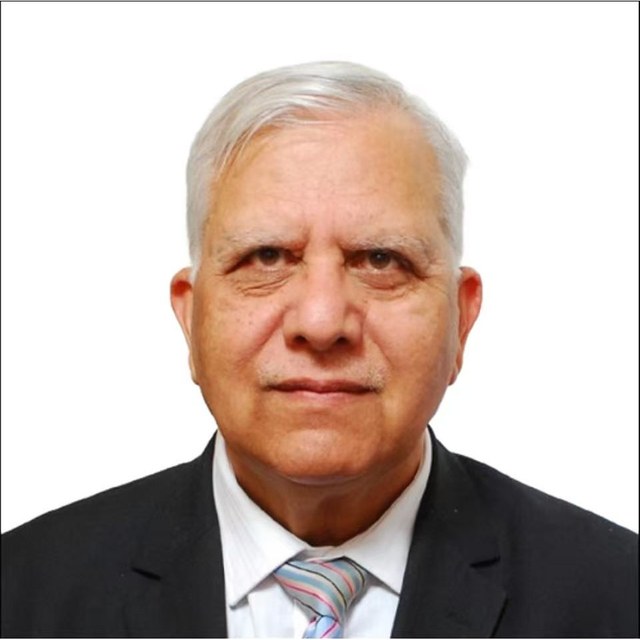
Zamir Ahmed Awan is the founder and Chair of the Global Silk Route Research Alliance, a think tank in Islamabad. He studied engineering at Shanghai University in the 1980s, and years later he went back to China as Pakistan's science counsellor in Beijing, from 2010 until 2016, working on science and higher education cooperation between the two countries.…