

(下边有中文翻译请继续看到底。 谢谢。)
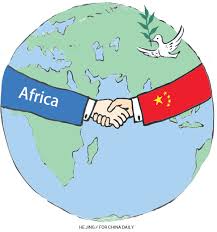
In a world grappling with geopolitical rivalry, rising protectionism, and development disparities, the relationship between China and Africa stands as a shining example of solidarity, mutual respect, and win-win cooperation. 在地缘政治对抗、保护主义抬头、发展差距扩大的背景下,中非关系是团结、相互尊重、合作共赢的典范。

In a world grappling with geopolitical rivalry, rising protectionism, and development disparities, the relationship between China and Africa stands as a shining example of solidarity, mutual respect, and win-win cooperation. The recent announcement by China to expand zero-tariff treatment on 100% of tariff lines for all 53 African countries with diplomatic ties marks not only a bold economic gesture but also a resounding political message: Africa matters.
At the Ministerial Meeting of Coordinators on the Implementation of Follow-up Actions of the Forum on China-Africa Cooperation (FOCAC), held from June 10 to 12 in Changsha, Hunan Province, this policy shift was formally unveiled. It reflects China’s unwavering commitment to promoting Africa’s development, integrating the continent more fully into the global economy, and building a stronger Global South.
The move, which comes alongside the Fourth China-Africa Economic and Trade Expo in Changsha, is more than just an economic incentive—it is a declaration of deep-rooted friendship and a vision for shared prosperity.
A Landmark Gesture of Economic Support
China’s decision to offer zero-tariff access for 100% of tariff lines to African countries is unprecedented in both scale and significance. While much of the world is turning inward, erecting tariff barriers and waging trade wars, China is doing the opposite—it is tearing down walls and building bridges.
This initiative empowers African countries to export freely to the world’s second-largest economy, creating enormous potential for local industries, agriculture, and manufacturing. It signals that Africa’s products, people, and potential are welcome in China—without tariffs, restrictions, or prejudices.
It also addresses a long-standing barrier that has hindered African nations from accessing global markets: trade inequality. For decades, African economies have struggled with unfair trading systems that benefited the industrialized North. China’s tariff relief marks a major correction of that imbalance. It is a step toward justice in global trade, a cause long championed by the Global South.
Helping Africa Move Beyond Poverty and Dependency
For centuries, Africa has been trapped in a cycle of poverty and underdevelopment, often fueled by colonial legacies, unfair trade practices, and external exploitation. The result has been a lingering sense of marginalization and being “left behind” in the global race for progress.
China’s engagement with Africa is different—it is development-focused, partner-oriented, and future-looking. By offering tariff-free access, China is not merely importing goods—it is exporting hope.
More than that, this policy will:
· Encourage investment in African productivity, especially agriculture and small-scale manufacturing.
· Improve Africa’s foreign exchange earnings, strengthening national reserves.
· Foster entrepreneurship, particularly among women and youth.
· Reduce dependency on aid and move towards self-sustained economic development.
Unlike the traditional aid-based model, China is creating an enabling environment where African countries can rise on their own feet.
Africa as an Equal Partner, Not a Passive Recipient
· The Changsha Declaration, jointly signed by China and 53 African nations, alongside the African Union, emphasized a shared commitment to multilateralism, non-interference, and mutual development. It was a powerful rebuke to the politics of division and hegemony.
· African countries are not being treated as passive recipients of China’s generosity. Instead, they are equal stakeholders in a cooperative journey toward modernization, industrialization, and dignity.
· China’s approach is rooted in respect for sovereignty, dialogue among civilizations, and the principle that development is a universal right, not a privilege for the few.
· In his congratulatory letter to the Ministerial Meeting, President Xi Jinping reaffirmed China’s commitment to high-quality, people-centered development in Africa. Echoing the sentiments of African leaders, he emphasized that Africa’s progress is not only an African dream but a global necessity.
Beyond Trade: A Holistic Vision of Development
China’s engagement in Africa extends far beyond tariff relief. The outcomes of the FOCAC follow-up meeting include 35 tangible deliverables under ten partnership categories—ranging from agriculture and infrastructure to digital economy, climate resilience, and people-to-people exchanges.
This comprehensive approach acknowledges that economic growth is not just about numbers—it’s about transforming lives.
Some highlights of China’s support include:
· Building and upgrading roads, ports, and railway networks across the continent.
· Training thousands of African youth under scholarship and vocational programs.
· Supporting the green transition by investing in renewable energy projects.
· Strengthening healthcare infrastructure through hospital construction and medical aid.
· Promoting the Digital Silk Road to close the technological gap between Africa and the rest of the world.
· This integrated approach ensures that Africa is not just catching up but actually leading in many innovative domains with China’s backing.
A Shared South-South Narrative
The Changsha Declaration reflects a unified voice of the Global South, resisting the trend of economic coercion and unilateralism that has defined much of modern international relations. Together, China and African nations called for a fairer, more inclusive global order that reflects the aspirations of developing nations.
It was no coincidence that the declaration condemned tariff wars, an indirect critique of policies pursued by some Western powers, particularly the United States. The statement underscored the importance of solidarity among developing nations and the need for greater autonomy in shaping their futures.
In this sense, China-Africa cooperation is not just about development—it is about sovereignty, dignity, and a multipolar world order where no one nation dominates others.
The China-Africa Expo: More Than Just a Fair
The Fourth China-Africa Economic and Trade Expo, held alongside the ministerial meeting, showcased the vitality and diversity of China-Africa ties. With thousands of African products, entrepreneurs, and officials present, the Expo was a celebration of human connection, cultural exchange, and entrepreneurial ambition.
It is a powerful signal that Africa is not just a land of raw materials—it is a continent of creators, thinkers, innovators, and traders. And China sees that potential.
Chinese companies, local governments, and civil society are increasingly engaging with African counterparts in business partnerships, joint ventures, and knowledge transfer, helping to move the continent away from extractive models toward value addition and industrialization.
Toward a Shared Future of Prosperity
China-Africa relations are not transactional—they are transformational. Rooted in a shared history of anti-colonial struggle, grounded in mutual respect, and aimed at a just and prosperous future, this relationship is evolving into one of the most important partnerships of the 21st century.
While the West often views Africa through a lens of charity or strategic competition, China treats Africa as an equal partner and strategic friend. Its zero-tariff initiative is not a favor—it is an act of solidarity.
As the world faces the twin challenges of inequality and fragmentation, China and Africa are showing a different path—one based on cooperation, inclusiveness, and mutual benefit.
It is a reminder that when nations rise together, with dignity and purpose, they can build a better world—not just for themselves, but for all humanity.
Let the story of China and Africa be a lesson to the world: that trust, friendship, and shared dreams are still possible in our divided times.
在地缘政治对抗、保护主义抬头、发展差距扩大的背景下,中非关系是团结、相互尊重、合作共赢的典范。最近,中国宣布对所有53个有外交关系的非洲国家扩大100%税目的零关税待遇,这不仅是一个大胆的经济姿态,也是一个响亮的政治信息:非洲很重要。
6月10日至12日,在湖南长沙举行的中非合作论坛后续行动落实部长级协调人会议上,这一政策转变正式公布。这体现了中国致力于促进非洲发展、推动非洲更全面融入世界经济、建设更加强大的全球南方的坚定承诺。
这一举措恰逢第四届中非经贸博览会在长沙举行,它不仅仅是一种经济激励,更是一种根深蒂固的友谊和共同繁荣愿景的宣言。
具有里程碑意义的经济支持姿态
中国决定向非洲国家提供100%税目的零关税准入,规模和意义都是前所未有的。当世界上大部分国家都在向内发展,建立关税壁垒,发动贸易战时,中国却反其道而行之——它正在拆除壁垒,搭建桥梁。
这一倡议使非洲国家能够向世界第二大经济体自由出口,为当地工业、农业和制造业创造巨大潜力。这表明非洲的产品、人民和潜力在中国是受欢迎的,没有关税、限制或偏见。
它还解决了一个长期阻碍非洲国家进入全球市场的障碍:贸易不平等。几十年来,非洲经济一直在不公平的贸易体系中挣扎,而这种贸易体系使工业化的北方国家受益。中国的关税减免标志着这种不平衡的重大调整。这是朝着全球贸易公正迈出的一步,这是全球南方国家长期倡导的一项事业。
帮助非洲摆脱贫困和依赖
几个世纪以来,非洲一直陷入贫困和不发达的循环,往往是由殖民遗产、不公平的贸易做法和外部剥削加剧的。其结果是一种挥之不去的边缘化感,以及在全球进步竞赛中被“抛在后面”的感觉。
中国与非洲的交往是不同的——它以发展为中心,以伙伴为导向,面向未来。通过提供免关税准入,中国不仅在进口商品,而且在出口希望。
更重要的是,这项政策将:
·鼓励对非洲生产力,特别是农业和小规模制造业的投资。
·提高非洲外汇收入,加强国家储备。
·培育创业精神,特别是妇女和青年的创业精神。
·减少对援助的依赖,走向自给自足的经济发展。
与传统的以援助为基础的模式不同,中国正在创造一个有利的环境,让非洲国家能够自力更生。
非洲是平等的伙伴,而不是被动的接受者
·中国与53个非洲国家以及非盟共同签署的《长沙宣言》强调共同致力于多边主义、不干涉内政、共同发展。这是对分裂和霸权政治的有力谴责。
·非洲国家没有被视为中国慷慨援助的被动接受者。相反,他们是走向现代化、工业化和尊严的合作旅程中的平等利益攸关者。
·中国的做法植根于尊重主权、不同文明之间的对话,以及发展是一项普遍权利而不是少数人的特权的原则。
他呼应了非洲领导人的情绪,强调非洲的进步不仅是非洲梦,也是全球的需要。
超越贸易:发展的整体视野
中国在非洲的参与远远超出了关税减免。中非合作论坛后续会议成果包括农业、基础设施、数字经济、气候适应、人文交流等10大伙伴关系领域35项实质性成果。
这种全面的方法承认,经济增长不仅仅是数字的问题——它还关乎生活的改变。
中方支持的亮点包括:
·建设和升级整个非洲大陆的公路、港口和铁路网。
·通过奖学金和职业项目培训数千名非洲青年。
·通过投资可再生能源项目支持绿色转型。
·通过医院建设和医疗救助加强卫生基础设施建设。
·推进数字丝绸之路建设,缩小非洲与世界的技术差距。
·在中国的支持下,这种综合方法确保非洲不仅在追赶,而且在许多创新领域处于领先地位。
南南共同叙事
《长沙宣言》反映了全球南方的统一声音,抵制主导现代国际关系的经济胁迫和单边主义趋势。中国和非洲国家共同呼吁建立一个更公平、更包容的全球秩序,反映发展中国家的愿望。
宣言谴责关税战并非巧合,这是对一些西方大国(尤其是美国)所奉行政策的间接批评。声明强调了发展中国家之间团结的重要性,以及在塑造未来方面拥有更大自主权的必要性。
从这个意义上说,中非合作不仅仅是为了发展,而是为了主权、尊严和多极世界秩序,没有一个国家可以支配其他国家。
中非博览会:不仅仅是一个博览会
与部长级会议同期举行的第四届中非经贸博览会,展示了中非关系的活力和多样性。成千上万的非洲产品、企业家和官员出席了这次博览会,这是一场人与人之间联系、文化交流和创业雄心的庆典。
这是一个强有力的信号,表明非洲不仅仅是一个原材料之地——它是一个创造者、思想家、创新者和贸易商的大陆。中国看到了这种潜力。
中国企业、地方政府和民间团体正越来越多地与非洲同行在商业伙伴关系、合资企业和知识转移方面进行接触,帮助非洲大陆从采掘模式转向增值和工业化模式。
迈向共同繁荣的未来
中非关系不是交易性的,而是变革性的。两国关系根植于共同的反殖民斗争历史,以相互尊重为基础,以公正和繁荣的未来为目标,正在发展成为21世纪最重要的伙伴关系之一。
西方常常从慈善或战略竞争的角度看待非洲,而中国则把非洲视为平等的伙伴和战略朋友。它的零关税倡议不是一种恩惠,而是一种团结行动。
在世界面临不平等和分裂的双重挑战之际,中非走出了一条不同的道路——合作、包容、共赢。
它提醒我们,当各国带着尊严和目标共同崛起时,它们可以为自己和全人类建设一个更美好的世界。
让中非的故事给世界一个教训:在我们这个分裂的时代,信任、友谊和共同的梦想仍然是可能的。
( 注意: 本文是用AI翻译的,或有误差。请以原版英文为准。谢谢。)
Reference Link:- https://moderndiplomacy.eu/2025/06/19/china-africa-relations-a-new-chapter-of-solidarity-development-and-shared-future/