
Masked Israelis assaulted a delegation of European diplomats and public figures, as well as Palestinian olive harvesters

 French mayor, Belgian envoy among wounded in several settler attacks in West Bank. Masked Israelis assaulted a delegation of European diplomats and public figures, as well as Palestinian olive harvesters, in a village near Ramallah on Saturday, less than 24 hours after settler attacks in the West Bank left at least 11 people wounded, including Washington Post photojournalist Heidi Levine. The attackers also smashed a window of a Belgian consular vehicle, according to activists at the scene and Palestinian media reports. The delegation included representatives from Poland, Belgium and France, among them Bernard Baudoux, mayor of Aulnoye-Aymeries, who was attacked and wounded, and Anick Van Calster, Belgium’s consul general in Jerusalem. The Israel Police said its West Bank district is investigating the incident and that a report has been forwarded to Israel’s Foreign Ministry to help locate the victims. Amit Orfali, an activist who accompanied the delegation, said he arrived at the scene with another activist after Palestinians reported that settlers were stealing sacks filled with olives. At this point, according to Orfali, “seven masked settlers armed with clubs surrounded our vehicles and beat them, threatened to kill us and demanded to see our IDs.”Other attacks on Palestinian olive harvesters and activists were reported across the West Bank on Saturday. In Masafer Yatta, near Hebron – where settlers also reportedly stole sheep from residents – the Palestinian Red Crescent said six people were wounded by pepper spray and physical assault during the olive harvest. The IDF said that Israeli soldiers, who were filmed at the scene, had arrived following a confrontation that developed amid reports of the theft of sheep belonging to Israeli citizens. According to the IDF, troops collected evidence, and the police are probing the parties’ claims. |
 Harvesting Palestinians’ olives helps assert Jewish ownership of West Bank, top settler rabbi says Meanwhile, on Friday, Rabbi Dov Lior, a leading figure in the religious Zionist movement, ruled that Jews may harvest olives from Palestinian-owned groves in the West Bank, claiming the land belongs to the Jewish people. Harvesting the olives, Lior argued, even in areas far from Jewish communities, helps publicly assert Jewish ownership of the land and fulfills the religious commandment of conquering the land.This does not constitute theft, according to Lior, because “the Arabs never bought the land from the people of Israel or from a private Jew, and therefore it is stolen in their hands.” Jewish law, he added, holds that land cannot be stolen, meaning it “remained the property of the people of Israel.”A week before Lior’s ruling, six rabbis from the Gush Etzion settlement bloc issued a letter stating that harvesting olives from Palestinian-owned groves was forbidden under Jewish law because it constituted theft, adding that “beyond the theft, when such an act is done by people who observe the Torah and its commandments, it also constitutes a desecration of God’s name.”The rabbis’ letter sought to counter a halakhic argument that the orchard owners had “given up” on harvesting their trees, thereby permitting Jews to pick the olives. “There is no [religious] permission to act this way,” they wrote, explaining that “the conduct of the Arab owners of these orchards shows that they have not given up on their olives.” |
 Syrian sources confirm exchange between Netanyahu and al-Sharaa. Israel has been “very helpful” to Saudi Arabia as it wages war against Yemen’s Houthis, U.S. President Trump told reporters on Friday, adding that an Abraham Accords agreement with Riyadh was “back on the table.”Earlier this week, a diplomatic source told Haaretz that PM Netanyahu was trying, with U.S. mediation, to persuade Saudi Arabia to allow Israel to intervene in the war against the Houthis. Another source familiar with the details said the goal was “to join forces with the Saudis,” develop ties with the kingdom and pave the way for a normalization agreement in the future. Saudi Crown Prince Mohammed bin Salman, however, was not interested in Israeli assistance in the campaign against the Houthis, the diplomatic source added, fearing that cooperation with Israel would be unpopular with the Saudi public. He added that Israeli military intervention in Yemen was “off the table” because of bin Salman’s veto. On Thursday, following Netanyahu’s claim that he spoke with Syrian President Ahmad al-Sharaa last year to stop violence against the country’s Druze minority, Syrian sources close to the presidential palace confirmed to Haaretz that the two had an exchange. I called al-Sharaa, it was a very short and sharp conversation, and the massacre stopped,” Netanyahu said during a visit to Yarka, a Druze village in northern Israel, referring to the clashes in the Sweida province between the Syrian regime and Druze militias in July 2025, where about 300 Druze were killed. According to Syrian sources, the conversation was not a direct dialogue between the two leaders but involved other participants, including U.S. representatives and an official from an unnamed Arab country. |
Reference Link:- https://mail.yahoo.com/c/n/list/folders=00_1&listFilter=ALL_INBOX/messages/00_AAgpuWuJ2xgNLCemmMewu9Elwqj?.src=ym&reason=unexpected_ymv
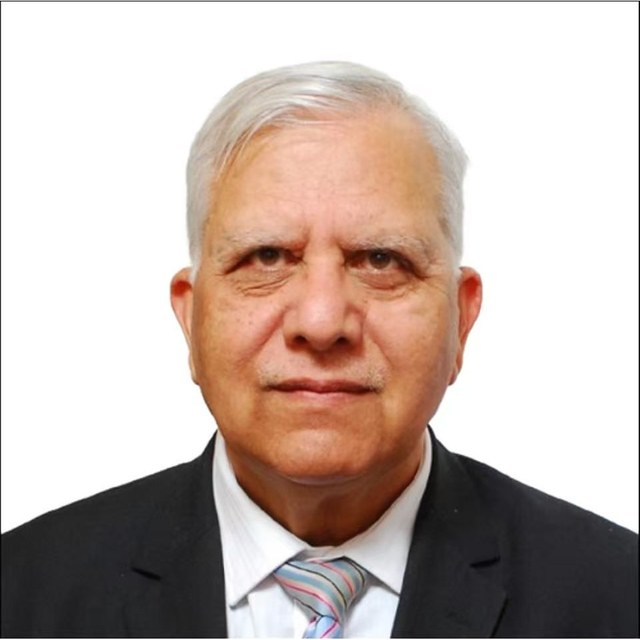
Prof. Engr. Zamir Ahmed Awan 全球丝绸之路研究联盟创始人兼主席
Zamir Ahmed Awan is the founder and Chair of the Global Silk Route Research Alliance, a think tank in Islamabad. He studied engineering at Shanghai University in the 1980s, and years later he went back to China as Pakistan's science counsellor in Beijing, from 2010 until 2016, working on science and higher education cooperation between the two countries.…