2035:巴基斯坦能否将区域潜力转化为共享繁荣?

(下边有中文翻译,请继续看到底。 谢谢。)

The 30th Meeting of the Council of Ministers (COM) of the Economic Cooperation Organization (ECO), held in Islamabad on November 16, 2026, could mark an important turning point in regional economic diplomacy. The adoption of the Islamabad Communiqué and the Strategic Goals of Economic Cooperation 2035 provides a renewed framework for cooperation among member states. More importantly, Pakistan’s assumption of the ECO chairmanship for 2026–2027 offers an opportunity to translate longstanding regional aspirations into practical achievements.
Under the theme “Reviving Regionalism for a Resilient ECO,” Pakistan has taken responsibility at a time when geopolitical tensions, economic uncertainties, disrupted supply chains, climate change and technological transformation are reshaping the international environment. The challenge is no longer to identify opportunities but to develop the political will, institutional capacity and practical mechanisms required to benefit from them.
A region of enormous untapped potential
Established in 1985, ECO brings together ten countries: Pakistan, Türkiye, Iran, Afghanistan, Azerbaijan, Kazakhstan, Kyrgyzstan, Tajikistan, Turkmenistan and Uzbekistan. Together, they possess considerable energy resources, agricultural capacity, mineral wealth, industrial potential and strategically important geographical positions connecting South Asia, Central Asia, the Middle East and Europe.
According to the ECO Trade and Development Bank, the region has approximately 545 million inhabitants and a combined nominal GDP of around $3.04 trillion. Yet its share of global trade remains close to 2 percent. This contrast highlights the considerable gap between regional potential and actual economic performance.
The Islamabad Communiqué recognizes this challenge and identifies trade liberalization, transport connectivity, energy cooperation, industrial development, digital transformation and investment as major priorities. The Strategic Goals 2035 should therefore be viewed as a practical roadmap rather than another collection of diplomatic aspirations.
Trade integration must become the immediate priority
Regional economic integration cannot advance without removing unnecessary trade barriers. Despite geographical proximity and complementary economies, ECO countries continue to face complicated customs procedures, inconsistent regulations, limited market access and inadequate cross-border infrastructure.
The proposed amendment and implementation of the ECO Trade Agreement (ECOTA), together with the draft Trade Facilitation Agreement, deserve particular attention. Member states should accelerate negotiations, simplify customs procedures, introduce electronic documentation and strengthen the Single Window system.
The proposed joint trade zones, including the successful Turkmenistan-Uzbekistan experience, could provide practical models for expanding cross-border commerce. Free economic zones, joint manufacturing enterprises and regional value chains can also encourage investment and generate employment.
Small and medium-sized enterprises deserve special consideration. They are essential to employment generation, entrepreneurship and inclusive growth. Better access to finance, technology, regional markets and business networks would allow smaller businesses to participate meaningfully in regional integration.
Connectivity: Pakistan’s strategic opportunity
Transport connectivity is perhaps the most important area in which Pakistan can contribute to ECO’s future. Its geographical position provides natural access to the Arabian Sea and international maritime trade routes. Through Karachi, Port Qasim and Gwadar, Pakistan can offer landlocked Central Asian economies access to international markets.
However, geographical advantages alone cannot generate economic benefits. Efficient railways, modern highways, reliable border facilities, competitive port services and predictable transit arrangements are indispensable.
The full implementation of the ECO Transit Transport Framework Agreement should be accelerated. Regional transport corridors must become commercially viable, with reduced transit costs, simplified documentation, and reliable movement of goods.
Pakistan should also explore synergies between ECO connectivity initiatives, the China-Pakistan Economic Corridor (CPEC), the Belt and Road Initiative (BRI), and Central Asian regional transport networks. Such cooperation could strengthen Eurasian connectivity and create new opportunities for trade, investment and industrial development.
The communiqué’s emphasis on cooperation with ASEAN is equally encouraging. Developing institutional links between ECO and ASEAN could connect two important regional markets and expand opportunities for businesses across Asia.
Energy, technology and industrial cooperation
Energy security is another shared regional priority. ECO countries possess substantial oil, gas, hydropower, solar and wind resources, but their distribution and development remain uneven. Stronger energy connectivity, regional electricity markets and cooperation in clean energy could improve energy security and support industrial growth.
The operationalization of the ECO Clean Energy Centre in Baku and the proposed regional electricity market are positive developments. Pakistan and other member states should actively participate in these initiatives, particularly in renewable energy, electricity transmission, and energy-efficient technologies.
The adoption of the ECO Five-Year Roadmap on Minerals Cooperation for 2026–2030 is also significant. Critical minerals are increasingly important for electric vehicles, batteries, renewable energy systems, and advanced technologies. Regional cooperation in exploration, processing and value addition could help member states move beyond the export of unprocessed resources.
Digital transformation deserves similar priority. Artificial intelligence, robotics, 5G, blockchain and satellite technologies are reshaping economies. ECO countries should promote joint research, technical training, technology exchange and responsible AI governance. Greater cooperation in digital infrastructure and cybersecurity would also reduce technological disparities.
Human development and environmental responsibility
Economic integration must ultimately improve people’s lives. Education, technical and vocational training, research, healthcare and youth empowerment should remain central to ECO’s development agenda.
The proposed institutionalization of youth and women’s forums is welcome. Regional scholarships, university partnerships, vocational training and joint research programs could strengthen human capital and promote mutual understanding.
Climate change and water scarcity require equally urgent attention. Glacial melting, desertification, droughts, floods and declining water resources threaten agriculture, livelihoods and regional stability. ECO countries should cooperate in water conservation, climate-resilient agriculture, early-warning systems, environmental monitoring and renewable energy.
The proposed regional water initiatives and the 2028 UN Water Conference in Dushanbe provide opportunities to develop practical, coordinated responses.
Pakistan’s chairmanship: From diplomacy to delivery
Pakistan’s new chairmanship carries both opportunities and responsibilities. Its diplomatic role in supporting dialogue and de-escalation during the recent Iran–United States crisis, acknowledged in the Islamabad Communiqué, demonstrates the value of constructive regional diplomacy. Recognition of Qatar’s mediation efforts also highlights the importance of cooperation in resolving regional conflicts.
Nevertheless, lasting economic integration requires political stability, mutual trust and respect for the sovereignty and legitimate interests of every member state. Regional cooperation must not become hostage to geopolitical rivalries.
Pakistan should establish clear implementation timelines, measurable targets and regular monitoring mechanisms for the Strategic Goals 2035. The ECO Secretariat, Regional Planning Council and relevant national institutions must receive the necessary resources and authority to ensure effective coordination. Greater involvement of the private sector and international financial institutions, including the ECO Trade and Development Bank, will be essential for financing regional projects.
A shared vision requiring collective commitment
The Islamabad Communiqué represents an encouraging expression of collective political will. However, the success of ECO will not be measured by the number of meetings, declarations or agreements adopted. It will be measured by increased regional trade, functioning transport corridors, affordable energy, industrial investment, employment opportunities and improved living standards.
Pakistan has an opportunity to provide purposeful leadership and help transform ECO into a more effective instrument of regional economic integration.
The message is straightforward: the region has resources, markets, human capital and geographical advantages. What it needs most is sustained cooperation, institutional efficiency and the determination to implement agreed commitments.
The real question is whether ECO member states can move beyond political declarations and turn their shared vision into economic reality. By 2035, the organization should be judged not by what it promised in Islamabad, but by what it delivered to the people of the region.
ECO 2035:巴基斯坦能否将区域潜力转化为共享繁荣?
2026年11月16日在伊斯兰堡举行的经济合作组织(ECO)部长理事会第30次会议,可能成为区域经济外交的重要转折点。通过通过《伊斯兰堡公报》和《2035年经济合作战略目标》,成员国之间的合作获得了新的框架。更重要的是,巴基斯坦担任2026至2027年度ECO轮值主席国,为将长期的区域愿景转化为实际成果提供了契机。
在“重振区域主义,打造韧性ECO”这一主题下,巴基斯坦正承担起责任,此时地缘政治紧张、经济不确定性、供应链中断、气候变化以及技术变革正在重塑国际环境。挑战不再在于寻找机遇,而在于发展必要的政治意愿、制度能力和切实可行的机制,以真正受益于这些机遇。
一个蕴藏巨大潜力的地区
经济合作组织成立于1985年,由巴基斯坦、土耳其、伊朗、阿富汗、阿塞拜疆、哈萨克斯坦、吉尔吉斯斯坦、塔吉克斯坦、土库曼斯坦和乌兹别克斯坦等十个国家组成。他们共同拥有丰富的能源资源、农业能力、矿产财富、工业潜力以及连接南亚、中亚、中东和欧洲的战略要地。
根据ECO贸易与发展银行的数据,该地区约有5.45亿人口,名义GDP总额约为3.04万亿美元。然而,其在全球贸易中的份额仍接近2%。这种对比凸显了区域潜力与实际经济表现之间巨大的差距。
《伊斯兰堡公报》认识到这一挑战,并将贸易自由化、交通互联互通、能源合作、产业发展、数字化转型和投资列为优先事项。因此,2035年战略目标应被视为一条切实可行的路线图,而非又一连串外交抱负。
贸易一体化必须成为当务之急
若不消除不必要的贸易壁垒,区域经济一体化就无法取得进展。尽管地理位置相近且经济互补,ECO国家仍面临复杂的海关程序、不一致的法规、有限的市场准入以及跨境基础设施不足等问题。
拟议的ECO贸易协定(ECOTA)修正案及其实施,以及《贸易便利化协定》草案,值得特别关注。成员国应加快谈判进程,简化海关手续,推行电子文件系统,并加强“单一窗口”系统的建设。
拟议的联合贸易区,包括土库曼斯坦与乌兹别克斯坦的成功经验,可为拓展跨境贸易提供切实可行的范例。自由贸易区、联合制造企业及区域价值链也有助于吸引投资并创造就业机会。
中小企业值得关注。它们在促进就业、创业和包容性增长方面发挥着关键作用。改善对融资、技术、区域市场和商业网络的获取,将使中小型企业能够更有效地参与区域一体化进程。
互联互通:巴基斯坦的战略机遇
交通互联互通或许是巴基斯坦为ECO未来发展所能贡献的最重要领域。其地理位置使其天然连接阿拉伯海及国际海上贸易航线。通过卡拉奇、卡西姆港和瓜达尔,巴基斯坦可使内陆的中亚经济体获得进入国际市场的通道。
然而,仅靠地理优势无法带来经济收益。高效的铁路系统、现代化的高速公路、可靠的边境设施、具有竞争力的港口服务以及可预测的运输安排都是不可或缺的要素。
应加快落实ECO过境运输框架协定。区域交通走廊必须实现商业化可行性,降低运输成本,简化手续,并确保货物可靠流通。
巴基斯坦还应探索ECO互联互通倡议与“一带一路”(CPEC)、“一带一路”倡议(BRI)以及中亚地区交通网络之间的协同效应。此类合作有助于加强欧亚大陆的互联互通,为贸易、投资和工业发展创造新的机遇。
公报强调与东盟的合作同样令人鼓舞。加强欧洲合作组织(ECO)与东盟之间的机构联系,有助于连接两个重要的区域市场,并扩大亚洲企业的发展机遇。
能源、技术与工业合作
能源安全是另一个共同的区域优先事项。ECO成员国拥有丰富的石油、天然气、水电、太阳能和风能资源,但这些资源的分布和开发仍不均衡。加强能源互联互通、建立区域电力市场以及在清洁能源领域的合作,有助于提升能源安全并支持工业发展。
巴库ECO清洁能源中心的落地实施以及拟议的区域电力市场是积极进展。巴基斯坦及其他成员国应积极参与这些倡议,特别是在可再生能源、电力传输和节能技术领域。
2026–2030年ECO五年矿产合作路线图的通过也具有重要意义。关键矿产对电动汽车、电池、可再生能源系统和先进科技日益重要。在勘探、加工和附加值创造方面的区域合作,将帮助成员国摆脱对未加工资源的出口依赖。
数字化转型同样值得同等重视。人工智能、机器人技术、5G、区块链和卫星技术正在重塑经济格局。生态合作国家应推动联合研究、技术培训、技术交流以及负责任的人工智能治理。在数字基础设施和网络安全方面的更大合作,也有助于缩小技术鸿沟。
人类发展与环境责任
经济一体化最终必须改善人民的生活水平。教育、技术与职业教育、科研、医疗保健以及青年赋权,应继续作为生态合作国家发展议程的核心内容。
设立青年和女性论坛的提议值得欢迎。区域奖学金、大学合作、职业培训及联合研究项目有助于加强人力资本建设,并促进相互理解。
气候变化和水资源短缺同样需要紧急应对。冰川融化、荒漠化、干旱、洪灾以及水资源减少威胁着农业、生计和区域稳定。生态合作国家应在水资源节约、气候适应型农业、早期预警系统、环境监测和可再生能源方面开展合作。
拟议的区域水资源倡议以及2028年在杜尚别举行的联合国水大会,为制定切实可行且协调一致的应对措施提供了契机。
巴基斯坦担任主席国:从外交到落实
巴基斯坦的新任主席国任期既带来机遇,也肩负责任。在近期伊朗与美国危机期间,巴基斯坦在支持对话与缓和局势方面发挥的外交作用,已在伊斯兰堡公报中得到认可,这充分体现了建设性区域外交的价值。对卡塔尔调解努力的认可,也凸显了在解决地区冲突中加强合作的重要性。
然而,实现持久的经济一体化需要政治稳定,以及各成员国相互信任,并尊重彼此的主权和正当利益。区域合作绝不能沦为地缘政治竞争的牺牲品。
巴基斯坦应为《2035战略目标》设定明确的实施时间表、可衡量的目标以及定期监测机制。同时,必须向经济合作组织秘书处、区域规划理事会及相关国家机构提供必要的资源和权限,以确保有效协调。私营部门和国际金融机构,包括ECO贸易与发展银行的更大参与,对于为区域项目提供融资至关重要。
需要集体承诺的共同愿景
《伊斯兰堡公报》体现了各方团结一致的政治意愿,令人鼓舞。然而,ECO的成功不应以会议数量、声明或协议通过的数量来衡量,而应以区域贸易的增长、高效运作的交通走廊、可负担的能源、工业投资、就业机会以及生活水平的提高来评估。
巴基斯坦有机会发挥建设性领导作用,推动ECO转变为更有效的区域经济一体化工具。
信息明确:该地区拥有丰富的资源、市场、人力资源和地理优势。它最需要的是持续的合作、制度效率以及落实既定承诺的决心。
真正的问题在于,ECO成员国能否超越政治宣言,将共同愿景转化为现实的经济成果。到2035年,该组织的评价不应以它在伊斯兰堡所承诺的内容为准,而应以它为地区人民实际提供的成果为准。
(注意: 本文是用AI翻译的,或有误差。请以原版英文为准。谢谢。)
Reference Link:- https://strafasia.com/eco-2035-can-pakistan-turn-regional-potential-into-shared-prosperity-1795012749011
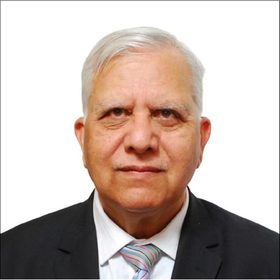
Zamir Ahmed Awan is the founder and Chair of the Global Silk Route Research Alliance, a think tank in Islamabad. He studied engineering at Shanghai University in the 1980s, and years later he went back to China as Pakistan's science counsellor in Beijing, from 2010 until 2016, working on science and higher education cooperation between the two countries.…