中巴友谊迈向太空

(下边有中文翻译,请继续看到底。 谢谢。)
The forthcoming journey of Pakistan’s first astronaut to China’s Tiangong Space Station represents far more than a scientific achievement. It is a historic milestone in the 75-year relationship between Pakistan and China, demonstrating how a time-tested friendship is evolving into a partnership in advanced science, technology, and space exploration. As Pakistan prepares to send its first astronaut aboard China’s Shenzhou-24 mission, the two countries are opening an exciting new chapter in their strategic cooperation.
According to the announced mission plan, November 2026 is expected to mark the beginning of this historic journey. The Pakistani astronaut will travel to the Tiangong Space Station as a payload specialist and is expected to return to Earth aboard Shenzhou-23, following a short-duration mission. This will make Pakistan the first country whose astronaut visits China’s operational space station and the first foreign participant in China’s human spaceflight program. It is an extraordinary demonstration of confidence and trust by China in its closest strategic partner.
The achievement follows the cooperation agreement signed between Pakistan’s Space and Upper Atmosphere Research Commission (SUPARCO) and China Manned Space Agency (CMSA) in February 2025. Two Pakistani pilots, Muhammad Zeeshan Ali and Khurram Daud, were selected following a rigorous assessment process and subsequently began specialized training at China’s Astronaut Centre in April 2026. One will undertake the mission while the other will serve as backup. Their preparation includes spacecraft operations, physical conditioning, microgravity adaptation and Chinese-language training.
The astronaut will undertake scientific experiments in microgravity, including research relevant to biotechnology, material science and life sciences. These experiments could have practical implications for Pakistan, particularly in food security, agricultural productivity, climate resilience and scientific innovation. More importantly, the experience will expose Pakistani scientists and engineers to sophisticated research methodologies, operational standards and technologies that would otherwise take considerable time and resources to develop independently.
A partnership extending beyond Earth
China-Pakistan space cooperation has been developing for decades. China’s contribution to Pakistan’s satellite program has been particularly significant. The launch of PRSS-1 and PakTES-1A in July 2018 from China’s Jiuquan Satellite Launch Centre represented an important step in strengthening Pakistan’s remote-sensing capabilities.
The successful launch of the PAKSAT-MM1 communication satellite in May 2024 further advanced this partnership. It is designed to improve broadband connectivity, television broadcasting, telecommunications and digital services. In January and July 2025, Pakistan also advanced its Earth-observation capabilities through the launch of EO-1 and PRSC-S1, respectively, from China. These developments demonstrate how bilateral cooperation is translating into practical technological capabilities.
Satellite technology has enormous importance for Pakistan’s development. It can strengthen agricultural monitoring, urban planning, disaster management, flood forecasting, environmental protection, water-resource management, and national connectivity. Given Pakistan’s vulnerability to climate change and natural disasters, investment in space-based observation and communication systems is particularly valuable.
The partnership also extends to navigation technology, artificial intelligence, biotechnology, information technology, 5G telecommunications, remote sensing and high-performance computing. Joint research centers, university exchanges, technical training and technology-transfer initiatives under the broader China-Pakistan Economic Corridor framework provide further opportunities to strengthen Pakistan’s scientific and industrial capabilities.
From Tiangong to the Moon
Perhaps the most exciting prospect is that this astronaut mission is not an isolated achievement. Pakistan is preparing to participate in China’s Chang’e-8 lunar exploration mission, scheduled for around 2028, through an indigenous lunar rover developed by SUPARCO. The approximately 35-kilogram rover will contribute to scientific exploration of the lunar surface, including research on lunar soil and the testing of technologies relevant to future exploration.
Pakistan has also expressed its ambition to achieve a lunar landing by 2035. Although this is a challenging long-term objective, the experience gained through astronaut training, satellite development, lunar rover engineering and collaboration with Chinese institutions can provide an important foundation.
The next priority should be to translate these opportunities into stronger domestic capabilities. Pakistan needs sustained investment in research and development, university laboratories, indigenous satellite manufacturing, robotics, propulsion systems, artificial intelligence and the training of young scientists. Technology transfer should progressively lead to local design, production and innovation rather than permanent dependence on external support.
An unmatched symbol of friendship and trust
China’s decision to welcome a Pakistani astronaut as the first foreign visitor to Tiangong carries exceptional diplomatic and strategic significance. It reflects a level of confidence, institutional cooperation and mutual understanding developed through decades of consistent engagement. The relationship has survived changing regional and international circumstances because it rests on enduring strategic interests, political trust and people-to-people connections.
This milestone also sends a positive message to the younger generation of Pakistan. It demonstrates that scientific ambitions need not remain distant dreams when countries cooperate, share knowledge and invest in human potential. Pakistani students and researchers should see this mission as an invitation to pursue careers in aerospace engineering, astronomy, robotics, biotechnology and other emerging technologies.
The China-Pakistan relationship has traditionally been described as an all-weather friendship, an ironclad partnership and an exemplary model of international cooperation. Its expansion into human spaceflight gives these descriptions a new and tangible meaning. Few bilateral partnerships have developed such a comprehensive range of cooperation, from infrastructure, energy, defense and education to satellite technology and human space exploration.
The forthcoming mission should therefore be celebrated not simply as Pakistan’s first journey into human spaceflight, but as a shared achievement reflecting China’s willingness to extend advanced scientific opportunities to a trusted partner.
From the mountains of the Karakoram to the orbiting Tiangong Space Station, the China-Pakistan friendship continues to reach new heights. Its next destination may well be the Moon.
中巴友谊迈向太空.
巴基斯坦首位宇航员即将前往中国天宫空间站的旅程,远不止是一项科学成就。它标志着巴基斯坦与中国的75年关系迈入一个历史性里程碑,展现出经久不衰的友谊正逐步发展为在先进科技、航天探索领域的合作。随着巴基斯坦准备派遣首位宇航员执行中国神舟-24号任务,两国正在开启战略合作的新篇章。
根据已公布的任务计划,2026年11月预计将开启这一历史性旅程。巴基斯坦宇航员将以载荷专家身份前往天宫空间站,并在完成短期任务后搭乘神舟-23返回地球。这将使巴基斯坦成为首个访问中国运营空间站的国家,也是首个参与中国载人航天计划的外国成员。这是中国对其最亲密战略伙伴所展现的非凡信心与信任的体现。
这一成就源于巴基斯坦空间与上层大气研究委员会(SUPARCO)与中国人民解放军航天员中心(CMSA)于2025年2月签署的合作协议。经过严格评估,两名巴基斯坦飞行员穆罕默德·泽伊尚·阿里和库拉姆·道德被选中,并于2026年4月开始在中国航天员中心接受专业培训。其中一人将执行任务,另一人担任备份。他们的培训内容包括航天器操作、体能训练、微重力适应以及中文语言学习。
航天员将在微重力环境下开展科学实验,涵盖生物技术、材料科学和生命科学等领域的研究。这些实验可能对巴基斯坦具有实际意义,特别是在粮食安全、农业生产力、气候适应能力以及科技创新方面。更重要的是,这次经历将使巴基斯坦的科学家和工程师接触先进的科研方法、操作标准和技术,而这些若由本国独立开发,通常需要耗费大量时间和资源。
这是一次超越地球的国际合作
中巴航天合作已持续数十年。中国对巴基斯坦卫星计划的贡献尤为突出。2018年7月,由中国酒泉卫星发射中心成功发射的PRSS-1和PakTES-1A卫星,标志着加强巴基斯坦遥感能力的重要一步。
2024年5月,巴基斯坦通信卫星PAKSAT-MM1的成功发射进一步推动了双方合作。该卫星旨在提升宽带连接、电视广播、电信及数字服务。2025年1月和7月,巴基斯坦又分别通过从中国发射EO-1和PRSC-S1卫星,提升了其地球观测能力。这些进展表明,双边合作正转化为切实的技术成果。
卫星技术对巴基斯坦的发展具有重要意义,可有效加强农业监测、城市规划、灾害管理、洪水预报、环境保护、水资源管理和国家互联互通。鉴于巴基斯坦对气候变化和自然灾害的脆弱性,投资于空间观测与通信系统具有特别重要的价值。
这一合作还涵盖导航技术、人工智能、生物技术、信息技术、5G通信、遥感以及高性能计算等领域。在更广泛的中巴经济走廊框架下,联合研究中心、大学交流、技术培训以及技术转让项目,为加强巴基斯坦的科技与工业能力提供了更多机遇。
从天宫到月球
或许最令人振奋的是,此次载人航天任务并非孤立成就。巴基斯坦正准备通过由SUPARCO自主研发的月球探测车,参与中国计划于2028年左右实施的嫦娥八号月球探测任务。这款约35公斤重的探测车将有助于开展月面科学研究,包括对月壤的研究以及测试未来探测相关技术。
巴基斯坦还表达了在2035年前实现登月的目标。尽管这是一个具有挑战性的长期目标,但通过宇航员训练、卫星研发、月球车工程以及与中国机构合作所获得的经验,可为实现这一目标奠定重要基础。
下一步应优先将这些机遇转化为更强的国内能力。巴基斯坦需要持续投入研发,建设大学实验室,发展本土卫星制造、机器人技术、推进系统、人工智能,并培养年轻科学家。技术转让应逐步推动本地设计、生产和创新,而非长期依赖外部支持。
友谊与信任的无与伦比的象征
中国邀请巴基斯坦宇航员作为首位访问天宫空间站的外国访客,具有非凡的外交和战略意义。这体现了数十年来持续合作所建立的信心、制度协作和相互理解。这一关系之所以能够经受住地区和国际形势的变化,是因为它建立在持久的战略利益、政治信任以及人文交流基础之上。
这一里程碑也向巴基斯坦年轻一代传递了积极的信息:当国家之间开展合作、共享知识并投资于人才潜力时,科学抱负不必再遥不可及。巴基斯坦的学生和研究人员应将此次任务视为投身航空航天工程、天文学、机器人学、生物技术及其他新兴科技领域的契机。
中巴关系传统上被形容为全天候的友谊、坚不可摧的伙伴关系,以及国际合作的典范。如今,随着两国在载人航天领域的合作不断拓展,这些描述获得了崭新而具体的意义。几乎没有哪一对双边合作伙伴能像中巴这样,在基础设施、能源、国防、教育,乃至卫星技术与载人深空探索等领域实现如此全面的合作。
因此,即将到来的任务不应仅仅被视为巴基斯坦首次进入载人航天领域,更应被看作是双方共同取得的成就,彰显了中国愿向值得信赖的伙伴开放先进科技机遇的诚意。
从喀喇昆仑山脉到轨道上的天宫空间站,中巴友谊持续迈向新的高度。其下一个目标很可能就是月球。
(注意: 本文是用AI翻译的,或有误差。请以原版英文为准。谢谢。)
Reference Link: https://en.people.cn/n3/2026/1111/c90000-20517995.html
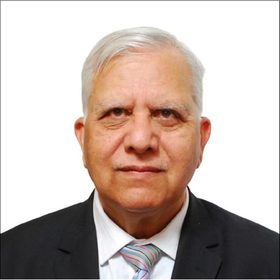
Zamir Ahmed Awan is the founder and Chair of the Global Silk Route Research Alliance, a think tank in Islamabad. He studied engineering at Shanghai University in the 1980s, and years later he went back to China as Pakistan's science counsellor in Beijing, from 2010 until 2016, working on science and higher education cooperation between the two countries.…