

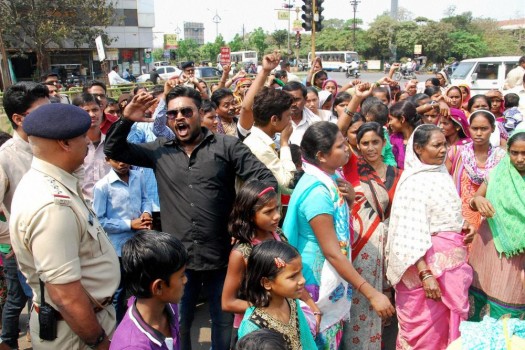
Thousands gather in Mumbai with heavy police presence as concerns mount that millions will be denied voting rights
India’s youth-led Cockroach movement kicked off more nationwide protests on Friday as thousands of people gathered in Mumbai, amid mounting concerns that millions of citizens are being unfairly stripped of their vote.
The movement, which calls itself the Cockroach Janta Party (CJP) and has massive support among the country’s Gen Zs, returned to the streets to demand the resignation of the chief election commissioner, Gyanesh Kumar.
Kumar has become a highly contentious figure after a report in the Indian Express newspaper alleged irregularities and internal concerns about a process to revise and “purify” India’s electoral register, called the Special Intensive Revision (SIR).
SIR, which was overseen by Kumar, has resulted in tens of millions of people being deleted from the electoral register. Large numbers are challenging their removal.

Opposition politicians and civil society groups have alleged SIR is part of a widespread manipulation of India’s electoral system to benefit the ruling Bharatiya Janata Party (BJP).

The CJP began as online satire but grew into a powerful manifestation of youth power and an unexpected challenge to the Narendra Modi government. There were protests for weeks in the heart of Delhi and the education minister was eventually pressured into resigning in July. In the aftermath, the group declared it would remain active as a “pressure group” to hold the government to account on issues of education and democracy.

Last week, after the revelations about the election commission, the CJP’s founder, Abhijeet Dipke, announced that if Kumar did not resign over the controversy, the “Cockroaches” would resume their agitation until he stepped down. Dipke said the Mumbai protest would kick off a nationwide movement, with more protests planned in Delhi, Goa, Kolkata and Bengaluru.
The authorities denied permission for the group to hold their protest at Mumbai’s Shivaji Park, but Dipke had vowed to go ahead regardless. “We are fighting against those in power,” he said at a press conference. “We all remember Mahatma Gandhi, who fought against the Britishers. Did the British ever permit him to agitate?”
Hundreds of people assembled in Mumbai on Friday afternoon, amid a heavy police presence, including many young people who said they were there to fight for India’s democracy.
“Voting is the most basic right of any citizen, but because of the actions of Kumar and the Election Commission, that right is under attack,” said Deesha, 22, a student activist. “So many millions of people have lost their votes and aren’t even recognised as citizens of India anymore. This attack on our democracy must stop. The first important step is to get Gyanesh Kumar to resign, and then SIR must be reversed.”
Janvi Upadhyay, 18, said the Cockroach movement had awoken the young people of India “and if they think they can just come and take away votes and cheat the elections, we will show them just how wrong they are”.
Reference Link:- https://www.theguardian.com/world/2026/oct/02/india-cockroach-movement-protests-mumbai-changes-voter-roll