
Pakistan: Energy sector reforms required
Source Xinhua, Dawn, Arab News, Anadolu and Minute Mirror

Federal Minister for Power Awais Ahmed Khan Leghari and the Federal Minister for Petroleum Pervaiz Malik, in a joint video message this past week, apologized for load shedding in the country, laying responsibility on the unavailability of Re-Gasified Liquefied Natural Gas (RLNG) from QatarEnergy – compelled to declare force majeure on 24 March 2026 – which, they claimed, reduced Pakistan’s generation capacity by around 5000 MW.
Leghari stated that “we can buy from the spot market to run power plants, but when its cost is passed onto consumers after two months their electricity bills will increase by 5 to 6 rupees per unit;” and the Petroleum Minister revealed that a single cargo pre-28 February 2026 cost around 30 to 35 million dollars but which at present costs around 75 million dollars – untenable for not only domestic consumers, struggling with rising inflation and unemployment, but also a serious challenge to a country whose foreign exchange reserves are largely borrowed.
It remains unclear whether the video was posted before or after the decision by Pakistan LNG Limited (PLL) to reject the 140,000-cubic-meter bid by BP Singapore, the sole bidder for a single spot cargo. This rejection was attributed to the government’s scarce foreign exchange reserves—which, even at 17.08 billion dollars, are estimated to cover less than three months of imports (the minimum required by multilateral and bilateral lenders).
Furthermore, the purchase was deemed untenable because the resulting per-unit cost would be unaffordable for household consumers and uncompetitive for productive sectors.
While there is much merit in the PLL decision, it is time to acknowledge flawed policies of the past that are continuing to-date and which require a holistic in-house approach. But to go this route would require a shift in the incumbent administration’s sustained reliance on multilateral prescriptions that have increasingly become more consumer-unfriendly –– full cost recovery that has translated into raising tariffs to absorb sectoral inefficiencies leading to not only erosion of the quality of life of households but also negatively impacting on productivity in general (including disabling exporters from being able to compete in the international market).
Another of the IMF’s prior conditions for the ongoing programme, before reaching a staff-level agreement, a precondition for the tranche release, is to contain the circular debt flow while the stock must be slowly brought down according to an agreed timeline.
The solution was to pressure the commercial banking sector to extend 1.2 trillion rupees (agreed by the Fund last year, which had earlier refused due to the policy rate at a high of 22 percent). However, the Fund secured a pledge from the government that it would remove the 10 percent cap on Debt Service Surcharge in electricity tariffs to cover power sector shortfalls.
There are three major past policy decisions that were flawed and continue to impede the sector’s health. First, the decision to compel distribution companies, the successor to the state-operated WAPDA as the sole energy distributor, to set one tariff throughout the country. With different cost and revenue structures in distribution companies, this has implied that each year the federal government, at the taxpayers’ expense, budgets tariff differential subsidies estimated at around 500 billion rupees; or, in other words, extends a premium for inefficiency.
The mantra echoed by the current administration is that the answer lies in privatization. Three distribution companies are targeted for privatisation in the current year, but there is a need to revisit the 2005 K-Electric privatization – a company that not only purchases electricity from the national grid but also receives tariff differential subsidy to this day –over 160 billion rupees in the current fiscal year.
The energy contracts signed under CPEC in 2016 favoured the Independent Power Producers (IPPs) as the Law Division at the time did not query or raise the issue of the possibility of the government being unable to meet the agreed capacity payments, payable in dollars. This is evident from the 450 billion rupee dues payable to the Chinese IPPs today.
True that, at the time the contracts were signed, foreign investment inflows were negligible and the then Prime Minister Nawaz Sharif’s rationale would have been that this would pave the way for growth; however, clearly projections at the time were over-optimistic – a tendency that continues to this day.
There is a need for more accurate and more informed projections, given that they have led to decisions that have cost millions of dollars to this country.
There is a need to strengthen the Law Ministry, given that the country is losing hundreds of millions of dollars in adverse judgments issued by international arbitration courts.
It is also relevant to note that the deal with QatarEnergy projected a rather optimistic growth rate that was never realized. This is evident, given that prior to Qatar declaring force majeure earlier this year, Pakistan, as per the contract, was diverting at a minimum of two cargoes for sale to a third party and, if the sale price was lower than agreed under the contract, then Pakistan would pay the differential.
It would not be remiss to point to the administration that the policy to mitigate the persistently negative fallout of climate change on our economy, notably enhanced reliance on renewables in general and solar in particular, is having an extremely negative effect on our ability to pay the rise in capacity charges agreed with the IPPs.
The obvious recommendation to the Ministry of Energy would be to look at India, where tariffs are not regulated by the Centre but by the State Electricity Regulatory Commissions, which take account of differences in energy sources (e.g., RLNG, coal, hydro, solar), distribution losses, subsidies, and state-specific policies.
The state commissions also ensure that tariffs are guided by the National Tariff Policy and do not exceed the average cost of supply by more than 15 percent for specific consumer groups. The resulting recommendations must be taken up first by the Cabinet and then by the Council of Common Interests (CCI) for final approval and implementation.
To conclude, the reforms that the government has been implementing for decades under the tutelage of multilaterals have not yielded positive results in the past and are unlikely to in the future. What is required is a holistic approach that seeks to look at past and existing policies, evaluate the success or otherwise of past privatizations, and to apply those lessons learned; and, last but not least, to desist from borrowing for the sector, hoping that everything will meet all expectations; hope is not a strategy.
Reference Link:- https://www.brecorder.com/news/40438210
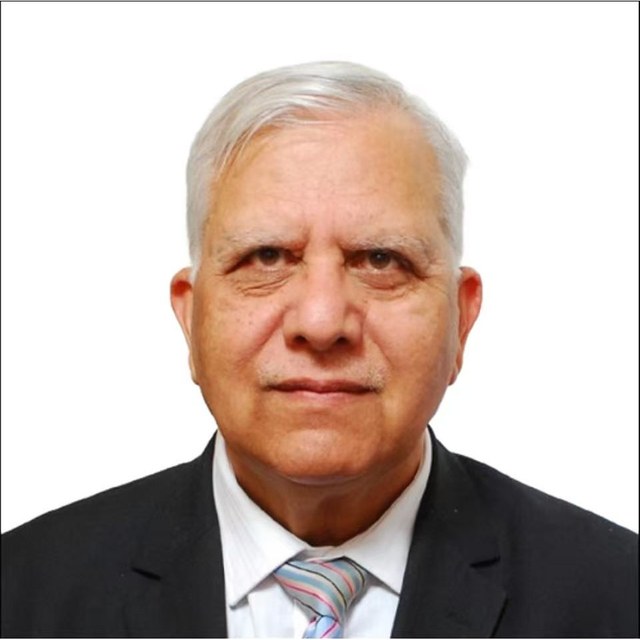
Zamir Ahmed Awan is the founder and Chair of the Global Silk Route Research Alliance, a think tank in Islamabad. He studied engineering at Shanghai University in the 1980s, and years later he went back to China as Pakistan's science counsellor in Beijing, from 2010 until 2016, working on science and higher education cooperation between the two countries.…