
Pakistan: SOE reform: the way forward
Source Xinhua, Dawn, Arab News, Anadolu and Minute Mirror

This is the tenth and final article in a series on Pakistan’s state-owned enterprises and privatisation. The previous nine examined governance, three decades of privatisation, Pakistan Railways and PIA, the cost of delay, and the Privatisation Commission’s capacity. The final issue is durability: which changes should be embedded in law, what regulatory architecture a larger private sector needs, and how reform can survive political cycles.
Pakistan has accumulated enough experience to know what works. Banking privatisations showed the value of capable private ownership under a credible regulator. The recent PIA transaction showed how preparation, restructuring and competition can transform a sale process. These lessons now need to be institutionalised.
Strengthening the law
The Privatisation Commission Ordinance 2000 already establishes the Commission as a body corporate, but its governance structure is dated. The Chairman is responsible for day-to-day administration, while appointments and tenure remain heavily dependent on government discretion.
The law should separate governance from management through a non-executive Chairman, the Privatisation Minister, a professionally recruited Chief Executive instead of a secretary, and an independent, skills-based Board with defined terms, fit-and-proper criteria, annual evaluation, and appropriate remuneration.
The Ordinance already requires annual reporting and publication. The weakness is in quality, timeliness, and public visibility. The Board should be explicitly responsible for quarterly and annual performance reports, published on the Commission’s website and submitted to government and Parliament within prescribed timelines.
A public Privatisation Registry should show active transactions, milestones, delays and post-closing obligations. Completed transactions should be reviewed against the objectives approved at the outset.
Pakistan also needs a consolidated Privatisation Transaction Framework as part of the Commission’s Board-approved policies, aligned with the Ordinance, rules and broader SOE policy. It should set transaction-readiness criteria, adviser selection and evaluation standards, requirements for competitive tension and disclosure, post-closing monitoring, and circumstances in which a transaction should be paused or redesigned.
The Board should review it periodically so that lessons from each transaction improve the next.
The approval process should be streamlined. The Commission Board should be empowered to take operational and transaction decisions within the approved privatisation programme, while the CCoP and Cabinet focus on major strategic approvals, including programme scope, final transaction approval and reserve prices.
Pakistan Railways illustrates another legal issue. The SOE Act 2023 was extended to Railways in 2024, and it was subsequently classified as strategic and essential. Yet its core institutional form remains that of a government department. Its commercial operations should be corporatised within a defined timetable, with a separate legal identity, professional board, proper financial statements, business plan and clear accountability. Strategic status is compatible with corporatisation.
The link between SOE classification and privatisation should also be tightened. Section 35 of the Privatisation Commission Ordinance gives the Commission strong powers once an enterprise is approved by Cabinet as eligible for privatisation.
Once the Federal Government has formally classified an SOE for privatisation, bringing it under this regime should be automatic and time-bound so preparation can begin before value deteriorates further.
Regulation for a market economy
Privatisation is part of a larger economic transition. Pakistan needs to reduce the state’s role as owner and operator of commercial businesses and create more space for private enterprise, investment and competition. A genuine market economy also depends on effective regulation developed and enforced by smart and independent sector regulators.
As government withdraws from running businesses, its role as rule-setter and regulator becomes more important. Private ownership alone does not guarantee competition or efficiency.
Weak regulation can replace a public monopoly with a private one, discourage investment, or shift high costs to consumers and taxpayers. Over-regulation with a bureaucratic approach is disastrous for a market economy.
This is especially important in energy. Electricity and gas combine network monopolies, large long-term investments, complex tariffs, and essential services.
NEPRA and OGRA need strong professional capacity, independent decision-making, transparent processes, and predictable regulation. They must promote competition where markets can support it, regulate monopoly networks where they cannot, enforce service and investment obligations, and balance the legitimate interests of consumers, investors and taxpayers.
Regulatory readiness should therefore be part of transaction readiness. As privatisation of major energy utilities proceeds, market structure, tariff frameworks, licensing regimes, performance standards and regulatory enforcement must be fit for purpose. Smarter regulation, which inherently depends on the quality of those charged with their governance, alongside greater private ownership is essential if privatisation is to improve services, attract investment and strengthen the economy.
The political challenge
Privatisation has survived changes of government for more than three decades. The difficulty has been maintaining pace when transactions encounter bureaucratic resistance, inter-ministerial disputes, litigation, labour concerns or public criticism. Programmes lose momentum and entities remain in limbo for years owing to a culture of complacency and status quo.
The financial consequences have been severe. As estimated earlier in this series, delayed and flawed reform has cost the country more than Rs15 trillion in direct fiscal terms, with a much higher economic cost. Well-executed privatisations, particularly in banking, have also saved the public purse trillions and created stronger businesses, taxpayers and employers.
Transaction quality and timing matter far beyond the sale price.
Investment in the Privatisation Commission should be treated as essential reform infrastructure. Permanent deal teams, technology, competitive compensation, and the ability to run several transactions in parallel would cost a fraction of what Pakistan loses through delay or flawed transactions.
Public communication is equally important. Federal commercial SOEs hold assets of about Rs38 trillion, close to one-third of GDP, while many earn weak returns and some require continuing fiscal support. Citizens should see the opportunity cost. Resources absorbed by commercial enterprises are unavailable for infrastructure, health, education and targeted social protection. Governments should explain why an enterprise is being retained, restructured, closed or privatised, and what taxpayers should expect in return.
Results will build the strongest political support. The failed 2024 PIA process attracted a single Rs10 billion offer. After substantial restructuring and preparation, the 2025 auction attracted three bidders and a winning bid of Rs135 billion for a 75 percent stake, as most of that amount was structured as fresh capital for the airline rather than cash proceeds to the government. The change in transaction structure created a striking improvement in competitive interest and valuation. Speed has value when the asset, regulatory framework, and transaction are properly prepared.
The discipline to deliver
After 36 years, Pakistan’s central weakness in SOE reform is implementation discipline. The next phase requires a tighter legal framework, clearer approvals, professional governance of the Privatisation Commission, permanent transaction capacity, credible reporting, effective regulators, stronger post-transaction monitoring, and corporatisation of commercial activities that still sit inside government departments.
These reforms are practical and achievable. Their value lies in consistent application across transactions and governments. Reform will become durable when sound governance, hard budget constraints, credible regulation, timely reporting and disciplined privatisation become part of the normal machinery of government.
A smaller commercial footprint for the state must be matched by stronger institutions that regulate markets, protect competition and balance the interests of consumers, investors and taxpayers. That is the foundation of a market economy in which private enterprise can become the engine of investment, innovation and growth.
Reference Link:- https://www.brecorder.com/news/40437979
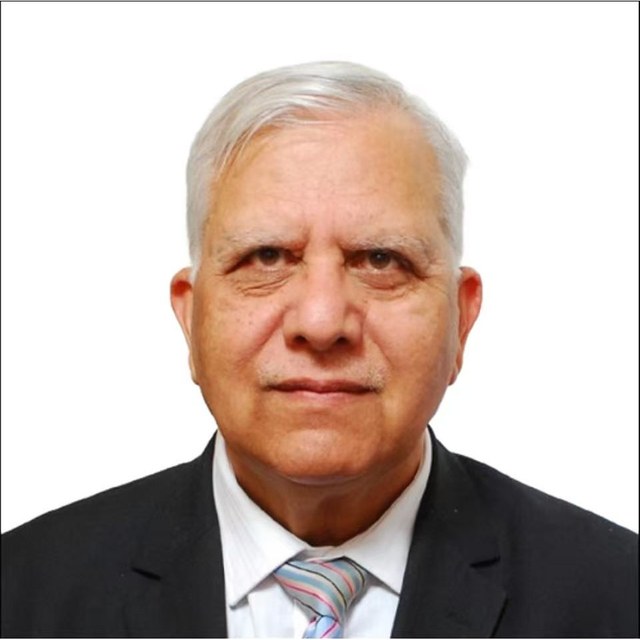
Zamir Ahmed Awan is the founder and Chair of the Global Silk Route Research Alliance, a think tank in Islamabad. He studied engineering at Shanghai University in the 1980s, and years later he went back to China as Pakistan's science counsellor in Beijing, from 2010 until 2016, working on science and higher education cooperation between the two countries.…