

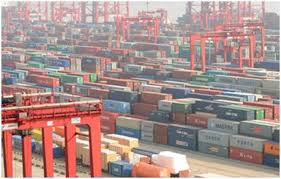
The proposal to phase out Pakistan’s Export Processing Zones (EPZs) and Special Economic Zones (SEZs) by 2035 under the IMF programme has understandably alarmed the business community. A Senate Finance Committee has now urged the government to renegotiate the arrangement, fearing that dismantling the incentive structure could damage investment, exports and industrialisation.
The IMF argues that these incentives impose fiscal costs, create distortions between firms operating inside and outside zones, and undermine a level playing field. Its proposed solution is to move from profit-based incentives such as tax holidays towards cost-based incentives such as accelerated or immediate depreciation of investment.
The IMF’s rationale is understandable. Pakistan’s tax system contains numerous exemptions and concessions that can distort competition, encourage tax arbitrage, and erode the tax base.
Under the Extended Fund Facility, the objective is to move towards a uniform tax regime and gradually eliminate profit-based incentives, replacing them where appropriate with cost-based incentives such as accelerated depreciation.
The principle of a broader and more neutral tax base is difficult to dispute. But applying it mechanically to SEZs and EPZs could be a serious policy mistake.
The issue is not whether tax holidays should continue indefinitely. The real question is whether a developing country such as Pakistan can attract investment, generate employment and expand exports without providing investors some form of compensating advantage for the additional risks and costs of operating in Pakistan.
Tax neutrality is not industrial neutrality.
An investor establishing a factory in Pakistan compares it with Bangladesh, India, Vietnam and other emerging manufacturing destinations. The decision depends on electricity, land, logistics, customs, taxation, regulatory predictability, skilled labour and the ease of obtaining approvals.
A tax holiday can distort competition between firms inside and outside a zone. But a properly designed SEZ is not merely a tax haven. It is supposed to provide an industrial ecosystem in which infrastructure, utilities, customs, logistics and regulatory services are concentrated, making them more efficient.
If Pakistan had already offered reliable energy, efficient logistics, world-class infrastructure and genuinely one-window regulation throughout the country, there would be a stronger case for eliminating much of the special zones’ tax incentives.
Unfortunately, that is not the reality.
Pakistan’s EPZ and SEZ policies have suffered from inadequate infrastructure, delayed utilities, bureaucratic interference, fragmented regulation, and weak implementation. On top of it, there is harassment of investors by multiple provincial government entities – out to fleece investors with made-up, pretentious claims. This all adds to the cost of doing business and poses a challenge to investors in conducting their businesses through fair business practices.
The promise of one-window operation has too often remained on paper. An investor entering an SEZ should not have to deal separately with departments responsible for land, construction, environment, electricity, gas, labour, customs and taxation. The zone authority should provide a genuine single institutional interface with government.
The failure to deliver this efficiently is an argument for reforming the zones—not abandoning them.
An industrial investment is a long-term commitment. If the policy framework governing SEZs is progressively dismantled, prospective investors will inevitably question the durability of Pakistan’s investment incentives and policy commitments.
This could weaken Pakistan’s ability to compete for foreign and domestic industrial investment. The consequences would extend beyond the loss of a tax concession.
New industrial units create factories, supply chains, skills, technology and employment, while manufacturing generates multiplier effects through transport, packaging, engineering, maintenance, and local suppliers.
The stakes therefore involve not merely taxation but exports, employment and industrial growth.
India and Bangladesh offer a different lesson.
India has not abandoned the SEZ model of multiple incentives, including those in taxation.
Official data show exports from operational SEZs reaching $172.27 billion in 2024-25, compared with $5.16 billion in 2005-06. India has modified its tax incentives over time, but SEZs remain an important part of its export and investment architecture.
Bangladesh provides an even more relevant comparison because it competes directly with Pakistan for labour-intensive manufacturing.
In FY2024-25, enterprises operating in Bangladesh’s BEPZA-administered zones exported $8.22 billion, equivalent to 17.03% of national exports, while employing more than 533,000 workers. More than 33,000 new jobs were created during that year. In FY2025-26, exports from these zones increased further to $8.41 billion, representing 17.51 percent of Bangladesh’s total exports.
These figures demonstrate that properly managed zones can become significant platforms for exports, employment and foreign investment.
The lesson from India and Bangladesh is not that tax holidays should continue forever. It is that successful zones combine fiscal incentives with infrastructure, administrative facilitation, investment promotion and export orientation.
Pakistan should therefore accept the IMF’s legitimate concern about poorly targeted tax expenditures, but negotiate a better route to the same objective.
Instead of hollowing out in one go the blanket EPZs tax incentives, an alternate business model could be systematically introduced where the profit-based exemptions could progressively be replaced with performance- and investment-based incentives linked to actual investment, employment, exports, technology transfer, and local value addition.
A company that takes a tax holiday without investing or exporting should receive little benefit. A company that builds a factory, creates jobs, exports, and brings technology into Pakistan should receive meaningful support.
That is not simply a tax concession. It is industrial policy.
The 2035 deadline should therefore be treated as a target for transformation, not extinction. Pakistan should aim to reach a point where investors come not primarily because of tax holidays, but because the country offers competitive energy, logistics, infrastructure, skilled labour, and regulatory simplicity.
EPZs and SEZs are not the destination. They are a ladder towards industrialisation.
Pakistan should reform the ladder, provide relief in cost and ease of doing business, measure its performance and remove the rungs that do not work. But dismantling the ladder before the country has achieved industrial competitiveness would be economic self-defeat.
Understandably, the decision and policymakers, at all levels of hierarchy, are well aware of it, but the will and means to act are missing.
Reference Link:- https://www.brecorder.com/news/40437977/sezs-and-epzs-reform-not-retreat