

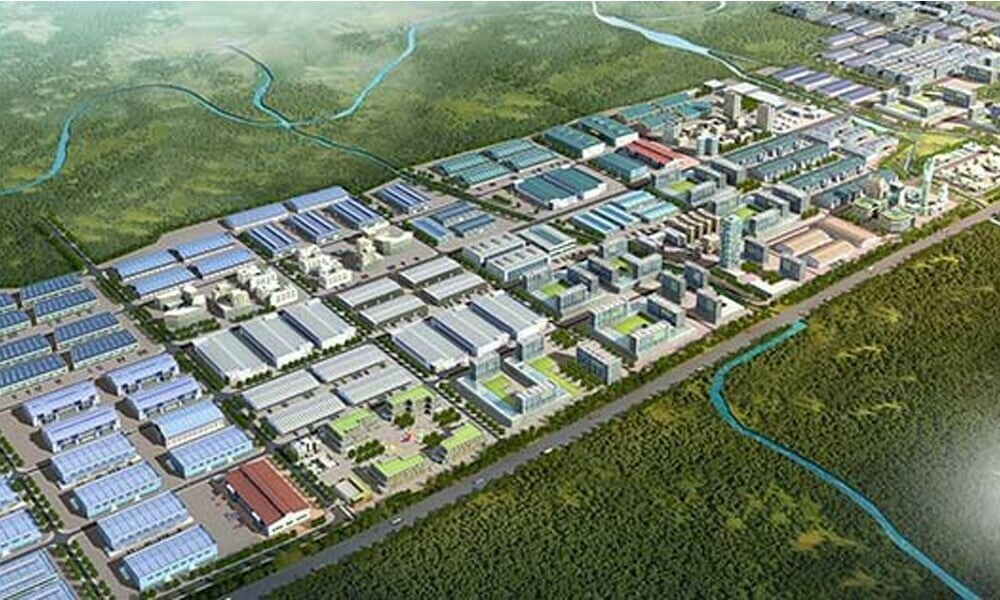
For more than a decade, Pakistan’s Special Economic Zones have operated on a simple promise: approved zone enterprises and developers receive a ten-year income tax exemption, along with a one-time exemption from customs duties and taxes on qualifying imported capital goods. The idea was to pull industry into planned industrial clusters.
The results, however, have been uneven. Several zones remain underdeveloped, while the incentive structure has often rewarded location more than performance. A firm could benefit simply by being inside the zone, regardless of how much it produced, exported, invested, or employed.
That model is now being rethought. Under the IMF programme and growing fiscal constraints, Pakistan is moving towards what may be described as “SEZ 2.0”: replacing broad profit-based tax holidays with more targeted, cost-based incentives, supported by clearer performance indicators and fiscal oversight. In simple terms, the state should stop rewarding presence and start rewarding output.
The real test should be straightforward: how much new investment comes in, how many jobs are created, how much is exported, how much local value is added, and how many firms graduate into competitive supply chains.
Pakistan can no longer afford incentives that look generous on paper but deliver little in return. Fiscal space is tight, FDI remains thin, exports need scale, and industry needs confidence. SEZ 2.0 should therefore not be treated as another tax reform, but as a framework for making government support conditional on measurable economic results.
The model needed to change because blanket tax holidays have not delivered enough. They reward firms after profits start flowing, but offer relatively little to serious manufacturers that spend years investing before returns come in. They can also create opportunities for profit shifting or tax arbitrage unless substantive economic activity and related-party transactions are rigorously verified.
The better model is to reward delivery. Firms should earn support for actual investment, exports, jobs, productivity gains, technology transfer, and local value addition. Higher achievement should attract stronger support; failure to meet agreed commitments should reduce or withdrawn benefits. This would make the system harder to misuse and easier for the government to budget.
Pakistan is not there yet. The country still largely follows the existing SEZ model, under which approved developers and zone enterprises receive income tax exemptions and qualifying machinery imports receive customs and tax relief.
The actual reform is still ahead. Under the IMF-supported programme, Pakistan has committed to amending the SEZ Act by June 2027. Separately, Pakistan has also developed a plan to phase out existing SEZ and EPZ fiscal incentives by 2035, subject to pre-existing contractual obligations, while shifting from profit-based to cost-based incentives.
Changing the incentive formula alone will not fix Pakistan’s SEZ problem. Many zones struggled not because tax breaks were missing, but because the basics were delayed: power, gas, roads, water, and customs facilitation. No tax holiday can compensate for a zone without reliable electricity or serviced land. SEZ 2.0, therefore, also needs transparent incentive approval, digital verification linked to customs, payroll and tax records, infrastructure delivered before firms are asked to invest, and clear sunset clauses and clawbacks where commitments are not met. Existing contractual rights should be protected through clear grandfathering rules so that confidence is not shaken while the new framework is introduced.
International experience offers useful lessons. China and the UAE demonstrate the importance of infrastructure, logistics, governance and industrial clustering alongside fiscal incentives. Vietnam highlights the value of efficient customs administration and integration with global supply chains. Poland and Ireland illustrate how investment support can be linked to project-level outcomes such as R&D, skills and technology. Bangladesh shows that zones can generate exports and employment without necessarily delivering rapid movement into higher-value manufacturing. For Pakistan, the lesson is clear: SEZs should not become fenced-off tax shelters; they must become platforms for export-oriented, productivity-led and higher-value investment.
Ultimately, success will depend on execution, not just design. Investors will need quick approvals, transparent verification, ready infrastructure, and confidence that policy will remain predictable. Pakistan should also be willing to rationalize the SEZ map. Zones that have not met development milestones should not keep absorbing policy attention and fiscal space indefinitely. SEZ 2.0 should reward performance at the zone level as well as the firm level.
If Pakistan gets this balance right, it may end up with fewer zones, but better ones. If Pakistan gets it wrong, it could lose on both sides: investors may find the new system too uncertain, while the government may still fail to protect the revenue it wants to save.
Pakistan does not need more zones on maps. It needs fewer zones that actually work.
Reference Link:- https://www.brecorder.com/news/40432793