Pakistan: Rice exports up by 0.35m tonnes in four months

Pakistan’s total rice exports surged by 353,000 tonnes to reach 1,351,000 tonnes during the first four months (July-October) of the current fiscal year 2026-27.
The exports were propelled by a massive 62pc jump in Basmati shipments that defied severe maritime disruptions across the Red Sea, the Strait of Hormuz, and the broader Middle East.
According to trade figures for the July-Oct 2026 period, Basmati exports climbed by 116,000 tonnes compared to the corresponding period last year to stand at 301,000 tonnes. Meanwhile, non-Basmati shipments expanded by 140,000 tonnes year-on-year to reach 1,049,000 tonnes.
The remarkable expansion in Basmati export volume came despite heightened geopolitical tensions involving Iran, shipping route diversions, skyrocketing ocean freight charges, and elevated marine insurance premiums.
Market analysts attribute the premium grain segment’s resilience to a mix of domestic policy support and strong agricultural fundamentals. Specifically, the extension of the Drawback of Local Taxes and Levies (DLTL) scheme through September, substantial carryover stocks, an expanded cultivation area, double-cropping in select regions, higher per-acre yields, and favourable weather conditions combined and culminated in a bumper Basmati harvest.
In the coarse grain segment, Pakistani exporters posted a 16pc increase in non-Basmati shipments despite fierce price competition from heavily subsidised Indian rice and aggressive offers from Thailand, Vietnam, Cambodia, and Myanmar.
The country-wise trade data for October 2026 shows that the Philippines emerged as the single largest buyer of Pakistani rice during the month with imports of 87,478 tonnes, followed by Tanzania at 43,747 tonnes and Kenya at 33,078 tonnes. Other major destinations during October included the United Arab Emirates with 25,305 tonnes, the European Union with 21,200 tonnes, Central Asia with 16,400 tonnes, China with 11,949 tonnes, and Saudi Arabia with 7,655 tonnes.
Reference Link:- https://www.dawn.com/news/2046421
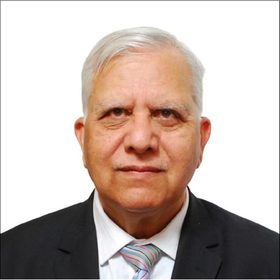
Zamir Ahmed Awan is the founder and Chair of the Global Silk Route Research Alliance, a think tank in Islamabad. He studied engineering at Shanghai University in the 1980s, and years later he went back to China as Pakistan's science counsellor in Beijing, from 2010 until 2016, working on science and higher education cooperation between the two countries.…